Three recent developments underscore the health threat posed by atrazine, one of the most widely used herbicides in the U.S.
Earlier this month, California’s environmental health agency said it planned to list atrazine as a carcinogen.
A new analysis found roughly one-quarter of the miles of rivers and streams in the U.S. are contaminated by it at levels harmful to aquatic life.
And a separate study said the Environmental Protection Agency’s proposed approach to curbing atrazine runoff would do little to resolve the contamination problem.
Prevalence and exposure
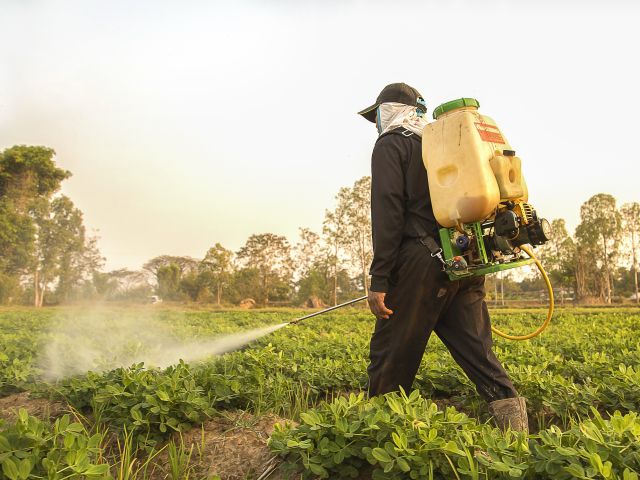
Agrochemical giant Syngenta’s atrazine is one of the most widely used herbicides in the U.S., with roughly 70 million pounds applied annually, primarily to cornfields across the Midwest.
Rain washes the chemical off farm fields and into nearby rivers, streams, lakes and groundwater. About 860,000 miles of rivers in the U.S. are contaminated with the weedkiller at levels that can harm aquatic life, according to a new analysis by the Center for Biological Diversity.
The problem isn’t limited to the Midwest. Atrazine is especially prevalent in five hot spots, including the Chesapeake Bay, Lake Okeechobee and Texas’ Gulf Coast. In the Chesapeake Bay, atrazine contaminates more than 5.5 million acres of the watershed at levels higher than those known to harm aquatic ecosystems.
The runoff also pollutes sources of drinking water for millions of Americans. Atrazine is consistently the most frequently detected crop chemical in tap water, according to EWG’s Tap Water Database, which shows that 2,055 water utilities in 36 states detected atrazine, affecting drinking water for about 40 million people.
Of those utilities, 479 in 18 states serving roughly 3 million people reported atrazine levels above EWG’s health guideline of 0.1 parts per billion, or ppb.
The EPA’s own monitoring data repeatedly show atrazine in Midwestern drinking water sources at levels that spike above EPA’s woefully inadequate legal atrazine tap water limit of 3 ppb.
What exposure can do to your health
A growing body of scientific research links atrazine exposure to serious health concerns, including reproductive and developmental harm, such as premature birth and low birth weight, as well as endocrine disruption, which can interfere with the body’s hormone systems.
More recent research has also raised concerns about the connection between atrazine exposure and an increased risk of cancer.
In 2025, the World Health Organization’s International Agency for Research on Cancer, or IARC, classified atrazine as “probably carcinogenic to humans,” underscoring the urgent need for the EPA to reassess the chemical’s safety.
But the agency, parroting Syngenta’s talking points, dismissed IARC’s findings. It claimed the science shows exposure does not increase cancer risk.
Federal and state regulation
Set in 1991, the EPA’s outdated atrazine tap water standard fails to reflect the full body of scientific evidence accumulated over the past three decades.
EWG’s health guideline is 0.1 ppb to protect from harm to the developing fetus, harm to the reproductive system and hormone disruption.
A second recent peer-reviewed study by researchers with CBD, published in the Journal of Environmental Quality, concluded that the EPA’s proposed measures to curb atrazine runoff would do little to protect U.S. waterways from the herbicide. The agency in 2024 proposed a contamination-relief plan but is yet to finalize it.
The researchers estimated that just 1% of the 11,248 watersheds contaminated with atrazine would fall below the EPA’s threshold for concentrations that can harm aquatic ecosystems if the plan were implemented.
The CBD, the Center for Environmental Health and the Pesticide Action & Agroecology Network this month sued the Trump EPA for failing to establish Clean Water Act-required water quality criteria for the weedkiller.
The lawsuit comes just as EPA Administrator Lee Zeldin considers whether to renew approval of atrazine for another 20 years.
The suit doesn’t seek a ban, but its outcome could eventually shape how states regulate herbicide runoff from farmland.
Recent California action may force the issue.
Earlier this month, the state’s EPA announced its intent to list atrazine as a carcinogen under the state’s Proposition 65 law.
Prop. 65 requires businesses to warn state residents about the health risks of exposure to certain chemicals. A conclusion by the state EPA’s Office of Environmental Health Hazard Assessment carries weight among environment and safety advocacy experts.
Government action and inaction
Today more than 60 countries prohibit the use of atrazine. Yet it remains legal in the U.S. and widely applied to agricultural fields, despite widespread water contamination and mounting evidence of its potential harm to human health.
And given the Trump administration’s increasingly industry-friendly approach to pesticides, there is little reason for confidence that the review will result in meaningful restrictions.
The initial report from Health and Human Services Secretary Robert F. Kennedy Jr.’s Make America Healthy Again Commission explicitly acknowledged that atrazine “can cause hormone disruption and birth defects” in babies.
But even that limited recognition of the weedkiller’s health risks provoked an intense backlash from the pesticide industry. All references to atrazine and other crop chemicals were subsequently stripped from the final report.
Over the past year, the Trump EPA has approved more than five new pesticides containing “forever chemicals” known as PFAS, while President Donald Trump signed an executive order invoking the Defense Production Act to boost domestic production of glyphosate, the nation’s most widely used weedkiller.
Against this backdrop, the prospect of the EPA taking decisive action to curb atrazine’s use and protect public health remains uncertain.
The bottom line
The growing evidence of atrazine’s potential health risks, its widespread presence in drinking water and waterways, and its classification as probably carcinogenic to humans demand a serious response from federal regulators.
Rather than dismiss independent scientific findings and yield to pesticide-industry pressure, the Trump EPA should thoroughly reassess atrazine, establish more protective water-quality standards and put the health of families over the narrow financial interests of chemical corporations.
Americans should not have to wonder whether the water flowing from their taps contains a pesticide that likely causes cancer and developmental harm to children and that dozens of countries have banned.
What can consumers do to protect themselves?
While stronger federal safeguards are needed to protect everyone from atrazine and other drinking water contaminants, consumers can take steps to learn more about what is in their drinking water.
EWG’s Tap Water Database helps fill critical information gaps by allowing people to search by ZIP code for reports on contaminants detected in their local water supply, the levels found for each and the potential health risks in their drinking water.
The database also offers guidance on water filters that may help reduce contaminants detected in a user’s water supply, helping consumers identify options tailored to their local water-quality concerns.