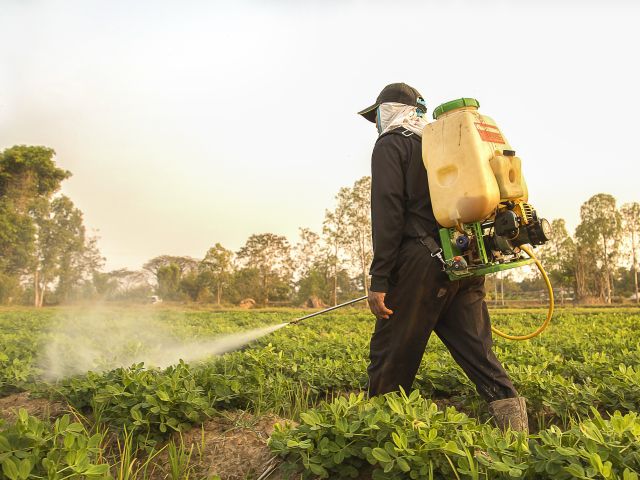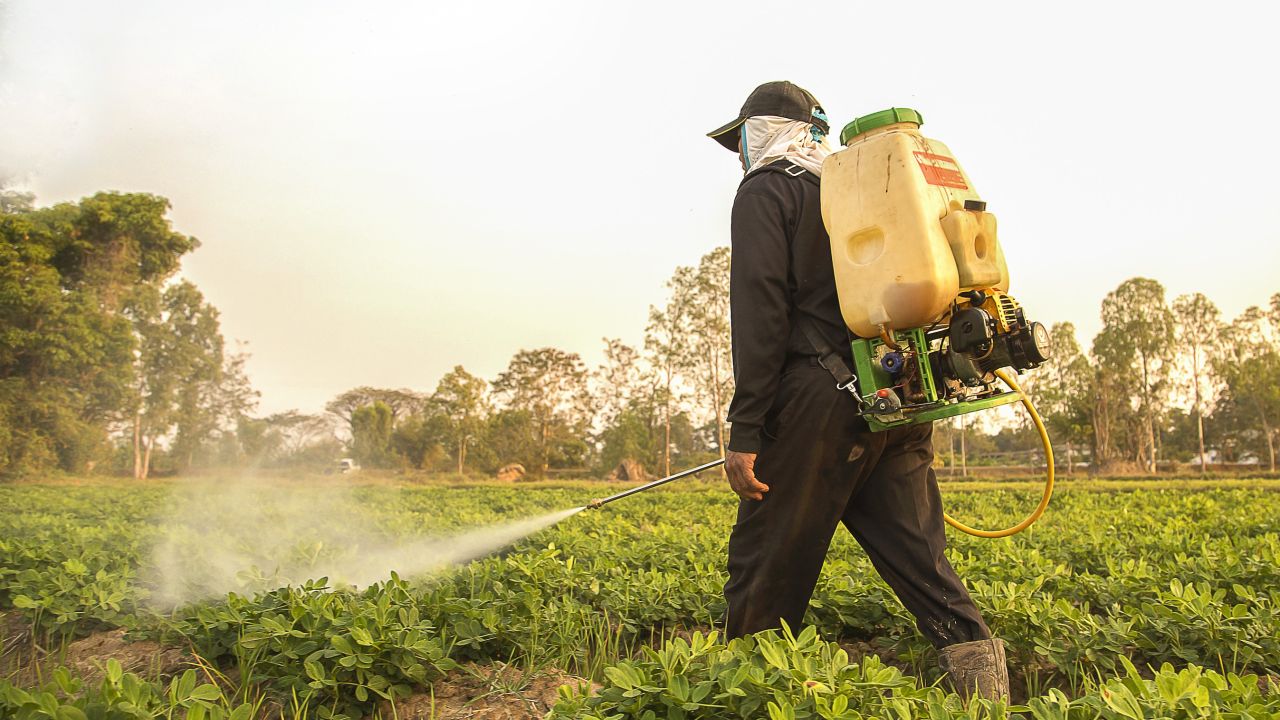
When California regulators asked the pesticide industry for more information about the toxic chemical paraquat, the companies abandoned the state instead of providing the data.
It’s a telling sign that every state should heed – not just because California is the second state to phase out paraquat but because of what the industry’s behavior revealed.
California regulators sought data to determine whether the health and safety risks of paraquat were fully understood and whether they could be controlled after new studies linked exposure to paraquat to thyroid damage and birth defects.
If the paraquat companies had proof the chemical was safe to use, submitting that information might have kept them in the largest paraquat market in the country.
Instead, they walked away from California entirely.
That’s the clearest signal a company can send that no fix exists. When managing health and environmental risks from pesticides is possible, California regulators tend to allow the industry to propose mitigation plans because it’s the cheaper, more profitable and politically palatable path.
When industry chooses to ditch an entire market instead, that’s a strong indication the risk sits beyond what regulators assume they can address by merely restricting how it’s used.
Failing to turn over safety data
A 2024 California law required the state’s pesticide regulators to reevaluate paraquat’s risks to public health and the environment. As questions arose, regulators called on the paraquat companies for missing safety data.
California’s regulators sought additional data from industry after their own scientists publicly reviewed studies linking paraquat to preterm birth, congenital heart and limb defects, low birth weight, hypothyroidism and lower thyroid hormone levels.
The state also requested a study on field volatility. Field volatility studies monitor how far a pesticide travels through the air after it's applied, which regulators use to estimate exposure risks to nearby workers and communities.
That request followed new data submitted to the U.S. Environmental Protection Agency by Syngenta, the world’s largest paraquat distributor at the time. The data indicated that paraquat vapor may travel more than 2.7 miles from the field where it's applied, based on early estimates from computer models.
When regulators ask for this information, what they really want to see is if they can keep the product on the market, not pull it. If the answer had been, “it travels a manageable distance, and here's how buffer zones or application changes address the risks,” paraquat might have been allowed to stay in use in California under new restrictions.
The companies shared some data, but ultimately decided to pull their products from California rather than provide the requested data about birth defects, thyroid damage and field volatility.
Instead of complying with the state’s request, all seven paraquat manufacturers chose to walk away from their largest market. And it wasn’t just one or two major companies who could afford to take the hit. Every company had the chance to provide data when the regulators began their process, but all chose to back out.
Their decision triggered a so-called “voluntary” end to the sale of paraquat in California, which the state’s pesticide regulatory program announced in August.
The word “voluntary” is somewhat misleading. The inability or unwillingness to prove that the ongoing use of paraquat is safe belies the industry’s “voluntary” action.
Why 2.7 miles is a mitigation problem, not just a statistic
The paraquat regulations currently in place in California and across the country were implemented under the assumption that only people working directly with the chemical were at risk of breathing it in.
The new 2.7-mile estimate from the Syngenta data means that people living around areas where it’s used are not protected by those regulations.
That distance matters because it falls largely outside what standard regulatory tools can fix. That is why both California’s Department of Pesticide Regulation and the EPA asked pesticide companies to monitor how far paraquat actually moves in the air away from the application site.
Industry left California, rather than submit that data to DPR.
Regulators often use buffer zones to protect nearby workers and communities when they believe a risk is contained to a few hundred feet. Application timing restrictions are implemented when the danger is tied to specific conditions, like wind speed on the day of applying. But a vapor that can potentially travel multiple miles after application isn't something a buffer zone or a limited application schedule can reliably contain.
There are no obvious restrictions that manage a risk of that magnitude for paraquat, which may be exactly why the companies were unable to successfully propose one.
Paraquat health risks
Paraquat is one of a small number of chemicals with a clear link to Parkinson's disease. Chronic exposure to paraquat increases the risk of developing the disease by reducing the number of neurons in dopamine-producing parts of the brain.
Exposure to the chemical is also linked to thyroid cancer, childhood leukemia, kidney cancer, lung damage and non-Hodgkin lymphoma.
More than 70 countries have already banned it, along with the state of Vermont.
The risk isn't abstract. In March, a truck spilled 60 gallons of paraquat on a highway in Dorris, a small town in Northern California, forcing roughly 600 residents, including students at a nearby elementary and high school, to shelter in place. Ten people were hospitalized.
The companies had every reason to address the problems and didn't.
Despite the risks, paraquat manufacturers had a straightforward business incentive to keep selling in California: it was their biggest U.S. customer base. Over the past 10 years, paraquat use peaked in the state at around 11 million pounds in 2018. It has since declined to roughly 370,000 pounds in the most recently available year of data (2023).
That decline suggests farmers have effective alternatives. But that’s still a massive amount of paraquat.
If mitigating these risks had been possible, proposing a plan would have cost far less than walking away from the nation’s biggest market entirely.
The pesticide companies didn't contest DPR's initial concerns about potential health effects, nor did they propose ways to mitigate the human safety risks. They simply left, and DPR canceled every paraquat product registered in the state, a step so rare in California that it almost never happens.
Why this matters regardless of your state’s regulatory tools
Not every state has California’s regulatory authority to reevaluate and cancel a pesticide's registration.
But what happened in the state makes one thing clear: when given the chance to demonstrate that paraquat's risks could be managed, the industry that profits most from paraquat could not do it.
States like Michigan and Maine have utilized their pesticide regulatory authority to cancel the registration of dacthal and ban chlorpyrifos, respectively.
Connecticut, New Jersey, New York, Nevada, and several other states have restricted other high-risk pesticides through legislation, without needing California's specific reevaluation process. Other states have recently attempted to ban or restrict the use of paraquat through legislation.
California's story strengthens the case for state action, regardless of the route a state must take. In the face of unknown exposure and health risks that cannot be controlled or mitigated, the only answer is to cancel paraquat.