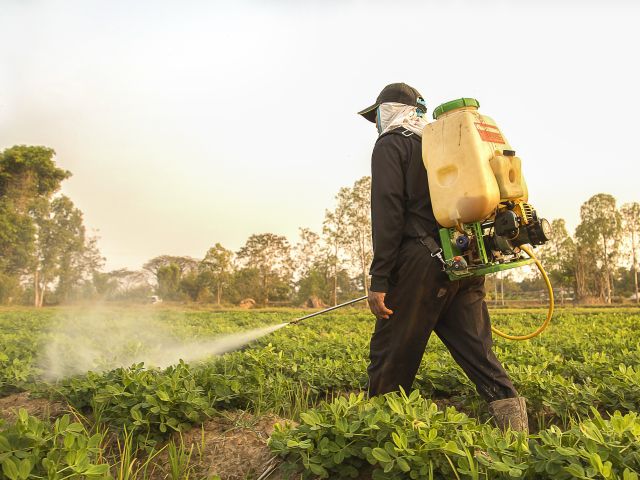
SACRAMENTO – Almost 40% of non-organic fruits and vegetables grown in California – which supplies more than half the nation’s produce – had residues of pesticides that are “forever chemicals” known as PFAS, a new Environmental Working Group analysis finds.
Out of 930 samples of 78 types of non-organic California-grown fruits and vegetables tested, 348 samples, or 37%, had traces of PFAS pesticides, based on state testing data EWG reviewed.
Within those 78 produce categories, 40 individual types of fruits and vegetables, or 51% of the different categories, had some residue of PFAS pesticides, the analysis finds.
California grows more than half of the fruits and vegetables consumed in the U.S., meaning what happens in its fields doesn’t stay in California but lands on dinner plates nationwide.
More than 90% of nectarines, plums and peaches sampled carried fludioxonil, a PFAS pesticide and fungicide. The European Food Safety Authority considers fludioxonil an endocrine-disrupting chemical that harms the reproductive system in rats.
Some PFAS have been found to be highly toxic even at low doses, linked to immune suppression, cancer and reproductive and developmental harm. These forever chemicals are already known to have contaminated drinking water for millions of Americans. Their presence on California-grown produce shows the pervasive spread of PFAS in the environment, and it’s another way that people are exposed to the chemicals.
“Many consumers associate PFAS exposure with industrial sources or consumer products like Teflon-lined pots and pans,” said Bernadette Del Chiaro, EWG’s senior vice president for California.
“At a time when Americans are demanding a healthier food system, we’re finding that core staples of a healthy diet are contaminated with chemicals linked to serious health harms.
“This report reveals a glaring hole in pesticide oversight – one that demands immediate regulatory action from both California and the federal government,” added Del Chiaro.
PFAS pesticides warrant far greater regulatory and scientific scrutiny, including more rigorous toxicity assessments by the federal Environmental Protection Agency and the California Department of Pesticide Regulation, and a reconsideration of their use.
The findings also build on another recent EWG report that found California farmers apply 2.5 million pounds of PFAS pesticides annually across 58 counties on average, raising additional concerns about soil and water contamination. In 2023, 785 different PFAS pesticide products were applied in the state, EWG found.
Additional findings
For the analysis, EWG scientists examined 2023 pesticide residue data collected by the California Department of Pesticide Regulation.
Across the 78 non-organic, or conventionally grown, produce types sampled, a total of 17 different PFAS pesticides were detected on 40 individual types of fruits and vegetables.
Strawberries carried the greatest variety of PFAS pesticides of any crop tested – 10 individual PFAS pesticides were detected – consistent with their longstanding status as one of the most heavily pesticide-treated crops in the country. Strawberries also rank among California's most valuable crops, with cash receipts of $3 billion in 2023.
Grapes and cherries showed contamination rates of 80% or higher, frequently carrying four or more different PFAS pesticides on individual samples. Grapes are California's most valuable crop, generating $6.5 billion in 2023.
Other significantly affected crops include spinach, blueberries and lemons. Many of these regularly appear on EWG's annual Dirty Dozen™ list – the fruits and vegetables with the highest overall pesticide residues in EWG’s Shoppers’ Guide to Pesticides in Produce™.
Explaining PFAS pesticides
PFAS are a group of thousands of human-made chemicals used across a wide range of products, including pesticides. They are called "forever chemicals” because of their extreme environmental persistence: the carbon-fluorine bond at their core is among the strongest in chemistry, making them resistant to breakdown in the environment and in the human body.
Nearly 70 pesticides that are PFAS are registered with the federal EPA, accounting for roughly 14% of all active pesticide ingredients. Fifty-three are registered for use in California, representing 5% of all state-registered active pesticide ingredients – yet they account for 15% of the pesticide residues detected on California-grown produce.
PFAS pesticides also generate trifluoroacetic acid, or TFA, a breakdown product. One study estimated that between 185,000 and 616,000 pounds of TFA could form annually from PFAS pesticides used in California. TFA's presence in the environment and in people is rising, and emerging research raises concerns about its reproductive and immune toxicity.
“PFAS pesticides and their breakdown products persist in our environment long after the harvest,” said Varun Subramaniam, EWG science analyst.
“While California’s produce is a cornerstone of the American diet, the fact that very high percentages of it carry residues of these 'forever chemicals' locks us into a cycle of long-term contamination of our soil, water, wildlife and human bodies,” he added.
A recent EPA analysis noted that 36 PFAS pesticides – 25 of which are registered in California – lack updated developmental and reproductive toxicity tests. Immunotoxicity studies are routinely waived in pesticide applications, despite growing evidence that PFAS chemicals are particularly harmful to the immune system.
Reducing exposure
EWG is not advocating that people stop eating California-grown produce, as fruits and vegetables are an important part of a healthy diet.
Some of the California-grown produce types had no detectable PFAS pesticide residues in the analysis, including sweet potatoes, cauliflower, mushrooms, tomatoes, watermelon, cantaloupe, sweet corn, avocados and summer and winter squash. Several of these routinely appear on the Shopper’s Guide Clean Fifteen™ list of produce with the least pesticide residue.
Some steps can help reduce exposure to PFAS pesticides, including purchasing organic produce when possible because these crops cannot legally be grown using PFAS pesticides. Washing produce, whether organic or conventional, can also help remove some pesticide residue.
“We deserve a food system that nourishes families without exposing them to chemicals that last a lifetime,” said Del Chiaro. “Feeding America should not mean contaminating it.”
Consumers can also consult EWG's Shopper's Guide to Pesticides in Produce and EWG's Guide to Washing Produce for additional guidance.
###
The Environmental Working Group (EWG) is a nonprofit, non-partisan organization that empowers people to live healthier lives in a healthier environment. Through research, advocacy and unique education tools, EWG drives consumer choice and civic action.