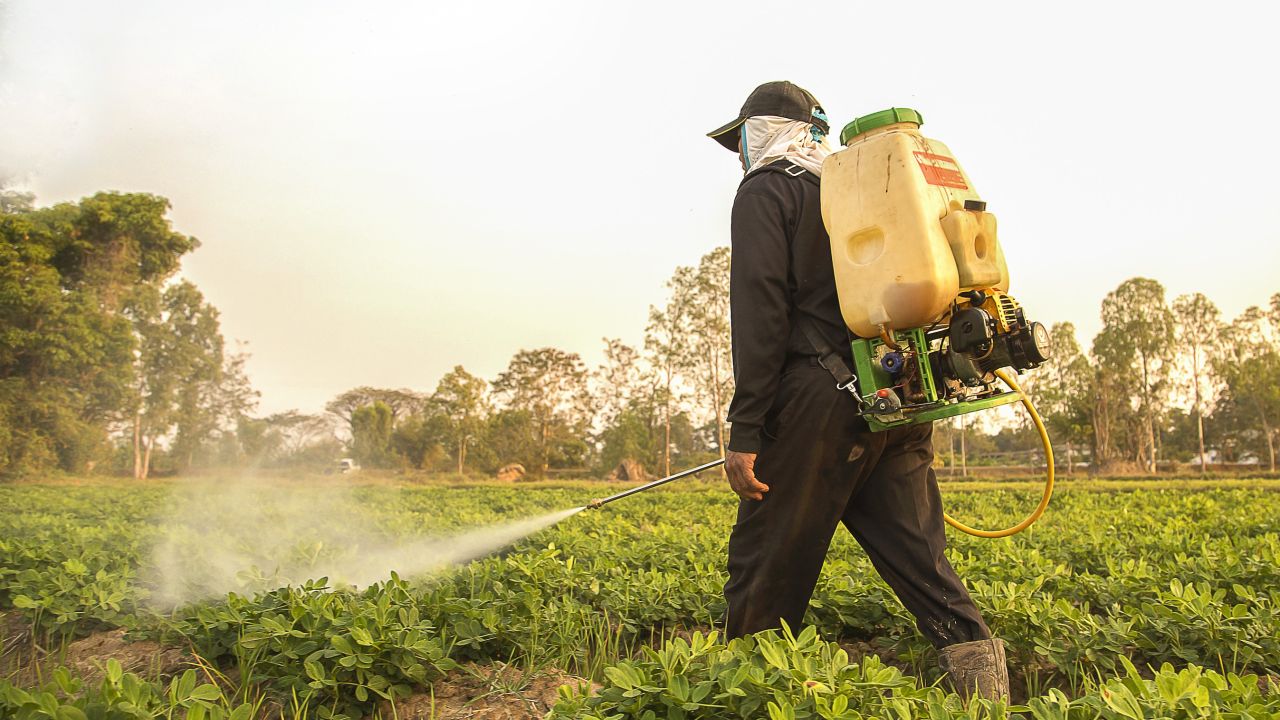
Paraquat is a highly toxic agricultural chemical that has been sprayed on fields for decades. Its value as a herbicide was discovered in 1955. It was introduced for commercial use in 1962 and the Environmental Protection Agency classified it as a “restricted-use pesticide” in 1978.
For years, it has been one of the most prevalent pesticides in U.S. agriculture. Its application skyrocketed in the 2010s. More than 70 countries have banned paraquat use due to its acute and chronic health risks – it’s time for the EPA and states to ban it.
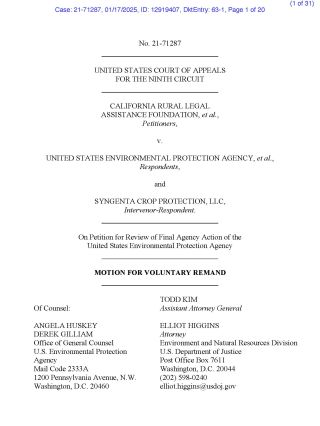
Research and studies available to the public, along with well-documented federal actions – and inactions – detail more than 60 years of government failure to protect the public from the dangers of the toxic pesticide paraquat. Exposure to the chemical is linked to greater risk of developing Parkinson’s disease and other serious health harms.
Pre-1980
1980s
Scientific evidence of harm builds
By the mid-1980s, the EPA has access to recent peer-reviewed science connecting paraquat to Parkinson’s disease. The EPA opens – then closes – a formal review.
1985
Scientists publish a landmark study in Science showing how paraquat structurally resembles MPTP, a compound known to cause Parkinson’s disease. The study’s hypothesis: Paraquat, like MPTP, may damage dopamine-producing neurons. This peer-reviewed finding is available to the EPA.

1987
The EPA scrutinizes paraquat’s safety, noting it as a possible human carcinogen. In the years that follow, independent studies further link paraquat exposure to Parkinson’s, a risk that the agency’s review never examined.
1990s
Evidence accumulates
Multiple peer-reviewed epidemiological studies in the public domain show elevated Parkinson’s risk in populations exposed to paraquat. The EPA re-registers paraquat in 1997 without fully addressing this evidence.
1997
The EPA approves continued use of paraquat. Despite referring to neurotoxicity in the final published decision, the agency says it lacks enough evidence to establish a link between paraquat and Parkinson’s.
1999-2010
Increasingly robust independent and federally backed science proliferates linking paraquat to Parkinson’s disease and supporting severe restrictions or bans on paraquat.
2007
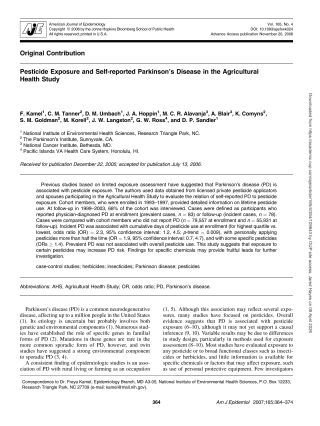
A federally funded study drawing on the National Institutes for Health Agricultural Health Study, a prospective cohort of over 84,000 licensed pesticide applicators, finds paraquat use is associated with higher prevalence of Parkinson’s disease. The study is co-sponsored by the EPA and the agency has direct access to the findings.
2007
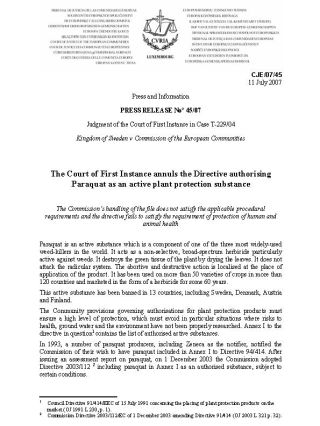
The European Union revokes paraquat registrations. Syngenta, which makes paraquat, declines to resubmit for EU registration.
2011-2019
EPA’s new review stalls
In 2011, the EPA opened its current registration review cycle for paraquat. During the following decade, more peer-reviewed studies emerge. These studies include findings from the NIH’s own Agricultural Health Study.
The EPA’s review stretches nearly a decade before producing an interim decision, in 2021.
2011
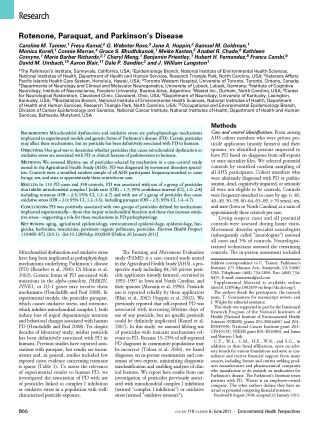
The findings based on the NIH Agricultural Health Study finds paraquat applicators are 2.5 times more likely to develop Parkinson’s than non-users. This U.S. government-funded science is available to the EPA.
2013
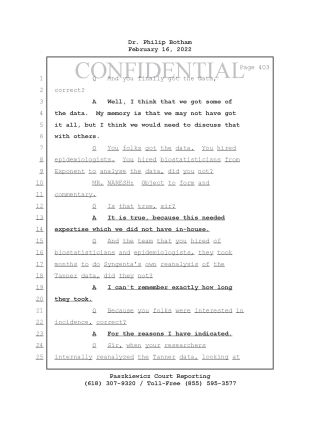
Paraquat manufacturer Syngenta conducts an internal study confirming previous NIH findings of a 250% increase in incidences of Parkinson’s disease among workers using it.
2020-present
A decade of review yields an interim decision and then a retraction.
2025
The EPA’s preliminary analysis of industry data suggests uncertainty about paraquat volatilization and the possibility it may travel farther than previously understood.
2025
The EPA withdraws its interim registration decision for paraquat and calls for more research, effectively restarting a review already lasting a decade. Paraquat remains on the market.