In a page straight out of the industry playbook, a powerful group of U.S. food companies has funded a “study” claiming consumers will pay more if harmful chemicals are labeled or banned.
The industry front group, which represents food giants Nestlé and General Mills, among many others, is also backing other efforts to quash states’ ability to enact stricter food chemical laws.
The Policy Navigation Group, a lobbying and consulting firm whose clients include Dow Chemical and Snack International, published the so-called study. It says food chemical laws in Louisiana, Texas and West Virginia would increase household grocery spending by 12%, or $860, per year.
Louisiana and Texas enacted laws requiring a simple label or QR code be added to a food products packaging if it includes select ingredients of concern, such as certain artificial dyes and preservatives. West Virginia’s law bans food products containing potentially harmful ingredients like propylparaben, Red Dye No. 3, Red Dye No. 40 and Yellow Dye No. 5 from being sold in the state.
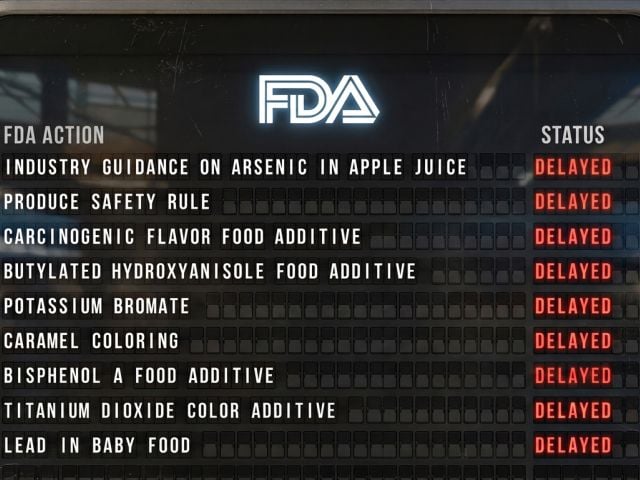
Federal regulatory failures have driven dozens of states to introduce similar laws targeting dyes, additives and other ingredients of concern.
But the study has serious flaws. From faulty data to bad math and poor logic, scrutinizing the claims makes clear they don’t add up.
Flawed grocery price analysis
The study uses highly selective examples, false assumptions and outdated models to drive up the cost estimates.
The study’s central assumption is that consumers who see a warning label on food will waste valuable time searching for an alternative that is more expensive. That’s because the study’s authors looked at only a handful of selected retailers who possibly charge more for products with fewer ingredients of concern.
But that’s not how most Americans actually shop.
Many major grocery chains, including Kroger, Publix, ShopRite and Wegmans, already offer affordable store-brand products that are free of many of the chemicals states are targeting with new food safety laws.
ShopRite, for instance, designed its Wholesome Pantry store brand to be free of artificial additives at competitive prices.
The study largely fails to account for these affordable, available alternatives – a limitation the researchers themselves acknowledge, noting that their focus on particular retailers likely led them to overlook some products and introduce bias in their results.
Texas, where H-E-B dominates the grocery business, is a heavy focus of the study. Under market pressure, H-E-B has already removed more than 175 synthetic ingredients from its store-brand line. That’s most of the ingredients targeted by Texas’ food chemical labeling law.
The study didn’t disclose the products and brands it analyzed. But its retailer of choice, Amazon, also owns Whole Foods, so it’s possible many of the pricier alternatives the study identified were Whole Foods products, not the kind of everyday substitutes most shoppers reach for.
According to a separate food industry report from February, two-thirds of all grocery retailers are reformulating brands to meet consumers’ desire for cleaner products. This includes removing artificial dyes and additives while maintaining affordability.
Faulty math skews study's outcomes
The study’s flaws don’t stop there.
Most significantly, it claims to be a cost-benefit analysis yet it fails to include the benefits of food chemical labels. This is not a minor methodological oversight but a fundamental failure.
Lower consumer exposure to chemicals of concern would benefit public health, yielding significant healthcare savings. Increased consumption of ultra-processed food, or UPF, is linked to higher rates of obesity, cardiovascular disease, cancer and diabetes, dementia and reproductive harm.
And the study’s calculations included the 14% of consumers who said they would ignore warning labels. This inflates estimates in consumer spending by assuming cost increases among consumers whose behavior would not actually change.
It also relied on consumer behavior data that is more than 16 years old, a limitation the researchers themselves flagged as a source of unknown bias.
Rather than use the lowest available prices for label-free alternatives, as a budget-conscious shopper would likely do, the study used average prices, further overstating the real cost to consumers.
Further, industry representatives and lawmakers sympathetic to them have misused the results to claim that labeling laws would increase by 12% the prices we see on store shelves. The study doesn’t predict that individual grocery items will get more expensive. It actually – and inaccurately – predicts some people will choose to buy more expensive groceries to avoid ingredients of concern. Those are not the same thing.
Helping shoppers make more informed choices is a public health benefit, not a burden. But the study frames labeling requirements as financial harm only.
Real-world effects of changing food labels
Faulty studies and overinflated price claims are tired industry responses to requests for greater food ingredient transparency.
In 2022, a federal rule took effect requiring labels on products made with genetically modified ingredients. Industry-funded studies predicted major price increases when products made with GMO ingredients were required to bear labels.
But the new labels didn’t drive prices up. Many brands simply chose to include the new symbol on their existing labels while other household staples like Cheerios and Grape Nuts were reformulated at no extra cost to consumers.
Consumer Reports found similar industry-funded studies overstated the costs of GMO labeling by nearly a factor of 10. The most realistic industry estimate was around $66 per family of four per year, compared to the original estimate of nearly $500, and even that lower figure was likely inflated.
Food companies update their labels regularly for seasonal promotions and rebranding, without consumers switching to pricier products. Ingredient disclosure labels would be no different.
A label change would cost a company as little as $205, an amount too small to show up on store shelves, according to the Agriculture Department in 2024.
Clearer labels mean more confident consumers
The study’s authors are correct about one thing: Shoppers’ time is valuable.
Right now, consumers who want to make better food purchases have to read fine-print ingredient lists on every product. Clear labels designed to identify chemicals of concern make it easier and faster for them.
While states push for better public health protections, EWG has tools to help you shop with confidence.
At home, consumers can check EWG’s Dirty Dozen Guide to Food Chemicals, which highlights top food chemicals to avoid due to health and safety concerns.
For more guidance, search EWG’s Food Scores, which provides ratings for more than 150,000 foods and drinks based on nutrition, ingredients and processing. Food Scores also flags unhealthy UPF and can help you identify alternatives.
Or if you’re on the go, EWG’s Healthy Living app puts that information at your fingertips while you shop.