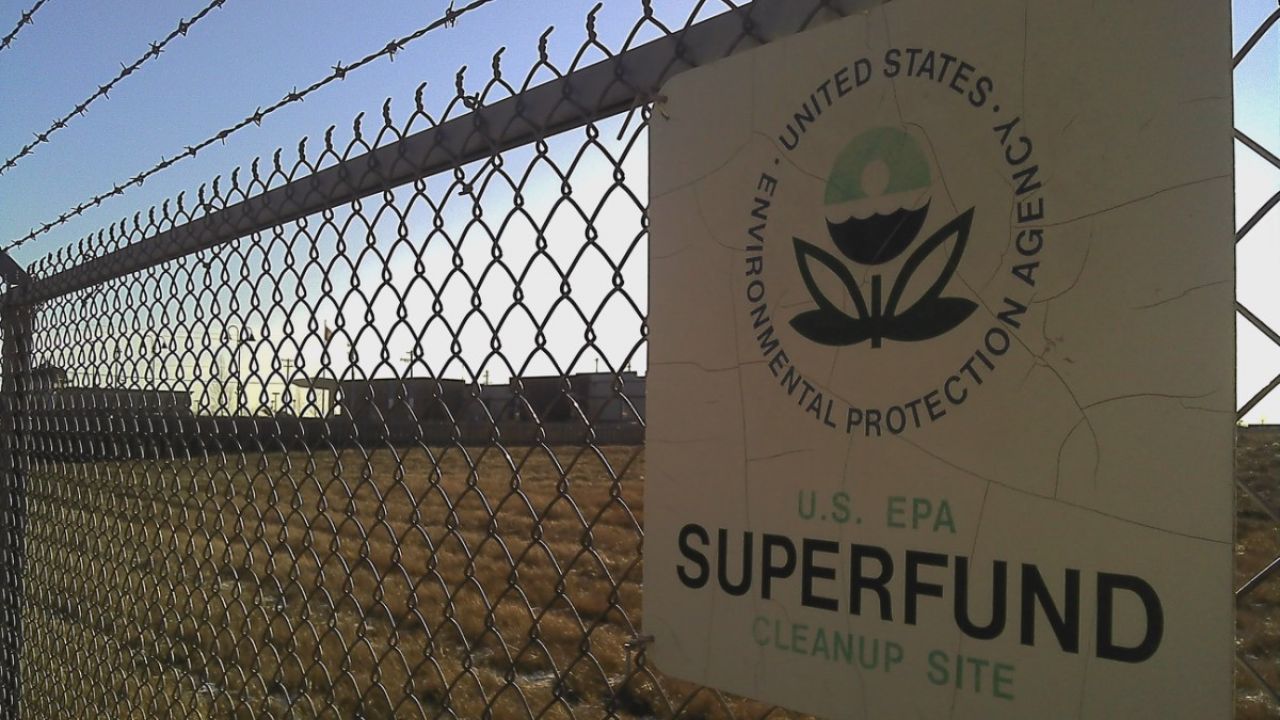
Results from new Department of Defense drinking water tests seem to contradict claims by the Environmental Protection Agency saying that 15 military bases designated as EPA Superfund sites due to high levels of hazardous chemical contamination have “human exposure under control.”
The EPA maintains that the amount of chemicals on the bases no longer poses a risk to human health, yet DOD test results say otherwise. Tap water testing near 15 military sites finds the toxic “forever chemicals” known as PFAS at levels that raise concern about potential health harms.
The apparent disagreement between agencies emerges against a backdrop of uncertainty about the future of federal limits for toxic chemicals like PFAS.
Bases in Arizona, California, Florida, New Jersey and Washington, among others, have all reported PFAS in nearby drinking water wells above the federal standards.
Questionable health risk assessment
The contradiction between the two agencies raises urgent concerns about how the EPA assesses health risks at some of the nation’s most polluted areas, known as Superfund sites, as well as casts doubt on the likelihood and duration of cleanup at these sites.
PFAS contaminates the off-base drinking water at 15 military Superfund sites. These highly polluted areas have been targeted for cleanup by the EPA for other toxic chemicals. However, the EPA appears not to have taken PFAS fully into account yet.
The contradiction also calls into question whether communities near these installations are unknowingly drinking contaminated water as a result of stalled cleanup efforts.
Legally permitted levels
The levels of PFAS at these sites exceed current federal standards for PFOA, PFOS, PFHxS and PFNA, according to Pentagon tests.
The EPA may roll back the PFHxS and PFNA standards, while the DOD says that, for now, it will clean up sites to the existing standards.
The federal limits are known as maximum contaminant levels, or MCLs. They represent the highest amount of a chemical legally allowed in drinking water. An MCL standard is based on the health risks of PFAS exposure and the public health benefits associated with lower PFAS levels.
The EPA’s official public reports show that human health exposure from hazardous substances is “under control” at these 15 sites. The designation of a Superfund site as “under control” signals that the EPA has determined the site is no longer a source of toxic chemical exposure.
Therefore, the designation can reduce the agency’s urgency and prolong cleanup projects, which sends a message to the community that there is no longer a risk of exposure.
Despite the DOD test results, the EPA has not yet updated its records for the 15 military Superfund sites to reflect that human health exposure to PFAS is not, in fact, entirely under control. The threat remains. Civilian wells continue to receive PFAS-contaminated water, leaving many residents living near the sites still exposed to forever chemicals in their tap water.
In a rare move, the EPA recently updated its assessment of another site, the Wright-Patterson Air Force Base in Ohio, officially stating that human exposure and groundwater migration are no longer “under control” due to the presence of PFAS. Although this is the only known case of a change in status tied to PFAS, there may be others.
The military has provided bottled water or tap water filters to households near the bases, although only at a select number of the locations, not all 15.
PFAS remain near sites
The groundwater beneath homes close to these 15 military bases is still contaminated with PFAS, presenting a continued risk of exposure for well owners as well as additional expenses for well owners who have installed filtration. When the EPA updates the Superfund status to indicate that human health exposure is no longer under control, expedited cleanup actions are typically taken to address the problem.
Without the change in status, well owners and neighboring communities will remain in limbo because of the delay.
Other military Superfund sites may also be misclassified as having human exposure under control, even if there are elevated levels of forever chemicals in off-base wells.
However, we don’t know the extent of off-base exposure. More than 600 bases have reported on-site PFAS contamination, but the vast majority have not tested surrounding wells. As the military tests more locations, new installations and communities will likely be added to this list.
Military Superfund sites with ‘human exposure under control,’ despite PFAS in tap water
| Type of PFAS detected | Water test result (in parts per trillion) | Date of sample |
| Luke Air Force Base – Glendale, - Ariz. | ||
| PFOS | 28.3 | 3/31/2022 |
| PFOA | 6 | 3/31/2022 |
| March Air Force Base – Riverside, Calif. | ||
| PFOS | 390 | 9/7/2023 |
| PFOA | 110 | 4/13/2022 |
| PFHxS | 310 | 2/1/2024 |
| George Air Force Base – Victorville, Calif. | ||
| PFOS | 23.2 | 7/27/2023 |
| PFOA | 143 | 7/27/2023 |
| PFHxS | 846 | 7/27/2023 |
| PFNA | 18 | 10/26/2023 |
| Homestead Air Force Base – Homestead, Fla. | ||
| PFOS | 153 | 3/30/2023 |
| PFOA | 54 | 4/24/2024 |
| PFHxS | 130 | 2/21/2022 |
| PFNA | 36 | 4/24/2024 |
| Whiting Naval Air Station – Milton, Fla. | ||
| PFOS | 130 | 12/8/2021 |
| PFOA | 206 | 8/25/2021 |
| PFHxS | 129 | 8/25/2021 |
| Brunswick Naval Air Station – Brunswick, Maine | ||
| PFOS | 10.6 | 11/10/2021 |
| Loring Air Force Base – Limestone, Maine | ||
| PFOS | 168 | 10/24/2021 |
| PFOA | 13.5 | 10/24/2021 |
| PFHxS | 72.5 | 10/24/2021 |
| Otis Air National Guard Base/Camp Edwards – Falmouth, Mass. | ||
| PFOS | 18 | 3/6/2024 |
| PFOA | 11 | 1/9/2022 |
| Pease Air Force Base – Portsmouth, N.H. | ||
| PFOS | 860 | 2/21/2023 |
| PFOA | 140 | 6/12/2024 |
| PFHxS | 430 | 3/21/2023 |
| Naval Air Engineering Center (part of Joint Base McGuire-Dix-Lakehurst) – Lakehurst, N.J. | ||
| PFOS | 1,900 | 9/7/2022 |
| PFOA | 57 | 9/7/2022 |
| PFHxS | 670 | 9/7/2022 |
| Fort Dix (part of Joint Base McGuire-Dix-Lakehurst) – Pemberton Township, N.J. | ||
| PFOS | 1,900 | 9/7/2022 |
| PFOA | 57 | 9/7/2022 |
| PFHxS | 670 | 9/7/2022 |
| Cherry Point Marine Corps Air Station – Havelock - N.C. | ||
| PFOS | 50.2 | 7/13/2023 |
| PFOA | 12.6 | 7/13/2023 |
| Tinker Air Force Base – Oklahoma City, Okla. | ||
| PFOS | 141 | 3/17/2025 |
| PFOA | 61 | 6/14/2022 |
| PFHxS | 560 | 4/3/2024 |
| Bremerton Naval Base – Bremerton, Wash. | ||
| PFOS | 25.9 | 7/21/2023 |
| PFOA | 390 | 9/25/2023 |
| PFHxS | 18.9 | 7/21/2023 |
| Naval Air Station, Whidbey Island (Seaplane Base) – Whidbey Island, Wash. | ||
| PFOS | 4,720 | 10/6/2021 |
| PFOA | 523 | 5/19/2023 |
| PFHxS | 1,150 | 10/6/2021 |
Status of landmark protections
The EPA’s landmark standards for six PFAS in tap water, the MCLs which were finalized last year, are under threat. Some polluters and industry groups are pushing to dismantle these hard-won protections as part of a broader effort to gut environmental safeguards, and the agency has announced its intent to reconsider some of the standards.
The standards include first-time federal limits on the notorious forever chemicals PFOA and PFOS of 4 parts per trillion. The agency also set limits on three other types of PFAS, in addition to a mixture of these plus the forever chemical PFBS.
The agency’s plans for reconsidering the standards include rolling back limits for four currently regulated PFAS: PFHxS, PFNA, HFPO-DA (GenX), and the PFBS mixture. If finalized, this would be a win for PFAS polluters and a serious setback for consumers, who, if in states without their own standards, would continue to be exposed to toxic forever chemicals.
In 2024, the EPA designated PFOS and PFOA as hazardous substances under the Superfund law, formally called the Comprehensive Environmental Response, Compensation, and Liability Act. Industry groups are now seeking to overturn the agency’s designation, and the EPA has until August 18 to respond to the legal challenge.
Under the Superfund law, site cleanup managers must follow federal drinking water standards to assess the location and extent of cleanup to determine whether people are still being exposed to toxic chemicals.
Ongoing risks for residents
PFAS are linked to a number of serious health harms, including impaired immune system response, liver and kidney damage, hormone disruption, developmental and reproductive issues, and several types of cancer.
If the EPA rolls back the drinking water standards and hazardous substance designations, communities near these and many other military installations will remain contaminated, leaving exposed residents without resources to protect themselves.
The Pentagon has said that it will comply with the current EPA standards to address PFAS contamination at military sites. If the EPA cancels its limits for certain PFAS, the DOD could argue it is no longer legally obligated to clean up bases to meet those standards, a move that could halt or scale back cleanup efforts.
The Pentagon might also deny nearby communities access to clean drinking water by failing to provide bottled water or filtration, leaving thousands of civilians at continued risk of exposure to PFAS from nearby bases. This military response would threaten the health of residents in surrounding regions.
Slow cleanup progress is nothing new to communities near military installations with documented PFAS contamination. Despite knowing the health risks of PFAS for decades, the Defense Department has made few strides in cleaning up these chemicals. No site has yet to reach the formal cleanup stage of the Superfund process.
Without updated EPA reports reflecting the true scope of PFAS exposure at military sites, nearby communities will stay uninformed and unable to take action to protect themselves from continued exposure. These civilians are left defenseless against toxic threats.