Update appended
It's time to ban the toxic weedkiller paraquat – a step more than 70 other countries have taken because of its threats to human health. Paraquat has been linked to Parkinson’s disease, non-Hodgkin lymphoma, childhood leukemia and more.
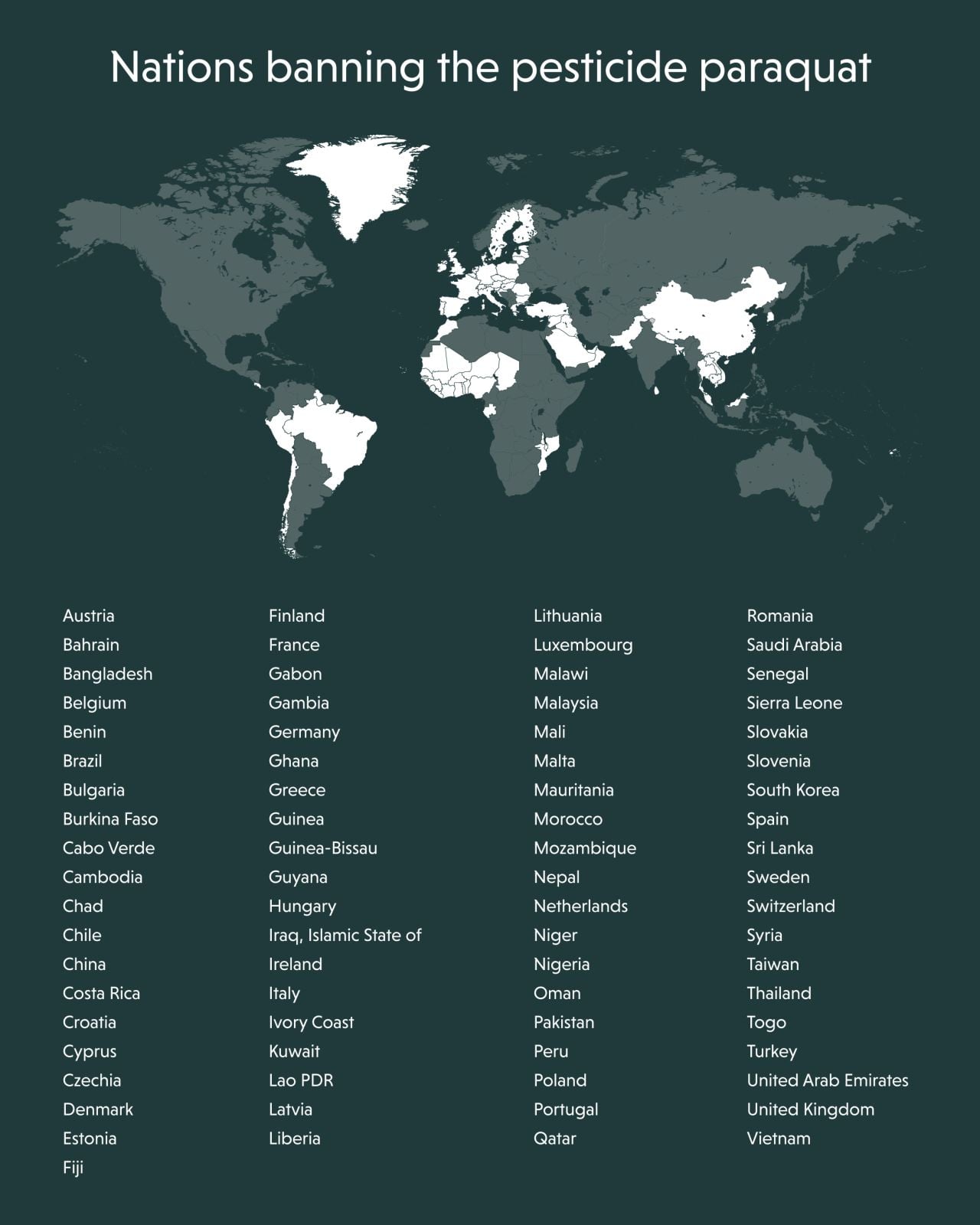
The European Union's ban applies to all 27 member countries.
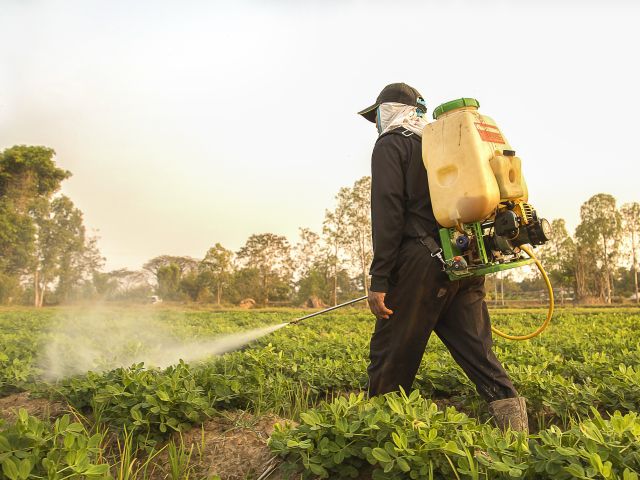
While the Environmental Protection Agency says paraquat is too toxic for use on U.S. golf courses, it still allows use of the herbicide on farms. This threatens the health of the people who apply it, other farmworkers and those who live or work near crop fields where it’s used.
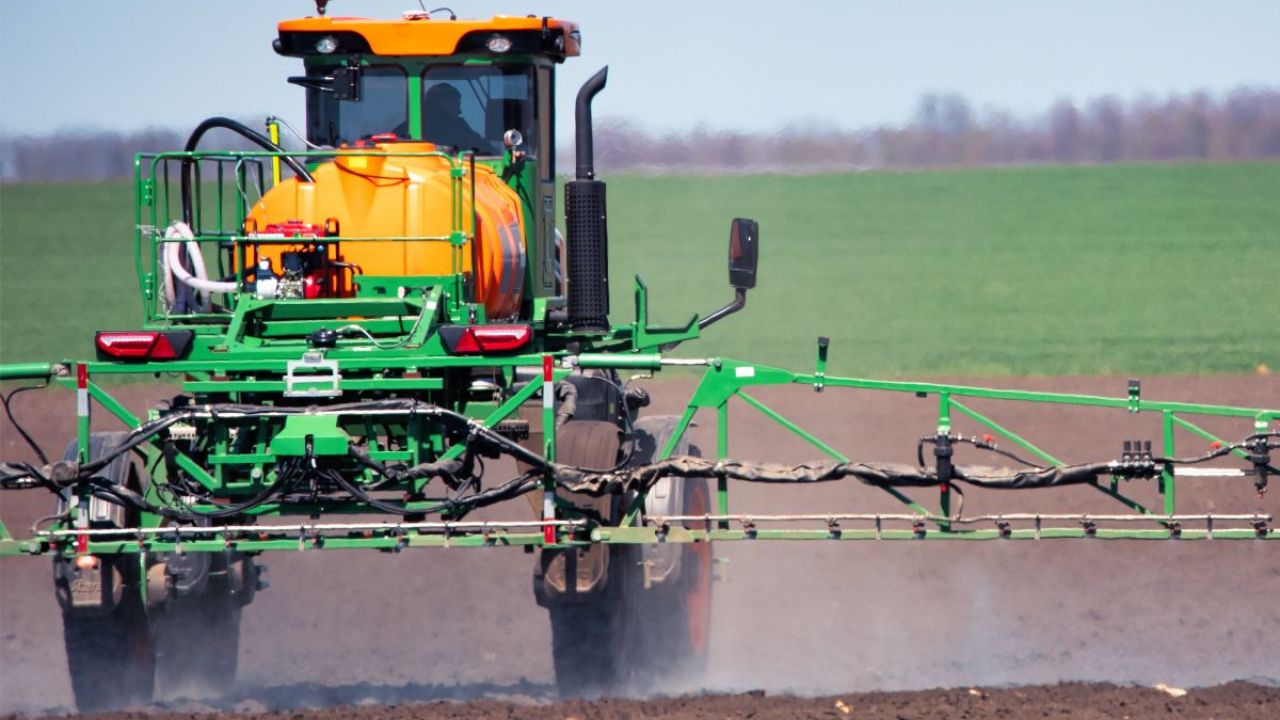
Paraquat is primarily used to clear fields before farmers plant corn, soybeans, cotton, almonds, peanuts, wine grapes and other crops. While much of the paraquat applied winds up in the soil for years, the chemical can also drift through the air or linger in dust. A recent EPA review found paraquat can drift further than was previously thought.
This pesticide drift creates health concerns. Recent studies show workers and residents in areas with the highest use of the chemical face greater risk of Parkinson’s disease.
Syngenta makes paraquat in the United Kingdom. The Swiss-based company, which was acquired by a Chinese state-owned chemical conglomerate, has long understood the chemical’s health risks. But it spent decades hiding this knowledge from the public and the EPA. Ironically, Chinese, U.K. and Swiss farmers are prohibited by their respective governments from using paraquat.
But the weedkiller isn’t prohibited in the U.S. Ingesting even tiny amounts of paraquat can be lethal. Reports from America’s Poison Centers show hundreds of accidental and intentional poisonings linked to paraquat ingestion in recent years, with at least one death a year.
Parkinson’s and paraquat
Chronic exposure to paraquat increases the risk of developing Parkinson’s disease by reducing the number of neurons that produce dopamine in certain parts of the brain. Researchers have used paraquat exposure in animals to study Parkinson’s disease.
A study using data from the National Institutes of Health found people who sprayed paraquat were more than twice as likely to develop Parkinson’s disease as those who applied other pesticides. And a meta-analysis of 13 studies found a 64 percent increase in the likelihood of developing Parkinson’s disease from paraquat exposure.
Most recently, findings from researchers at UCLA show paraquat sprayed within 500 meters, or about 1,640 feet, of where people lived and worked could more than double a person’s odds of developing Parkinson’s.
Other health problems linked to paraquat include thyroid disease and cancer, impaired kidney function, childhood leukemia and non-Hodgkin lymphoma.
EPA ignores the evidence
The EPA is ignoring how people working on farms or living nearby can be exposed to paraquat – ignoring direct drift of paraquat through the air and underestimating how much can be resuspended in dust. The agency assumes that people spraying paraquat will follow instructions designed to minimize drift and harm.
But studies show “off label” use of pesticides is common, with virtually no enforcement.
Two recent investigations in California and Pennsylvania found that paraquat is not always being used according to the instructions on the label.
States shouldn’t wait for the agency to act. Federal pesticide law sets a floor, not a ceiling. To protect their citizens and public health, state and local governments have the power to enact measures such as a ban on paraquat.
Editor's note: This article has been updated with new information on paraquat investigations.