HARRISBURG, Pa. – A bipartisan group of Pennsylvania lawmakers joined farmers and public health advocates at the Capitol this week to call for swift passage of House Bill 1135 and Senate Bill 1158. The legislation would prohibit the use of the highly toxic herbicide paraquat statewide and protect Pennsylvanians from future exposure to the chemical.
The House bill, introduced last year by state Reps. Natalie Mihalek (R-Allegheny/Washington) and Melissa Shusterman (D-Chester County), would amend the Pennsylvania Pesticide Control Act of 1973 to ban all uses of paraquat across the commonwealth, starting in 2027.
If enacted, it would bring the Keystone State in line with more than 70 countries that have already outlawed the weedkiller, including China, Brazil and the European Union.
This week, companion legislation was introduced in the state Senate by Sens. Devlin Robinson (R-37) and Nick Miller (D-14), who joined their House colleagues at the event at the Capitol.
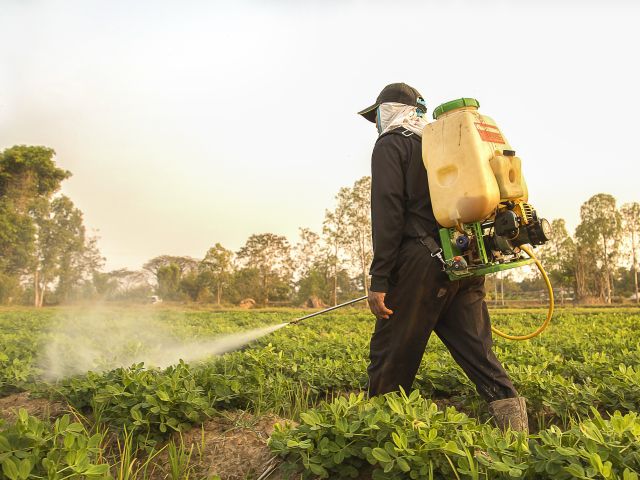
Research shows that people who work in or live near fields where paraquat is sprayed face significantly higher risks of developing Parkinson’s disease, with some studies showing the risk may double. One study, using data from the National Institutes of Health, found that people who applied paraquat on farm fields were twice as likely to develop Parkinson’s disease as those who handled other agricultural chemicals.
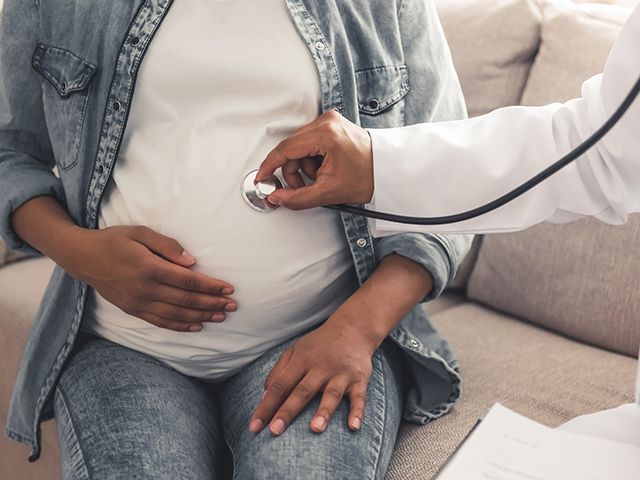
Paraquat exposure has also been associated with non-Hodgkin lymphoma, kidney cancer, thyroid disorders and – particularly in rural communities – a higher risk of childhood leukemia linked to prenatal exposure.
“Paraquat is so toxic that even small exposures can be deadly, yet it remains legal in the United States while much of the world has already banned the notorious herbicide,” said Geoff Horsfield, legislative director at the Environmental Working Group.
“The House and Senate bills are commonsense steps to protect farmers, farmworkers and rural communities from a chemical that science has clearly shown poses unacceptable risks,” he added.
“If links to cancer and Parkinson's aren't enough to drive change in Washington D.C., then we have to take action here in Pennsylvania,” Mihalek said. "If my bill were to become law, the Commonwealth would be blazing a path for 49 other states to also prohibit paraquat from being used.”
“Over 70 countries no longer permit the use of paraquat,” said Shusterman. “It’s embarrassing that the U.S. is so far behind. We have enough data, we have enough research, and we have enough knowledge. With the federal government unwilling to move to protect us, I believe that now is the time for states to act.”
“The dangers of paraquat to human health are well established through numerous scientific studies; more than 70 countries have banned its use, including the entire EU and China, where paraquat is made,” said Robinson.
“It’s very telling that the country that produces the product won’t even allow its own citizens to use or be exposed to it. Syngenta, the company that manufactures paraquat, has already paid millions in settlements to those it has harmed with this unsafe pesticide,” he added.
“Bottom line – exposure to paraquat is extremely hazardous and sometimes even fatal. This is why I am proud to partner with my colleagues on both sides of the aisle, Reps. Natalie Mihalek and Melissa Shusterman, the Parkinson Foundation Western Pennsylvania, The Parkinson Council, and many other passionate advocates to support legislation to protect our farmers, agriculture workers, and Pennsylvanians from this dangerous pesticide,” said Robinson.
The press conference coincided with a day of advocacy at the Capitol, as farmers, medical professionals and leaders from public health organizations met with lawmakers to urge support for the legislation and immediate action to advance both bills.
###
The Environmental Working Group (EWG) is a nonprofit, non-partisan organization that empowers people to live healthier lives in a healthier environment. Through research, advocacy and unique education tools, EWG drives consumer choice and civic action.