What does it look like to stand on principle when everyone around you is playing it safe? In today’s episode, EWG co-Founder and President Ken Cook sits down with Rina Shah, a political commentator, GOP strategist, geopolitical risk advisor and one of the most recognized Republican voices on national television.
As a former senior Capitol Hill advisor and two-time presidential campaign chief spokesperson, Shah spent years appearing on CNN, MSNBC, Fox News, and nearly every major network covering politics and global affairs. But long before the television appearances and the op-eds, she was the daughter of a Ugandan refugee family that lost everything under the brutal dictatorship of Idi Amin. That experience shaped everything about how she sees leadership, power and democracy.
Shah shares her family's remarkable story of survival, why she recognized the echoes of authoritarianism in President Donald Trump long before most were willing to say it out loud, and what it cost her to become the first elected Republican delegate to publicly challenge Trump’s nomination in 2016. A decade later, she’s still a Republican, still speaking out, and still refusing to let the party she loves be defined by fear and silence.
Disclaimer: This transcript was compiled using software and may include typographical errors.
Ken: I'm Ken Cook and I'm having another episode. And this is what I'm really excited about. This is a friend I've made over the internets. Over the past year and a half or so. And um, I have followed Rina Shah in her public persona, which is on just about every network television program I can think of that deals with politics, global affairs. The world of Washington. The, the world of GOP Democratic Party conflict.
You are constantly sought for your input and your perspective and just having spent, for the first time, you know, an hour or so together, uh, in person, I can see why. And so I'm tickled you were able to make some time and, and come on and talk to me, Rina. We've got
Rina: I had to make time, for a digital friend. We had to make it IRL, so here we are.
Ken: I'm so glad you did. Thank you. And, and there's so much to talk about. You know, one of the things that we chatted about just before the camera started rolling was sometimes I've felt like the Democratic party has left me.
Sometimes I felt like I left it. I've often identified as a bipartisan, nonpartisan in my professional life because I felt that was the best way to, to go about it. As well as abiding by the law and being nonpartisan. It just felt right. And for years, some of the best advice, some of the best support we got for environmental initiatives came from Congressional Republicans who had a conservation mindset who believed that we needed to protect nature because conserving things for the long term was a value that they held dear and so forth.
And even today, we, we never initiate a policy idea that we don't at least try to recruit Republican interest in or talk through with Republicans, both in California and here in in DC. And we were talking beforehand about how much that had changed. And it changed even during the course of your coming of age, right?
Rina: It did.
Ken: You had different plans, then to be someone who raised concerns about. Donald Trump in 2015 or 16.
Rina: And continue to, to this day, warn about Trumpism. Because what I, I think has happened in my journey is I've seen the light. And I, some people find it much earlier, people find it later. For me, I was forced to find it because I went through such a dark moment.
Exactly 10 years ago, I was the first elected delegate to the Republican National Convention to buck Trump and to say that I wanted to fight his nomination. And I did so in a place that was most unusual, but certainly had the most spotlight, which was Fox News. And I didn't expect to, because when I did it, it was just a natural answer to a question.
Ken: Yeah.
Rina: And so that experience taught me that, you know, you think you have friends one minute, and because you've said something, they suddenly don't wanna see you or affiliate with you. And it was a political fight that actually took a legal angle as well, because I was removed from a list of democratically elected delegates to the Republican National Convention, erased by my party.
And so, uh, to my family's credit, they helped me mount a legal fight. And I didn't take it lying down. And in doing so, I was the first challenge to Trump. And, uh, the whole world, the whole nation saw it. And so I still meet people to this day who said, I know who you were. I just never knew your name or what you look like, but I knew you were the first.
I remember I met filmmaker Michael Moore and he said, oh, I already know who you are. And there were people then, because it was the first kind of potential stop to Trump, because what my case signaled is that we could fight him on the floor of the convention and deny him the nomination to the party.
Which ultimately ended up not happening. I started basically the Free The Delegates movement. My case rather did. Other cases followed from, uh, a group of North Carolina delegates and Colorado delegates. And so I'm glad that I inspired people to do the right thing and express publicly what we felt about a man who did not, I feel, felt at the time, was not a Republican, a man who didn't seem to really show any allegiance to, to Republican party principles.
And had a lot of, I think, characteristics about him that gave me pause. Probably prime of which was, he was really somebody that looked like he saw the presidency as a, as a king. He wanted to be king. And I thought, oh, no, no. Because in my family's history, we know what that's like. On my dad's side, we were kicked out after three generations in Uganda by a dictator, by the name of, Idi Amin. And uh, we lost everything and so I grew up with my grandparents.
Ken: Yeah.
Rina: Because they came and lived with my father in the US. The rest of my family all became political refugees to the United Kingdom. But because my father was already here in the United States getting medical training, we were lucky enough, and my dad had really chosen America too.
Ken: Yeah.
Rina: As a young boy growing up in Uganda, he knew he wanted to come to America. He, of course, he could have never predicted that we'd be kicked out after three generations. I have cousins, older cousins of mine who have Ugandan passports as their birth passport. So this is a very recent experience in my family that I have had to see what you know, the result of was. And I've had to live that experience. I always say that dictators cause intergenerational trauma because
Ken: Yeah
Rina: My dad had seven sisters and loads of cousins who all looked up to him and, and many of whom needed him on a monetary level too. So much of my childhood and, and even young adult life was spent seeing that and seeing kind of the shambles of, again, losing everything we had, uh, and what it does just because one man didn't like how successful we were as merchants there in Uganda and he, and he killed many, I mean, it was a genocide.
Ken: Yeah, for sure.
Rina: My grandfather was able to escape a camp, and again, knowing these things, knowing that the madman Ida Amin, wanted to be a dictator, I kind of just knew that anybody who behaves that way is gonna create an America that I wouldn't recognize.
Ken: Had impulses that go in the wrong direction. And just to be clear to everybody you declare still as a Republican do, and it's not, not like you've left the Republican party. Yeah. It's more that under Trump,
Rina: The party’s left me.
Ken: Yeah.
Rina: In a way.
Ken: Yeah.
Rina: In a way. Yeah.
Ken: Yeah. Exactly. Right.
And, and you know, just in our, you know, brief conversation before. I so admire the way you express your values, and they're not all the same as mine. But the one thing that I, that I'm really impressed by is it's sort of the inverse of betrayal, which is, you know, loyalty to principles versus betraying them for the sake of power.
And we talked a lot about that. Of course, this is a town that trades in that. Where you're, you're almost seen as a sucker if you don't know the game and play by it. Right. Uh, what kind of loser would stand up for their principles, instead of get the next job? And, and I'm just thinking you must have been, you know, at, at that point in your career, you would've seen yourself in a Republican party, like the party of the of Bush.
You would've seen yourself maybe going into government rising up in the ranks and, and, and living within the Republican values that you hold dear and serving the country in that way. But that future,
Rina: It's not there that, that's not a reality, right. Yeah. I, I, well, I think I was telling you, all my family, or everybody in my family is a doctor.
My, my husband, my late father, both my brother and my sister. All four of my brother-in-laws and sister-in-laws, everybody has a medical degree. And I just have the greatest utmost respect for that because of course it is, I've seen their, their journeys and their tough journeys. You know, it is not only one of great sacrifice, emotionally and physically, it's a monetary sacrifice. Because going into the medical profession nowadays isn't an instant
Ken: No.
Rina: You know, um, sort of payday. I mean, yes, it's good money, but you gotta really want it. And I, I think I always grappled with what I really wanted and I, I looked back at some point in my, uh, young professional life and, and this was like right after college and I said, what is it I really wanna do?
And I had always loved the American presidency, and now I'm, I have the great pleasure of saying that I've actually served two US presidential campaigns at the highest level. Yeah. I've been a comms director and chief spokesperson for two of them, and they were chaotic and unsuccessful. But they were still full fledged presidential campaigns that allowed me to live outta my suitcase in many, many states, including South Carolina, New Hampshire, Puerto Rico.
I mean, learning all the things that you need to know and yeah, so I had this great life as a political operative when I left Capitol Hill, and I left Capitol Hill only in 2011.
Ken: Yeah
Rina: So I hadn't been a political operative for very long when I did the thing I did in 2016, so 10 years ago, I blew up my own career by bucking President Trump.
And after that, I, I think it's been a recurring question to me. What do I really want? Well, I wanna help people the way that my siblings and my husband and my dad did. And so, uh, to honor my late dad's legacy, we kept all his clinics open and, and it's just been a really great thing to be able to do that.
So, the way I see public service or having a job in government is public service to me. It's a way to change people's lives for the better. And I keep thinking about that. Well, surely there's an opportunity for me to do that again and, and every couple years I get a call from somebody saying, well, you run somewhere.
Ken: Yeah.
Rina: And in this past 10 years, it's been a no. Because I suffered what I suffered 10 years ago. I've lived to tell the tale, which I feel great about, and I was vindicated, of course by the impeachment decisions on Capitol Hill. And you know, I will say, I'm still able to enter the White House. So that is the testament to how America is a beautiful nation in which anything is possible.
Ken: Yeah.
Rina: But I definitely worry about just the impact I could have on, um, my fellow man because I'm, I'm not able to run for something and take on a real role in, uh, in public life that I, I would've wanted prior to 10 years ago.
Ken: Well, I, I mean, just to be clear, again, I think that the role you have in public life is more than impressive now.
Rina: Um, thank you.
Ken: Like I say, I don't, I, I can hardly turn on the television where your, your perspective hasn't been sought by someone and for good reason. Let's talk a little bit about the whole question of how so many people made the opposite decision that you made, Rina. Saw the same things, probably thought very close to the same thing about what they were seeing in Trump.
Rina: Oh yeah.
Ken: And yet they decided that they were going to go along or they were gonna be quiet, or they were going to look the other way. Or, or maybe they thought, and I think this was probably quite common, that they felt like someone needed to serve the interests of the public with a Republican lens and that they could do it.
And if they were in the government or if they were following along, they would get things done that would advance the greater good. Saw maybe Trumpism as more of a sideshow that they could work within. I think that was pretty common in his first term.
Rina: Yeah.
Ken: I think maybe some people were hiding out a little bit and maybe just liking the power and the position, but I think a lot of people really felt like, I gotta stick with this job 'cause someone worse will come in, that will bend to his will and I can — and so that became part of what Trump wanted to get rid of in his second term.
Those RINO Republicans, right. And uncontrolled bureaucrats in the deep state. And so now, how does it all hold together for so many of those people?
And we talked about it before and I think you summarized it and just said it's power.
Rina: Yeah. There's an obsession with power and money once you get here. It's exactly like what you see in the movies. It's disturbing to actually be able to have to, you know, say that that, that it is on that level. The sort of mental, I think acrobatics that have to take place
Ken: Yeah.
Rina: Are kind of mind boggling to me when I see people working through a lot of, what are illogical pathways to an answer under this administration? Because a lot of what this administration puts out, it, it just doesn't make sense.
Ken: Yeah.
Rina: Take for example, the tariffs.
Ken: The tariffs, and we have to, we have to tell everyone. You were one of the name plaintiffs. In the tariff case, then you opposing Trump's tariffs and, um, congratulations on winning at the Supreme Court among many others.
Rina: Yeah. The team definitely, uh, deserves a credit. I was actually named in the amicus brief, so I can't take full credit, but, uh, but def, defending democracy together.
Neal Katyal, uh, Norm Eisen. These are giants. I think if, if you're not following them, uh, you're missing out because they make the most coherent arguments. And I think that's, that's where we're at. You just have to, in the face of this nonsense, you have to sort of very squarely and coherently say, no, this is what's what.
And so that tariff case, the one that I was in the amicus brief for, was, um, with many other Republicans, I must add. Former congresswoman from Virginia, Barbara Comstock. Uh, there were some folks from the Nixon administration, Reagan administration. So you can tell these are long time.
Ken: My people.
Rina: Yes. I mean, I was gonna say, come on now. Experience learned, people who care a lot about principles and values. So yes, you, I have figured that out in our friendship. Ken, you just, you, you seem to understand that at no point does one need to turn their back on what they've been saying all along. No, because then that makes you completely untrustworthy.
And what kinda leader are you then? There have been any many times I've, I've looked at sort of my trajectory and thought, well, is this. I'm a businesswoman now. I have a firm, I get clients, we do geopolitical risk advisory services. These are, I'm selling something to companies. So, uh, a lot of what I'm out there saying could endanger some of their businesses, but that is why I decided to do all of this under non-disclosure agreements.
Ken: Yeah.
Rina: But I had to get creative to save myself. To be able to continue to earn money. That kind of bothers me at the end of the day.
Ken: Yeah.
Rina: I shouldn't. A person that's been a two time senior Capitol Hill advisor and a two time presidential campaign chief spokesperson should not have to worry about where their next job is gonna be.
And so, um, fortunately I've kept my firm running, but, but back to the tariffs case, because I, I wanna bring that together and say, I was a, a, a creature of Congress and why I signed onto this case is because the case hinged entirely on Trump not having the authority to impose these tariffs. That Congress has the actual authority.
Ken: Yeah.
Rina: You know, I know most Americans don't think about Article One. But when you start to kind of, even at the surface level, like start to follow some of these people, you'll see very plainly what is at stake in the, in the Trump era, and it's some of the most decent common stuff. So the fact that we had to do a case for something so simple just really made me livid.
Uh, and, and I was named in the case that was actually Learning Resources, which is a toy company they brought first. And, and so a
Ken: A toy company,?
Rina: I love this toy company, right? Yeah. I bought the toys well before I, they brought this case and so. I noticed their, their toys were pretty good quality. I noticed at times they were not made in the USA, but that's kind of the norm these days.
And um, most millennial moms like me will say most everything we've been buying since we first find out we're pregnant, is made offshore, made in China, made somewhere else and, and it's been really discouraging and I, and I get what the president has been trying to say, make in America, but you can't snap your fingers and do it right away.
Ken: Yeah.
Rina: I am concerned, yes. About what's going into our landfills. I'm concerned about this consumption centric culture. But I don't think the president is concerned about those things.
Ken: No.
Rina: I think he's trying to negotiate better trade deals. He's had plenty of time to do so and he hasn't.
Ken: Yeah.
Rina: So I was glad we were successful with this case.
People say, well, he turned around and said the next day he's gonna issue a 15% global tariff and, and sure he can do that under another temporary order. But even experts are saying that they don't think he has the right to do so.
Ken: It won't hold either.
Rina: Yeah. So I was I, to that end, I was like, we'll fight him anywhere and any time and anyhow.
Yeah, because yeah. He's not doing things that he has the authority to do. That is what we, the American people have the right to do is to stand up against that. And so a lot of this is hard for me to talk about, Ken, to be real honest.
Ken: I, I understand. '
Rina: ‘Cause I'm a bridge builder. I'm not a real fighter where I'm like, yeah, we're gonna get him, we're gonna tear him down.
Ken: We're gonna, we're gonna defeat.
Rina: Yeah. Time to shred this guy, you know? I'm not that type. And I, I guess people would say, well, what kind of political operative were you? Well, probably not a great one, you know? I mean, I, I gave it my all, but I am a lover, not a fighter. I, I care about building bridges and I think it's so obvious to me in this moment we need to do that because we’ve become completely polarized.
Ken: Yeah.
Rina: And uh, the people on the right are just defending nonsense every day of the week in the name of sticking it to the other side.
Ken: Yeah. Yeah. And being loyal to Trump. I noticed the distinction he made with, uh, Erika Kirk, where she said she forgave even the person who shot her husband and, uh, said, you know, spoke about embracing and loving, uh, even the most vile direct enemies, and Trump got up at the same ceremony and said, he likes to hate his.
Rina: Yeah. It's, it's completely bizarre how those kind of people remain around him when he says the kind of things that we teach our children not to say.
Ken: Yeah.
Rina: The kind of things we would never utter in a meeting. We've just allowed our, our, you know, the head of our executive branch, who by the way doesn't recognize that he is co-equal to the legislative branch.
I mean, you can't normalize this. There's not any degree of what he says that I can feel proud of, and I think that's. Real tragic because the American presidency is a place where you genuinely look up to for direction. When the country feels lost, I mean, I was very young on 9/11, but I remember Bush two leading us, George W. Bush
Ken: He rose to the moment
Rina: For what it was, he was able to do that. And there were plenty of times President Obama did too. I, because I think what I, I, we were discussing earlier, right? Is that sense that those guys cared?
Ken: Yeah.
Rina: They showed care. Yeah. Trump actually shows the opposite in so many of his interactions, he's showing you how little he cares.
Ken: Yeah.
Rina: He wants you to know that he's got something more important than that. And, and that is another instance in which I have to wonder what kind of impact is this gonna have on the next generation of Americans? Gen Alpha? I don't know what that's gonna do to their brains about how they see government. Elected office. Do they see that
Ken: Civic discourse?
Rina: Yeah. What is leadership to them? Is leadership just being in the role and then behaving any which way you see fit?
Ken: Yeah.
Rina: That to me is even worse because so much of the work you've done, I love that we connect on this, is that you know you wanna treat things, people around you well, right?
If you're not even treating the people around you, well, are you treating this earth we've inherited? Well, no, I don't think so.
Ken: And I, I came up in a time where some of the best advice I got certainly in Washington to try and get legislation passed or try and build bridges, as you were saying, came from Republicans who would pull you aside and and say, look, here's how to approach some of my members who don't maybe agree with you or even with me.
Try these arguments, see this person first, and if that person agrees. Basic coaching, because the goal was to do something that was good for the conservation of natural resources, the protection of the environment. It doesn't get more conservative than that. You know now so many of those impulses because they run against what Trump says, you know, that windmills cause cancer and we have to keep producing unlimited amounts of coal and oil, uh, because they're all clean and solar panels are dangerous.
All this stuff that he's saying. And then the deregulatory efforts, uh, for climate change and clean water, clean air. I know there are Republicans on Capitol Hill. I know it. Who object to this, but they dare not speak out.
Rina: They don't wanna be primaried, they don't want to be in his cross hairs, because with that comes public attention.
Ken: Yeah.
Rina: So many of them don't want that. Um, because then it trickles down to their families too. And it is, every time Trump pours a little bit of gasoline on a fire, it just doesn't turn into a small fire or even one that's a house fire. It's, it becomes a blazing inferno.
Ken: Yeah.
Rina: And that's what each one of them fear is that inferno will take them down in a different way.
Ken: Yeah.
Rina: But at the same time, what you're seeing is a complete capitulation to a man who acts as if he's king.
Ken: Yeah.
Rina: Like I said, kind of doing things under temporary orders, which he doesn't even have the right to do. And so everything goes to the courts. And I trust the courts. I'm somebody that has always believed that the courts give me at least hope.
Ken: Yeah.
Rina: Um, because the courts have saved us from a lot of terrible things in this republic. But again, in a representative democracy like ours, 'cause that is what we are, we have trust in these men and women to go up there and speak the minds of their constituents. And their constituents all aren't one party and they all aren't one demographic.
And so it's almost like they've been derelict of their duty in not speaking up against Trump and just kind of keeping their heads down and ho hum doing the job. I think a lot of them do that too. Well, I think this is a problem across the political spectrum. They remain in office just because of the money and the power.
Ken: The entourage, the attention.
Rina: Awards for doing nothing almost. I mean it's, it's kind of laughable that we've created an entire class of Americans that are above the average retirement age in this country, which is somewhere between 61 and 67. Whole crop of folks that go to Congress and stay out how? Oh, wait until death.
Ken: Yeah.
Rina: I mean, it is, it is just,
Ken: They get, they have to be carried out.
Rina: Yeah. So many people look at Congress and feel kind of betrayed and, and that there's no hope in it anymore because they know these people just stay to become fat cats. I mean, genuinely, if you're not leaving, what are you doing?
And, and I, I think term limits I can, the best case I've heard against them is that, well, it doesn't leave people enough time to come and have the impact they wanna have. Like, so be it. So then they're gonna be forced to try to have that impact in a shorter, truncated timeline. But really going back to kind of what these people are consumed with, the fact that there's no ban on insider trading is a huge tell.
Ken: Yeah.
Rina: The fact that so many of their net worth just grows and grows and grows over the years, though they've held no other jobs outside.
Ken: And we know what they make.
Rina: Indeed.
Ken: Yeah.
Rina: And then, uh, just a real desire to be relevant. I think that's why so many of them don't leave. 'Cause they fear again, won't have that, that fanfare that they're so used to.
Ken: Yeah
Rina: It, it's almost like a coming down off of that. But that's not mine and your problem. We are the taxpayers who pay for them to go up there and really advocate for us. How many of them advocate for us anymore?
Ken: Yeah.
Rina: And I don't even know that they're advocating for the right thing. I mean, there were good Republicans who were so concerned about Trump and the Paris Accords and, and this horrible hand.
Ken: The climate, the climate, international climate accords.
Rina: Exactly. Just the flat out denial he's done of climate change. That, that
Ken: It's a hoax,
Rina: It's a sickening thing when you know that there, even in my beautiful Native West Virginia, there are rivers and streams that are contaminated with literal poison. Toxins that are causing people to get sick. So why do we have a president that is again, doing this?
And to answer my own question, it's because he knows that distraction is the best way to slip other things through.
Ken: Yeah. Yeah. One of the moments when I, I really sort of thought this second term was going to be bad, was in the consideration of the great Big Beautiful Bill.
When all of the investments that had been made under the Biden administration in red states for clean energy, battery plants, uh, electric vehicles, all manner of investments that were being made in red states. And there were plenty of Republicans going to the ribbon cuttings. It was gonna be more jobs, it was gonna be more tax revenue. All good things. They didn't vote for the bill, but that's okay.
Biden, you know, Biden kind of gave him a wink and said, I know you didn't vote for it. This is an American
Rina: Oh yeah.
Ken: Effort to, you know, to green our energy supplies and compete with China. But when, when Trump came in and just, you know, just said, it's all a hoax and we have to end everything that Biden invested in, even in Republican districts and states, they just, so many of 'em just stayed silent.
Rina: I mean, hundreds of billions of funds, public, private funds. And um disproportionately
Ken: And jobs.
Rina: Right. And disproportionately going to red states.
Ken: Yeah.
Rina: I mean, the logic there would be okay, just kinda let that one go. People you know, over time will, will figure out that these are there, I'm looking at where were the top districts that saw most, uh, of the billions in factories, like EVs and uh, and solar and batteries. These were deeply red. In Georgia, North Carolina, Nevada, Texas. I mean, when you're creating jobs in rural and suburban red communities and you're not saying anything about those people not having voted for it, I think that's a true statesmanlike stance.
Ken: Yeah.
Rina: And I think that's what we can credit Biden for, but when we're talking about there being no lasting political insulation for that, that's a real missed opportunity on the Trump administration's part.
Ken: I felt like it was, I, I thought that would really undercut a lot of environmentalists and Democrats.
You know, it, it just didn't cross my mind. I mean, I have seen over, over years I've seen. You know, the tea parties say, well, we shouldn't even build highways.
Rina: Yeah.
Ken: Block the highway bill. But this is something very different. And I've taken a lot of this Trump stuff very seriously. It's, people have commented on it. But that's, that's how I do my environmental policy and politicking.
Rina: I love that, Ken, because why wouldn't you take it seriously? This is about how
Ken: How could you not.
Rina: The country and, and what you just said right there again, the missed opportunity on, on economy and jobs and growth. This is should be nonpartisan.
Ken: Totally. And it's the cheapest energy now, right? I mean, we're going back to coal that costs more. Didn't used to, but it does now.
Rina: Right. I just think that it's, it's nonsensical — that these leaders resisted preserving these subsidies.
Ken: Yeah.
Rina: Constituents, I hope, tell some of these people how they feel, but I do think most people are tuning in.
Ken: Yeah.
Rina: Because they, they're tired of the chaos and, and Trump knows that too. He knows when it's too chaotic. Everybody's not tuning in fully. And in fact they're tuning out because they're sort of like, okay, it's too much.
Ken: Yeah,
Rina: It's too much.
Ken: I'll live my life somehow without that channel.
Rina: I mean, with the Biden stuff, there was no chaos.
So that's why I think. The mainstream media zeroed in on his health so vehemently obviously he was in decline.
Ken: Mm-hmm.
Rina: Not everybody makes it to the age of 80 and behaves the same.
Ken: Yeah.
Rina: I, I was in shock the other evening to see Trump at the podium in the House of Representatives for the state, uh, state of the Union, because he's not that much younger than Biden.
Ken: Right.
Rina: And the fact that he seemed very perky and no letting up on the gas. Uh, that was surprising to me. But again, aging hits different people differently. Everyone's different. Yeah. I just think that because the Biden administration didn't engage in the chaos strategy that this administration deploys every day of the week, then
Ken: That's interesting.
Rina: They were able to unfortunately have a target on their back.
Ken: Yeah. One of the things that caught my eye, uh, with you in the last couple of years, and there've been many 'cause I see you all, like I say, I see you all the time on my screen, was when you raise concerns about RFK Junior as the nominee for HHS, and you know, you're, you're someone who trained in as to the master's level in public health.
So you might well have been someone who rose through the ranks if you'd gone into government and been a high official now at HHS or FDA or whatever. And we would've been well served by your, our attitude to build bridges and, and compromise, if, if we'd had that. So say a little bit about speaking out on Kennedy's nomination.
We, of course we opposed it here for a lot of different reasons, but what caught your eye there? He seems very like Trump in many ways. Uh, and the way he approaches debates by just making them go away. Or like, instead of, you know, having gold standard science, which would mean a scientific debate, just firing scientists who disagree with them.
What was your early warning sign? As someone with some public health background and a family of doctors. They must have been calling you up. Say this is a disaster.
Rina: Well, I th, I think they know that I'm, I'm very, very much, uh, disturbed by the a Secretary Kennedy. I still believe Trump should rescind him because — the vaccine stance.
Ken: Yeah, the vaccine stance. I agree.
Rina: Toughest one for me. And it's, it's personal actually. My, my late dad, um, was a polio survivor. And so, uh, a lot of why dad passed away is 'cause he had post-polio syndrome, which weakens your, your muscles. Uh, internally.
Ken: Yeah, yeah.
Rina: And, um, he contracted polio at age three in Africa at a time where people here in the US were getting polio vaccine, my dad was not. He was a surgeon. He was able to operate for eight hours at a time. His right shoe was built up, uh, because his leg was shorter.
Ken: Yeah.
Rina: And so every one of his shoes were built up and, and yes, it was absolutely amazing. He was a real life Superman, just knowing that if he'd had access to that vaccine. That wouldn't have been a story. And maybe he'd still be with us today.
Ken: Yeah.
Rina: And so I, I think for dad, if he were alive today, he'd be completely gobsmacked, by the idea of this Kennedy, in, you know, in a cabinet role, telling Americans that vaccines are not safe.
Ken: Yeah.
Rina: With the measles outbreak in Texas.
Ken: And South Carolina, even now, there were up to a thousand cases there.
Rina: Right. I, I mean, it's just a really disturbing, disturbing thing. I mean, he, I know RFK Jr has brought attention to a lot of under-discussed issues. Chronic illness, the roots of those, uh, illnesses. Uh, environmental toxins, obviously. Food additives.
Ken: Yeah, yeah.
Rina: Food system reform.
Ken: Yeah.
Rina: You know, I know these are areas where EWG, you are champions, but he's also shifted the conversation in the Republican party towards health is a core issue, which means something.
Ken: Yeah.
Rina: But again, kind of, not just softly or indirectly pointing to that crowd of generally homeschooling mothers who are nervous about whatever vaccine for their kids.
Ken: Yeah.
Rina: He's elevated those people.
Ken: Yeah.
Rina: To the point where I don't think the criticisms he gets are unfounded.
I'm, I'm glad he's seeing a lot of challenges because in, in the polling that I've seen, people are showing that they are concerned about his performance.
Ken: They're very concerned.
Rina: It's a mixed bag.
Ken: After all his criticism of the medical profession, parents still trust their doctors.
Rina: Yeah.
Ken: They mistrust him on vaccine policy.
Rina: Yeah. 60% overall disapprove in KFF data.
Ken: Yeah. Yeah. It's interesting because time, and again, Kennedy will say that the, the medical profession's been corrupted by Big Pharma and so forth, and yet he'll always fall back on the point that you should just have a conversation with your doctor.
Well, where are all these crooked doctors then. Why are they, what's not fitting together here? And, you know, people do trust their family doctor, and, you know, none of the doctors in your family are making money by what they prescribe.
Rina: No. No, they're not. Absolutely not. And I think that's, that's a huge misconception.
And, and certainly there was a point in time where the pharmaceutical industry had a choke hold on American doctors. Yeah. I mean, seventies, eighties. I remember when I, I was born in the eighties, but. There were, you know, reps that were, their sole job was to entertain the doctor and his family
Ken: Yes, of course.
Rina: And take them on these lavish vacations. And all this, and give them all this swag. So in my own home I remember there being like Cipro pens and stuff like that. And I just remember like my, my dad was not a prescriber, like in that way. Of course he prescribed, but he was a surgeon more.
So, you know, he didn't have the challenges his friends who were internal medicines had. I would go over to some of my dad and mom's friends' houses and they were, you know, family physicians or internists. I mean, everything would be drug company, like the Post-It notes even.
Ken: Yeah. Yeah.
Rina: So that branding came from, yes, them wanting doctors to prescribe their stuff and there was a heavy hand on that. But there's been serious legislation over the past 25 to 35 years.
Ken: Yeah.
Rina: That has really made it difficult for a doctor to be genuinely owned by a pharmaceutical company. I mean, there, there are certain areas, pain and addiction medicine where.
You know, people could make some claims, but I mean that, we are such a litigious society, let me put it that way. That I, I don't think we're seeing in American medicine what we saw years ago. Uh, you are seeing because it's a, a, actually, actually not as lucrative as it used to be. You are seeing a more of a, a servant minded physician leader go in.
Ken: Yeah, that's been my impression.
Rina: Yeah. It's been really fascinating.
Ken: And you see them online now. More of them. Some, oftentimes speaking out against things Kennedy has said, and I'm encouraged by, you know, doctors in everyday life just saying, okay, I'm gonna turn on the camera and I'm gonna.
Rina: I think they should.
Ken: Talk about my lived experience.
Rina: Yeah, you know, uh, we should definitely meet, uh, Dr. Vin Gupta, who's up in New York City. I think a frequent guest on MS Now.
Ken: Yeah, yeah, yeah.
Rina: He's great. He's got a real service mind too, and I think
Ken: Absolutely.
Rina: He happens to be also of Indian descent like me. I think for many of us who grew up with fathers or mothers who were in the service profession.
Ken: Yeah.
Rina: And, and my mom ran my dad's clinics for many years. Yeah. And in addition to a, a, a very large staff, it was about this do good, you know, do good for your fellow man. Particularly in impoverished areas where, where we've had rural clinics, I mean, you see people come in that haven't had access to a hot meal or a hot shower, you know, they've got a lot of things going on, uh, malnourished people.
And, and all you can say is that that is the place where, you know, we need to be talking most about how to really make sure we strengthen the safety net in this country. I think that is the one thing that this administration has disappointed me greatly in the second term on — it's a lack of regard for Medicare and Medicaid recipients.
Ken: Yeah. I'm very worried about that.
Rina: Government's job is to help those that can't help themselves.
Ken: Yeah.
Rina: The young, the poor, the, the sick and the elderly.
Ken: And in many cases there, you know, there's significant overlap with environmental pollution — those are the, the communities that are most afflicted.
They're the communities where they often are underinsured or uninsured. They won't have access to the same safety net that had a year ago because of some of the changes in the, in the law last year. And I've said to several people, environmental protection in some ways is built on the control of infectious disease by public health professionals.
That allows us to worry now about environmental pollution and its chronic, uh, effects on health because we, we have this baseline that's been taken care of. That's driven by acceptable vaccination rates and protection against measles and polio and mumps and and so forth. If that starts to erode, the public health profession's not gonna say, well, we need to keep focused on lead poisoning or some of these more complex environmental exposures.
They're gonna rush to the emergency, and the emergency is going to be measles, it's going to be mumps, it's going to be pertussis, it's going to be all those diseases that we can control with vaccines.
Rina: I just think to continue to paint out doctors is a problem, is a really terrible thing that RFK Jr. is doing because.
There is no greater trust, and this, again, another nonpartisan view than the relationship. And, and it, it's a trust relationship between a patient and a doctor.
Ken: A hundred percent
Rina: Or any provider, even if you've got a nurse practitioner. I think he's, he's really by not having any formal training. I, I think he's doing a real disservice to the country.
Ken: Yeah.
Rina: And that's why I had, um, I had said, uh, I believe on CNN, that I believe that Dr. Marty Macari or Dr. Scott Gottlieb would've been better people and could still be if Trump chooses to rescind this guy. Because I'm not entirely sold that he is a bridge to getting independence to become Republicans. No, I mean, he is just, he is somebody who's distracting from the priorities that this country has on a public health level.
Ken: Yeah. We'll have to see what the midterms bring, but I
Rina: Oh yeah.
Ken: We've been commenting quite a bit on social media lately that his decision to support Trump in the executive order to make more of this weed killer glyphosate by under, you know, defense authorization conditions. A lot of Maha moms feel really betrayed by that. And they’re right to feel betrayed.
Rina: I was very excited about the MAHA movement at first. It's vaccines that's turned me completely off. I actually even attended a MAHA Roundtable.
And so I got the invitation for the second one, but it was, um, oh, it was on the epidemic of vaccine injury.
Ken: Yeah.
Rina: And I was a total, whew.
Ken: Hard no.
Rina: Yeah, because it's like really? Because the one I was at was really good. It was about school lunches. And these were really great moms who were up there talking about how they're getting everything local from, the meats even. And
Ken: So exciting.
Rina: It, super exciting.
I had meant to stay for like 20 minutes just to see what it was all about. I ended up seeing like an hour and a half, 'cause it's a great concern to me. I have children. And my children are very small and I, I don't get much right in motherhood. In fact, every day I think I'm being a hashtag bad mom.
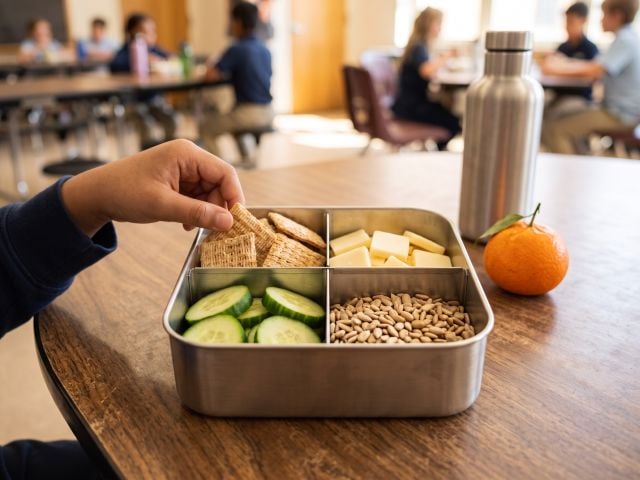
But, I do pride myself on making their lunches and snacks fresh every day. And they are in, um, Planet Box, which are, it's a great company. I love them.
Ken: Yeah.
Rina: Yeah. Uh, I've been using Planet Box for years and, and these are just stainless steel reusable, so easy with my faucet just to wash them quickly.
Absolutely. I, I don't have these plastic things that I'm putting in a dishwasher worried about.
Ken: The microplastics and all the rest,
Rina: The chemicals. None of it
Ken: Yeah.
Rina: And my kids know, I even send dipping sauces and little stainless steel. They know their, their utensils are stainless steel.
Ken: So if you're, you're just, you're basically saying if something opens up here at EWG, you'd be a good, you'd be a good candidate.
Rina: I'm a big fan.
Ken: I think you might be
Rina: My kids even eat off of stainless steel plates, I, I'm just so concerned about kind of, all of the leaching of the toxins. Coming off the, the materials that we have just normalized for ourselves and giving these tiny, tiny babies, these all plastic bottles. I mean, when I was growing up, we just didn't even have anything that had that many components.
Ken: Yeah.
Rina: And sure we weren't taking water bottles to school.
Ken: No, no.
Rina: We were drinking from water fountains
Ken: No. When did we get so thirsty? Exactly. Well, you know, and, and I have to say, we look at the MAHA Moms and except for the vaccine part, which we looked the other way from. I regret that now I should have paid more attention to what was happening with that dynamic.
But they're EWG people in many ways, right? They, they're worried about what's in their food, their air, their water. They don't want to have tons of ultra processed food. They want to make sure that we have a food environment, as it were, that offers other choices that are affordable and accessible.
All good things, not things Kennedy worked on directly before he went to support Trump, by the way. He was not a food policy guy, we never saw him in those debates. But still, he got the idea and it allowed him to not talk about vaccines during the campaign, which I think they didn't want him to do.
But now it is, it has turned out that it's harder to make lasting real change in food policy. Most of the jurisdiction for environmental protection is not under Kennedy, and they're deregulating just as fast and deeply as they can over at EPA, uh, and energy and interior. So he's brought along a lot of people with big promises and one after another, at least by my estimation, I think even in vaccines, ultimately it won't pan out.
I think ultimately, the decisions he's making defacto now, will be overrun by the march of science, ultimately. So he can make the decisions now 'cause by fiat because he has that power. But in order for them to really stick, he really does have to have gold standard science and go up against the best scientific minds that have a different approach.
And that's how you resolve these debates, not by firing the scientists that disagree with you, you.
Rina: Evidence is so important.
Ken: Yeah.
Rina: I mean, I remember when Obama and and Bush would come out even with charts, I mean, that wasn't uncommon. This president doesn't bring a single shred of evidence that is normal.
Ken: They don't show their work.
Rina: No, they don't. And if they do put up a picture or a graph or something, it's highly questionable.
Ken: Yeah.
Rina: Because let's not forget, this is a president that lied about his inauguration numbers in the first term
Ken: From the start? Yeah. Like day one. Yeah. And then he got his press secretary
Rina: To double down.
Ken: To double down. And that's the dynamic that is, has been more than anything disheartening to me knowing so many Republicans here in Washington and in just in life. I know so many of them. I know you're disappointed to see people not speaking truth to power. Just, just running for, for cover.
Rina: Well, I always say I stay in the Republican party to be an agent for good and change.
Ken: Yeah.
Rina: Because what happened to me 10 years ago, easily could have pushed me out of the party and I could have said, I'm an independent now, I'm a Democrat now. We're a multi-party system.
Ken: Yeah.
Rina: Or so we like to think. But the reality is we are a duopoly. And yes, the independents are growing in number. When you live in this town, you kind of have to pick a side and I, I don't wanna be pushed out, I'll tell you that.
I'm, maybe I'm a little too arrogant on that piece.
Ken: You don't strike me as the kind of person that's pushed out very easily.
Rina: Exactly.
Ken: I think you got that from mom and dad too.
Rina: I think I did. And it was, you know, one of those moments where I had to say, is this worth fighting for? And now 10 years later, I can absolutely say it was because I stood up for what I believed in.
I stood up against an injustice, what was wrong. They had no right to do that when I had become the number two vote getter. Out of 160 people a ballot. And so I, I just knew that I had to stand my ground. But in standing my ground, in this town, I've also realized a few things — is that there are people here who will keep their mouths shut because they are tired of having to defend their decision.
And also because their decision was one that was more about being against the other side than being for this side. That's kind of what I've seen with many a Republican who supports Trump, uh, that may even go and work in one of these agencies. The way I, I see them, these people, is that they feel that they aren't able to do anything outside of what they've got their sight set on.
So they'll do it, but they'll stay quiet about the tough stuff. Because why rock the boat for themselves? Why ruin a good thing, when this is probably a job that has a nice price tag attached? You know this, there's a lot of power and money concern in this town because it all leads back to somewhere. And as humans, I get it.
We wanna be tribal.
Ken: Yeah.
Rina: I mean, I know there's a growing crop of us that are anti-Trump. Uh, particularly with my organization, our Republican legacy, which, uh, Senator Jack Danforth of Missouri, Missouri and I we're, we've, uh, he created the org. He and some others. He is, uh, right now our, our figurehead and just a gem of a, a human.
Ken: Yeah, he is, of course.
Rina: He's got so much fight in him. He, uh, he asked me to co-author a Wall Street Journal op-ed with him this past fall in October. It was, um, titled Republicans, uh, ditch MAGA and, and so, you know, we were sort of making the case as to why Republicans need to abandon.
Ken: Take their party back
Rina: Yeah. And I, I think there's a growing sense that we can do it because Trump can't be here forever. And, uh, if he tries there's certain things in the Constitution that prohibit him from doing so. But I also believe that there are people out there who don't feel that JD Vance, the vice president, has what it takes to be
Ken: The successor.
Rina: Mm-hmm. The, yeah, to be the person who carries the mantle for, for Trumpism or MAGA or for MAHA, like he just doesn't have it. But certainly from a lot more people, I do hear that there was a silent Trump voter this last time. And many women my age, you know? Who would never tell you that they did.
Ken: Yeah.
Rina: Because they felt so betrayed by Biden on the economy. Now here we sit.
Ken: Yeah.
Rina: Over a year out from Trump having taken office and we see the economy isn't any better.
Ken: No.
Rina: So I think voters are hungry for not just a bridge builder, but somebody that's gonna really roll their sleeves up and get it done and be creative policy-wise.
Not do this nonsensical stuff of, let me just issue these tariffs across the board. And if you're really aiming at China, why aren't the tariffs against them much higher?
Ken: Yeah.
Rina: So he's not ever able to explain to the American people why he does what he does.
Ken: Yeah.
Rina: And the next, uh, leader of the Republican Party, I think will have that. Will have to explain.
Ken: Well, let's hope so. Um, and I just wanna thank you and, and tell you how much I admire your courage and uh, your consistency. It's inspirational. I'm not one who thinks institutions protect themselves. I think institutions a, actually, are very malleable, and that the only thing that matters is the people in them.
You know, you, you just decided to stand up and say, no, this, you know, the way our process works, I should be represented. I earned the votes and refused to believe otherwise when you were challenged because you have the evidence. So I look forward to the day when Republicans like you are the ones in charge.
When we can have these conversations about all manner of issues and come out the other side and not just be friends, but be allies for the common good, 'cause that's how you strike me, my friend. I'm so grateful that you took some time to be on the show with me today.
Rina: For having me here and you give me hope that wherever there's a wrong, there'll be somebody who makes it right, 'cause that's what you've been doing in your work and in your life. So thank you.
Ken: Thank you. It's good to be in the foxhole with you.
Rina: Indeed. Thanks again.