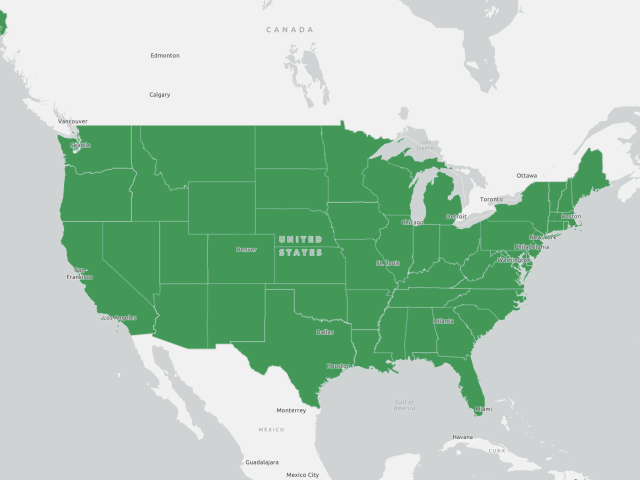
WASHINGTON – About 176 million people in the U.S. drink tap water contaminated by the toxic “forever chemicals” known as PFAS, according to new test data released by the Environmental Protection Agency.
That’s four million more Americans exposed to PFAS in drinking water than EPA found in previous tests. The total keeps moving closer to EWG’s 2020 estimate that PFAS is in the water of 200 million Americans.
At the same time as the known number of exposed people has gone up, the Trump administration is moving to roll back federal limits designed to protect their drinking water.
The 2.3% increase underscores the seriousness of the intensifying PFAS contamination crisis. It also makes the EPA’s plan to weaken drinking water protections even more alarming.
“The EPA’s own data proves the known extent of PFAS contamination is getting worse,” said David Andrews, Ph.D., acting chief science officer at the Environmental Working Group.
“In 2020, we estimated PFAS were in the water of 200 million Americans. This new data confirms what we feared: PFAS are widespread in Americans’ drinking water,” he added. “Yet the Trump administration is preparing to abandon protections by rolling back limits on four PFAS that can be detected in water. Delaying, weakening or abandoning PFAS limits is a public health betrayal.”
The EPA’s new findings come from tests of the nation’s drinking water supply conducted as part of the Fifth Unregulated Contaminant Monitoring Rule, or UCMR 5, which requires U.S. water utilities to test drinking water for 29 individual PFAS compounds.
Protections under threat
In 2024, the EPA finalized first-time limits on six PFAS in drinking water.
In a reversal last May, the EPA announced plans to roll back limits on four PFAS – GenX, PFBS, PFNA and PFHxS – leaving those chemicals unregulated.
The agency plans to retain the standards for the two most notorious chemicals, PFOA and PFOS, at 4 parts per trillion. But it also wants to extend the compliance deadline to 2031.
The limits, called maximum contaminant levels, or MCLs, set enforceable standards for the amount of contaminants allowed in drinking water.
The EPA’s plan to reverse the four MCLs also likely contradicts an anti-backsliding provision in the Safe Drinking Water Act. That law requires any revision to a federal drinking water standard to “maintain, or provide for greater, protection of the health of persons.”
“The EPA is abandoning science-based protections at the exact moment its own tests prove we need them most,” said Melanie Benesh, EWG’s vice president for government affairs.
“This isn’t just a regulatory rollback. It’s a deliberate exposure of American families to chemicals linked to cancer and other serious health issues,” she added.
Americans are experiencing a crisis of confidence in chemical safety. About 70% of U.S. adults fear for the safety of family members’ exposure to chemicals in drinking water, according to a new national survey by Pew Charitable Trusts. More than four out of five people, or 83%, believe the government must do more to protect people from harmful substances.
Widespread PFAS pollution
Even if the PFOA and PFOS MCLs remain in force, scrapping the four other limits will make it harder to hold polluters responsible for endangering millions of Americans by releasing toxic forever chemicals into U.S. waterways.
The EPA’s toxicity assessments of GenX and PFHxS — replacements for PFOA and PFOS — found that exposure to even extremely small doses could similarly pose serious health risks. If finalized, the EPA’s new rule would no longer enforce limits on GenX and PFHxS in tap water.
EWG estimates nearly 30,000 industrial polluters could be discharging PFAS into the environment, including into sources of drinking water. Restrictions on industrial discharges would lower the amount of PFAS ending up in drinking water sources.
“Addressing the problem of widespread drinking water contamination means stopping chemicals at the source. For PFAS, that’s industrial sites, chemical plants and any manufacturers unnecessarily using these chemicals in consumer products,” said Andrews.
Health risks of PFAS exposure
PFAS are known as “forever chemicals” because once released into the environment, they do not break down, and they can build up in the body. The Centers for Disease Control and Prevention has detected PFAS in the blood of 99% of Americans, including newborn babies.
Very low doses of PFAS have been linked to suppression of the immune system. Studies show exposure to PFAS can also increase the risk of cancer, harm fetal development and reduce vaccine effectiveness.
For over 30 years, EWG has been dedicated to safeguarding families from harmful environmental exposures, holding polluters accountable and advocating for clean, safe water.
“Consumers should be able to get clean water straight from the tap,” Andrews said. “With 176 million people now exposed to PFAS in their drinking water, government regulators must step up to ensure utilities have the resources to remove these toxic forever chemicals. Safe, clean drinking water should be guaranteed.”
“While the cost of removing PFAS from drinking water should not fall on consumers, there are home filters that can help,” he added.
For people who know of or suspect the presence of PFAS in their tap water, a home filtration system is the most efficient way to reduce exposure. Reverse osmosis and activated carbon water filters can be extremely effective at removing PFAS.
EWG researchers tested the performance of 10 popular water filters to evaluate how well each reduced PFAS levels detected in home tap water.
###
The Environmental Working Group (EWG) is a nonprofit, non-partisan organization that empowers people to live healthier lives in a healthier environment. Through research, advocacy and unique education tools, EWG drives consumer choice and civic action.