SACRAMENTO – In a victory for public health, today three bills targeting harmful ultra-processed food and hazardous chemicals in consumer products cleared the California Assembly and Senate appropriations committees.
The legislation includes a bill that, if enacted, would make California the first state to adopt new standards for ultra-processed food, or UPF. The second bill would require consumer disclosures for prenatal vitamins. The third would limit the toxic “forever chemicals” known as PFAS in consumer products, including cleaners and dental floss.
The Environmental Working Group is co-sponsoring all three bills.
“From classrooms to kitchens, California is taking concrete steps to reduce everyday exposures to toxic chemicals and protect public health and the environment,” said Bernadette Del Chiaro, EWG’s senior vice president for California.
“These bills reflect growing momentum in California to close dangerous loopholes in chemical safety,” added Del Chiaro. “Lawmakers are standing up for parents, children and all communities by moving forward protections that should have been in place long ago.”
In the Senate
The Senate Appropriations Committee approved Assembly Bill 1264, the groundbreaking UPF bill, advancing it to the Senate floor.
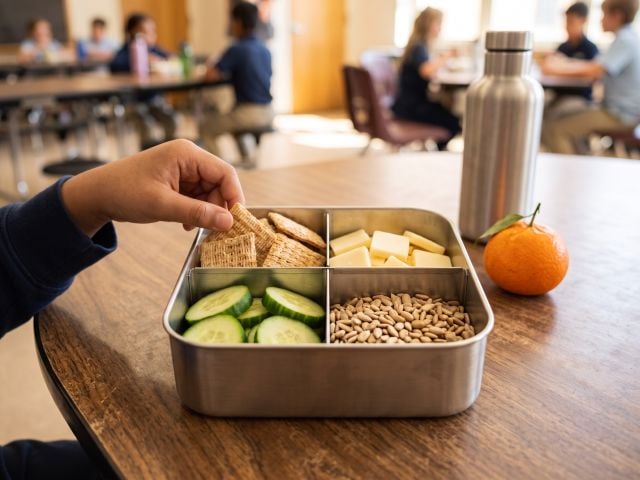
The bill, authored by Assemblymember Jesse Gabriel (D-Encino), would phase out certain “particularly harmful” UPF from meals served in public schools. If signed into law, it would also create a first-in-the-nation legal definition for UPF.
“Processed food can have a place in a healthy diet, but Americans – especially children – consume too many ultra-processed foods, which is contributing to increased rates of cancer, heart disease, diabetes and behavioral issues in children and diabetes,” said Del Chiaro.
“AB 1264 takes an important step toward protecting children’s health by identifying and removing the most harmful ultra-processed foods from California public schools,” she added.
“We commend Assemblymember Gabriel and all of the bill’s co-authors for taking commonsense steps toward better protection of the well-being of California’s children,” she said.
In the Assembly
The Assembly Appropriations Committee considered and approved the other two EWG-backed bills.
SB 646, authored by Sen. Dr. Akilah Weber Pierson (D-San Diego), would require prenatal vitamin manufacturers to test for and publicly disclose levels of potentially harmful heavy metals in their products.
If the bill is signed into law, California would lead the way on stronger maternal health protections nationwide. The measure would require manufacturers to regularly test a representative sample of their products and post results online, beginning in 2027.
“Expecting mothers deserve transparency about the ingredients in the supplements they take to support their health and their baby’s growth,” said Susan Little, EWG’s California legislative director. “It’s alarming to find heavy metals in prenatal vitamins.
“This bill is a critical step toward giving consumers the facts and pushing supplement companies to make safer products.”
SB 682, authored by Sen. Ben Allen (D-Santa Monica), would ban the sale or distribution of many consumer products with intentionally added PFAS – including cookware – starting in 2028.
PFAS are often used in nonstick coatings and can leach into food during cooking, contributing to serious health risks like suppression of the immune system, increased risk of cancer, harm to fetal development and reduced vaccine effectiveness.
The bill also applies to cleaning products, dental floss, plastic food packaging, ski wax and many other products. It would also create a regulatory program to enforce these bans.
“No one should be exposed to toxic PFAS just from cooking dinner or cleaning the kitchen afterward,” said Little. “This bill is a bold step toward protecting Californians from unnecessary exposure to ‘forever chemicals’ in everyday products.”
###
The Environmental Working Group (EWG) is a nonprofit, non-partisan organization that empowers people to live healthier lives in a healthier environment. Through research, advocacy and unique education tools, EWG drives consumer choice and civic action.