Every year, California agricultural fields are sprayed with an average of 2.5 million pounds of pesticides identified as the toxic “forever chemicals” known as PFAS, a new Environmental Working Group analysis and map shows. This widespread use could be contaminating produce, soil and drinking water, and exposing millions to potential health harms.
This new analysis by the Environmental Working Group shows these PFAS pesticides – herbicides, insecticides and fungicides – are widely used across the state’s most productive farmland, potentially exposing millions of Californians to hazardous chemicals that never break down in the environment.
EWG analyzed the use of 66 active PFAS pesticide ingredients identified in a peer-reviewed paper by EWG scientists and scientists from Center for Biological Diversity and Public Employees for Environmental Responsibility, published in July 2024. The EPA has since approved one additional PFAS pesticide and proposed approving four others for active use in the U.S.
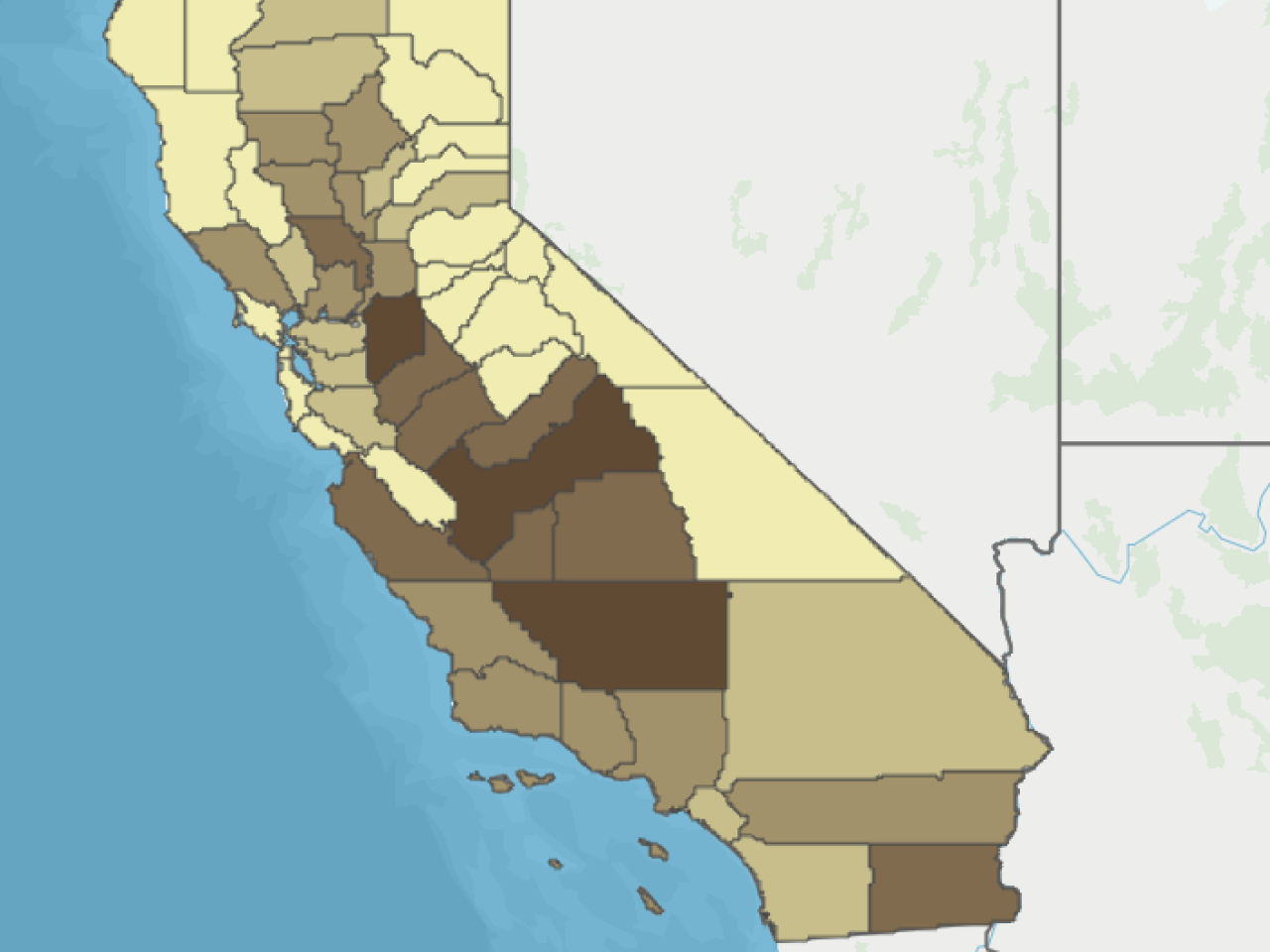
Based on this review, EWG created a new interactive map revealing that 52 federally approved PFAS pesticides were used in 58 counties across the state from 2018 to 2023. The map also highlights the types of crops soaked with those pesticides in those counties.
Source: State of California Pesticide Use Reporting
Between 2018 and 2023, nearly 15 million pounds of PFAS pesticides were applied to California farmland, according to data from California’s Department of Pesticide Regulation. This figure reflects the total use over that six-year period and highlights the widespread presence of these forever chemicals in the state’s agricultural system.
Counties with the largest amounts of PFAS pesticides during this period were Fresno with 2.1 million pounds, Kern with 1.6 million pounds, San Joaquin with 923,000 pounds and Imperial with 898,000 pounds. Other counties where PFAS pesticides were used include Monterey, Riverside and Sonoma.
EWG also found that PFAS pesticides are being used most heavily on some of California’s most iconic and lucrative crops. The heaviest uses included almonds, pistachios, wine grapes, alfalfa and tomatoes.
The analysis further revealed that 85% of PFAS pesticides used in the state were used for crop production. The remaining 15% were used for various structural practices, such as use as an insecticide for termite control and as an herbicide for landscape maintenance. In places like Imperial County, 98% of PFAS pesticides were used for crop production. Among the most frequently applied pesticides are the herbicide oxyfluorfen, the insecticide bifenthrin, the herbicide trifluralin, the insecticide lambda-cyhalothrin and the fungicide penthiopyrad.
Two of these pesticides, bifenthrin and trifluralin, have already been banned in the European Union due to health and environmental concerns. Yet they remain in widespread use on California farmland.
Explaining PFAS pesticides
Under federal law, PFAS can be approved as active ingredients in pesticide products, playing a direct role by controlling the “pest” in an herbicide, fungicide or insecticide. Active ingredients are disclosed on a pesticide’s label.
In the U.S., there are at least 66 PFAS active ingredients approved for use. PFAS may also be inert, or non-active, ingredients in pesticides. But that’s hard to assess given pesticide makers’ lack of disclosure about such ingredients. Inert ingredients don’t play a direct role in addressing pests, are added as performance enhancers, and are not individually disclosed.
When PFAS are listed as an active ingredient on a pesticide product, they often represent the greatest amount of forever chemicals in a pesticide compared to other PFAS that might be present, for example as inert ingredients.
Increasingly, active ingredient pesticides are fluorinated. The fluorinated qualities of the chemicals make the pesticide more stable and less likely to break down into other types of chemicals. But fluorination can turn the ingredients into PFAS, based on the commonly accepted definition of forever chemicals.
While the fluorinated qualities are attractive for agrichemical manufacturers, those same traits may also have unintended consequences, like increased persistence and toxicity in the environment, prolonging peoples’ exposure and potential health risks.
In addition to the use of active pesticide ingredients identified as PFAS, the fluorinated plastic containers used to store pesticides have been found to leach PFAS into products. PFAS leached into pesticides in this way are not disclosed either.
Pesticides marketed and used by consumers for home and lawn purposes are also allowed to be sold in the state, however their use was not reported and tracked as part of this study. They may still be a significant source of PFAS in the everyday environment.
Health hazards from PFAS
While the full impact of PFAS pesticides on human health are not well understood, the chemical class of PFAS do not break down in our environment and many build up in blood and organs.
Forever chemicals studied to date are associated with a range of serious health harms. Very low doses of PFAS in drinking water have been linked to the suppression of the immune system and are associated with an elevated risk of cancer, increased cholesterol, and reproductive and developmental harms, among other serious health concerns.
The widespread use of PFAS pesticides is a significant but overlooked source of contamination and exposure, affecting millions in California alone. These forever chemicals can accumulate in soil, be absorbed by crops and migrate into nearby water sources, yet current monitoring efforts fail to track this pollution. As forever chemicals, all PFAS are environmentally persistent, meaning the strong carbon-fluorine bond does not break down.
Over time, PFAS pesticides may degrade into other forever chemicals, like the ultra-short chain trifluoroacetic acid, or TFA, which is increasingly being detected in the environment, wildlife and people. Research suggests that pesticides are a major source of TFA in the environment.
For most people, food and drinking water are the primary routes of exposure to PFAS. That makes the use of these chemicals in agriculture especially concerning.
Lack of regulation increases exposure risks
Despite the known health harms of forever chemicals, the EPA has a long history of failing to protect Americans from PFAS. The EPA has also failed to deal with other toxic pesticides. Waiting for the agency to act on nationwide regulations on using PFAS pesticides will take too long, leaving farmers and Californians at risk.
In light of federal inaction on PFAS pesticides, states are beginning to step up. They’re protecting consumers by putting restrictions on the use of these substances.
Maine enacted the first statewide ban on PFAS pesticides in 2023, covering intentionally added PFAS, and pesticides contaminated with PFAS. That ban goes into effect in 2030.
Other countries are taking swift action to address the risks from forever chemicals in pesticides. Denmark banned six PFAS pesticide ingredients in July 2025. The country cited PFAS groundwater contamination resulting from the use of these pesticides in agriculture. Records show that four of these banned PFAS pesticides are used in California, including Fluopyram, with more 519,000 pounds used in the state from 2018 to 2023.
European regulators declined to renew approval of the PFAS herbicide flufenacet. In March 2025, the herbicide’s approval wasn’t renewed over thyroid health risks and groundwater contamination from its breakdown product TFA.
But California regulators and legislators have not taken regulatory actions to address pesticides made with PFAS – despite the state being among the biggest users of them.
Tips to reduce risk
There are non-PFAS alternatives to pesticides on the market – from herbicides to insecticides to fungicides – without the long-lasting health risks of exposure to forever chemicals.
Anyone concerned about exposure to PFAS pesticides should not reduce consumption of produce in an attempt to avoid pesticide residues. The health benefits of fruit and vegetable consumption outweigh the risks of pesticide exposure.
Instead, consumers can take practical steps to reduce exposure:
- Thoroughly wash produce before eating
- Choose organic options when possible
- Use trusted resources like EWG’s guide to washing produce and EWG Shopper's Guide to Pesticides in Produce™ to help lower dietary exposure