Julia Belluz, co-author of “Food Intelligence: The Science of How Food Both Nourishes and Harms Us,” joins EWG co-Founder and President Ken Cook to dismantle everything you think you know about nutrition, metabolism and weight loss. Julia is an award-winning health journalist, contributing opinion writer for The New York Times, and former senior health correspondent at Vox. She's a Knight Science Journalism Fellow from MIT and currently lives in Paris, France.
Belluz explains why our struggles with food aren’t personal failures. They are the predictable result of living in toxic food environments designed to make us overeat. Drawing on decades of nutrition science research conducted with co-author Kevin Hall at the National Institutes of Health, she reveals what people get wrong with food despite thinking they’re doing it right.
Belluz compares France's deliberate cultivation of healthy food environments to America’s chronic disease crisis. She discusses California's groundbreaking legislation defining ultra-processed foods, the promise and failures of Health and Human Services Secretary Robert F. Kennedy Jr.’s “Make America Healthy Again” agenda, and why we need systemic change to how we approach food.
Disclaimer: This transcript was compiled using software and may include typographical errors.
Ken: Hi there, Ken Cook here, and I'm having another episode. As we close out 2025. I wanna talk about food policy because to be honest, we need to reckon with some hard truths about where we are and how we got here. At the state level, EWG has been right at the heart of some genuinely historic victories.
California just passed groundbreaking legislation to define ultra processed foods in law and begin phasing them out of our schools with a bipartisan support across the Assembly and the Senate in the California legislature of 119 to 1. So we've seen movement on food additives, grass loopholes, and a growing recognition that our struggles with food and health aren't primarily personal failures, but the predictable result of a food environment designed to make us overeat and in unhealthy ways.
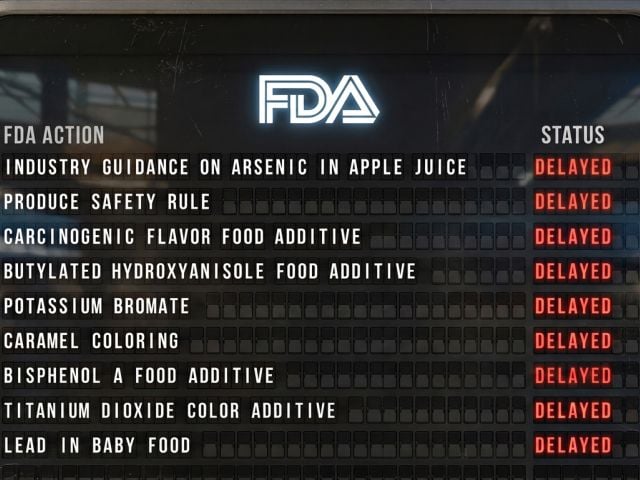
But at the federal level in important ways, we're moving backwards. The Trump administration and RFK Jr. came in with big promises to make America healthy again. But instead of tackling the toxic food system, they've shied away from real fights with the food and chemical industries. They've done nothing meaningful to regulate pesticides and food additives that are poisoning our food supply. And they've also supported changes that are very likely to reduce enrollment in nutrition assistance that's vital to millions of American households, including lots of kids. Kevin Hall, my guest’s co-author, and one of the nation's leading nutrition scientists felt compelled to resign from the National Institutes of Health over the direction things were heading under Bobby Kennedy.
As we head into January, millions of Americans are about to make New Year's resolutions about eating healthier, eating better, losing weight. Most of those resolutions won't fail because people lack willpower. And I certainly come up short often, but because they're swimming upstream against a food system that makes the unhealthy choice, the easy choice, and the healthy choice, exhausting, and now the very federal programs that could help are being dismantled.
My guest today is Julia Belluz, co-author with Kevin Hall of an extraordinary new book called Food Intelligence, the Science of How Food Both Nourishes and Harms Us. Julia is an award-winning health journalist who spent years reporting on nutrition and obesity science, and she's here today to explain why nearly everything we've been told about diet, metabolism, and weight is backwards or at least a little off and why solving this problem demands policy solutions, not just making better choices as individuals or making handshake agreements with food companies instead of regulating them. We're going to talk about why ultraprocessed foods are so hard to resist, what the science really shows about metabolism and macronutrients, what France can teach us about building healthier food environments through actual policy and regulation and why, despite this administration's failures, the movement at the state level toward healthier eating gives us reason to keep fighting.
Julia, thank you for being here. I loved your book and I'm such a fan of your work because you take so much time and effort to explain so clearly some of the science underneath nutrition that I like to think I had a pretty good knowledge of.
Tell me a little bit about how this book came about, and then I want to dive into some of the themes.
Julia: Absolutely. No, I'm so happy to be here. So, the book came about, I was reporting in, Washington DC. I was working for Vox at the time, and I became interested with obviously, the rates of diabetes, obesity, and other diet related diseases had been increasing.
And I was interested and quite fascinated by this idea of like, what is going on? Why are so many people struggling? And I had been a person who had struggled with my weight, and obviously like many people, I felt like the problem was my own, you know, that I didn't have the will to eat the right things all the time or whatever it was.
But it occurred to me that, you know, maybe there's something more going on if it's vast, millions of people across the age spectrum simultaneously having the same struggle. Right.
Ken: And for decades, for hundreds of years, right?
Julia: Yes. Yeah, absolutely. Yeah. The increases started, I guess in the 1970s and early eighties, for obesity.
Ken: But the obsession with weight and weight loss…
Julia: Is a long, is a long one. So in that context, I got to know Kevin Hall, who's my co-author on the book, and he was researching at the time. Until recently, he had been at the National Institutes of Health where he was running a lab and he was investigating a lot of these really central ideas to the debates in nutrition and in obesity science, trying to test different macronutrient diets, low carb, low fat, what kind of fat loss do they lead to? Um, a lot of these very big questions a lot of people had about food and what food was doing to them. And we got to know each other and we really enjoyed talking.
And he became a very good source. And at the time I was being asked to do a book on, I had reported a lot on Dr. Oz. And there was some interest in a book about him. And I thought, you know, I'm at this stage where I’d love to do a deep dive in a topic and kind of spread my wings as a writer. But, you know, that wasn't a topic I was interested in.
I mean, the advice I got about writing a book is you have to be sort of obsessive because you stay with the topic for so long. And, um, that wasn't a topic that I wanted to stay with for very long. And Kevin was being asked to do a book on his research, and we started talking about what if we did a book together?
We came up with this idea about a book that really investigated these, instead of telling people what to eat, how they're eating wrong, how everything they know about food is wrong, what if we just actually looked at the science of how do, how we know what we know about food, what it's doing in the body, and then even more fundamentally, why do we eat the things we eat?
Like how does this actually happen when we kind of unravel all that? What are the implications for how we should live and, and the policies and regulations we should have and addressing these epidemics of diet related diseases that we've seen. And so that's the book we wrote. And it took a long time to write.
I think we had the idea almost 10 years ago, and then it took us like five years. It was a long journey for sure.
Ken: Well, the result to me is really distinctive in the field of books on this topic. A lot of them are quite good, focus on the practical matters without delving into the science. And what I found so interesting is by delving into the science, I think I'm coming to a new appreciation of how to think about diet and health. I've over time sometimes been happy with my fitness and my weight, and other times not. You start off writing about protein and carbohydrates and fat and you really distill very well, I think what Kevin's, at least the initial study that you describe him reporting early in his career where he sort of ended up at odds with both the low carb and the low fat poles of the debate.
Can you say a little bit about how his research came about? He found himself really just saying, you know, it's not one or the other. It's really a different way of looking at these macronutrients and how they contribute.
Julia: Yeah, absolutely. So we thought about going through these three, the macronutrients, so this is most of the mass in food after water, and everyone has known about them.
Right now, we're in this obsession with protein maximization. One of the things we wanted to explore was why do we have these ideas we have about food? Where do they come from? And so many times they were very long held ideas. Yeah. That even though they had been debunked or investigated, and maybe there was more nuance than we originally thought, the idea would persist.
This idea that, you know, what matters for building muscles is you must, you know, eat lots of protein, but actually without resistance exercise, protein is just, it's additional calories like anything else that we eat, right?
Ken: Because we don't store it.
Julia: Yea, right we pee out the nitrogen basically, and then store the energy as body fat, like the other excess calories that we consume. So it's not like this magical nutrient that we can need to access with no consequences.
And when, when Kevin was starting his lab, it was around this time, we had swung from this obsession during the, I guess it's the eighties and 1990s on low fat and fat is the enemy. And you know, I remember when I was growing up, it was like, don't put butter on anything. Don't use butter to cook.
We were using all these alternatives to butter, which turned out to have trans fats in them, which were terrible for individual and population health. So there's this obsession with the low fat, and that gives way to this obsession with low carb and maybe actually fat isn't the problem. There were headlines in the New York Times, ‘butter is back’ and, you know, ‘we can eat all the fat we want as long as we adhere to a really low carbohydrate diet.’ And this persists in different ways. You know, this obsession with, and it actually comes up in protein, like eat a certain level of different macronutrients for optimal health or whatever the end point that people are claiming, you know, longevity or fat loss or whatever it is. Kevin does this really impressive thing. He runs a series of experiments investigating what happens when you match the calories, but put people on low fat or low carb diets, and he basically finds they end up losing the same amount of weight.
It's a wash. There's no — a very negligible difference. And he does this again and again. He ran, I can't remember. I think it's like four or five studies. And what was so interesting at the end, so the low fat people were embracing the research because again and again, he finds this extremely marginal edge with the low fat diets like, but it's negligible. It would have no clinical relevance. And then the low carb people were really upset because he doesn't find the same thing with the low carb diet and they kind of go after him and attack him. And I think that the main claim that they continue to make is if you let the diets run much longer, you would eventually see this advantage to the low carb diet and the body. You know, there's implications for hunger when people are eating ad libitum low carb diets that you can't see in this highly controlled clinical setting where you're fixing the number of calories. And so that's what they would say.
And I think Kevin would say, you know, let's think about this based on the research we have, and even going back centuries, it seems like at least when it comes to body fat gain or loss, a calorie is a calorie, whether it comes from protein, whether it comes from fat, whether it comes from carbs.
Ken: Because our bodies, he uses the metaphor of a hybrid car.
Julia: That's right. Yeah.
Ken: With multiple types of fuel.
Julia: That’s right. We have this incredible ability to build our body from these different fuels that are coming in and to rebuild our bodies and to also store the excess that we eat as body fat. And whether it came in the form of carbs or fat, it's gonna have the same fate. It's gonna end up being stored as body fat.
Ken: Yeah. And I found myself suddenly thinking, what does this laboratory look like? So it's actually bringing people into an a hospital type setting, and sometimes they're there for—weeks on end, right?
Julia: That’s right. We use this in the book. I did a stay in a metabolic chamber at the National Institutes of Health, and so these just look like tiny hospital rooms where you have like a toilet, an exercise bike, and a bed.
And essentially they're, yeah, measuring what's happening with your metabolic rate at all times. In a study, some people would do these stays in the metabolic chamber, and then at other times they're living in essentially what looks like a hospital ward. They're putting them on like loose fitting scrubs so they don't know whether they're gaining or losing weight.
Yeah. And they're feeding them all their meals and then they're meticulously tracking what happens to the food, how much food they're actually eating and, and what's left over. And it was a kind of like a, just a hospital ward outside of Washington D.C.
Ken: And the metabolic chamber, they're pulling air from the chamber? They're measuring your exhalation, your respiration?
Julia: Exactly, and so this, this turns out to be a very old way to measure before we even understood what metabolism was. That was funny 'cause I went in there thinking, you know, maybe it's some gadget that you wear in the room. But it's all happening through the inhalations and exhalations and measuring the gases that you're respiring and then running this through some calculations basically to estimate your metabolic rate and they, they'll track it against the activities you're doing.
So what's happening when you're exercising, what's happening when you're eating? And that was very interesting. I went into that because I held, long held, had held this idea that I think many people have, that a slow metabolism was the reason I had struggled with my weight.
And I thought, you know, I wanna get this measurement and then I'm gonna know and have this answer. And it's clearly that. And it turns out it wasn't. And it turns out for most people, it's not relevant. This idea that the metabolic rate that explains why we put on weight or why we're struggling is, is not the reason most people are struggling.
Ken: And so, because it's not the reason. This obsession with metabolism and taking supplements to ramp up your metabolism, although there was one example of one back in the thirties, I think that you go through where…
Julia: It persists, yeah.
Ken: It’s dangerous right?
Julia: Yeah. People are still using it. Yeah. DNP. It was discovered in, explosives, manufacturing plants in France in World War II and basically the people who are manufacturing these explosives are having all of these side effects. They're having increased heart rate and one of the big side effects that caught the attention of researchers in the US was that they were spontaneously losing weight. So researchers at Stanford became interested in this chemical and they started to test it as a treatment for obesity. The way people lose weight is that it does actually increase the metabolic rate.
So you're burning fuel faster, but it also led to a horrifying array of side effects and as well as it could potentially kill you, but it persists online. So there are still DMP supplements available. People are still getting harmed by this substance and yeah, I guess we'll go to great lengths to do things, as you said, to be thin.
Ken: Yeah, especially if some influencer has encouraged them to do it. Is it legal to have DNP in these supplements?
Julia: It's a good question. I would guess not because it's a known and dangerous chemical, but the supplement market in the US — there's very little oversight. And so yeah, it's sort of, unless you are found to be harming people, then I think, yeah, people can get away with a lot of craziness.
Ken: And speaking of influencers, I also loved your chapter on, that focuses on Liebig and his work early on to develop what, what was it was called? A meat extract?
Julia: Yeah, that's right. So it's one of the earliest nutrition supplements. So he had this idea that — basically he was fascinated with this question of what is it in food that rebuilds the body?
So how, how does food actually keep us from wasting away? And this is around the time protein is being discovered and he realizes it is the protein in the body that the protein in food, that when we eat it, the amino acids are building and, and rebuilding us.
Ken: And we should say this is sort of like the early-mid 1800’s.
Julia: That's right. So this is like foundational nutrition science that was happening at the time. Germany was the epicenter, and Liebig for organic chemistry and this very early efforts to understand our food and what is it doing in the body and Liebig was like a world leader. He was a world famous scientist.
And he becomes obsessed with this idea. And, it is true that animal products and meat in particular have the amino acid profile that's closest to what humans need. So although you can get your amino acids, your protein from just about every food, that particular amino acids that we need, animal products and in particular meat, are a very, I guess, efficient way to do this. Not environmentally and not in other ways, but it, you know, he was one of the first to pinpoint that, so he becomes obsessed with meat as this ultimate fuel and way to build and rebuild the body and in particular, he makes claims about muscles and many claims that persist to this day.
And at the time, meat is not obviously as common as it is now, and it's extremely expensive. So he figures out that you can make this meat extract, this product that he said was distilled from, you know, boiling down many pounds of meat and he was selling it in jars, quite affordably, I guess — more, more relatively affordable to meat.
And he said, you know, if you just add this paste to a vegetable stew or whatever it is, you can get the same benefits of meat. And it turned out this wasn't true. So it was one of the first, but he was so influential and so famous and his words carried so much weight that he was embraced by the scientific community.
They had like meat extract panels at scientific conferences. Yeah, it was really wild. There's a great book. It's called Frostbite and it traces you know, how did we come to have this global, like cryosphere for our food and, you know, how is it that, you know, we live in this time where you walk, go to the supermarket and it's kiwis and bananas and avocados at any time you want, and, and the author, um, Nicola Twilly makes this claim that if we didn't have Liebig and his obsession with meat, we wouldn't have this infrastructure if he had promoted lentils and beans instead. Because so much of the way we built our food system, it was about transporting meat around and in particular meat to feed people in cities that were growing. And so, yeah, that can all be traced back to him and many of his ideas persist.
Ken: Amazing. Yeah. As part of this discussion of protein, you talk a little bit about the most absurd examples now of everyday products that you can get to feed people's obsession with protein way beyond what their body really needs. And I love that you came across — I think it was protein water.
Julia: Yeah, protein, water, protein pancake mix, obviously protein boosted yogurts and various kinds of drinks. The claim is everywhere. You know, at some point we were working on that chapter and I thought this protein obsession is gonna fade by the time the book comes out and it's only increased.
And I think we're entering this, you know, the space that we're in now, it's sort of this, social media and wellness podcaster wellness obsession and claims and protein seems to be one of the central obsessions in that space.
Ken: Yes. And, and often in supplement form. So you can immediately after you've heard the Instagram pitch, you can buy a jar of something.
Julia: Exactly. Yeah. Yeah. So, and it, I guess it dovetails nicely. There's also the glucose obsession now, like with minimizing your blood glucose spikes. And I think it also folds in with that. It folds in with the supplements obsession. So yeah, there's a lot of like synergy among these various wellness obsessions that people have.
Ken: Say a little bit more about the glucose because I think we have before us, a nominee.
Julia: Yes. The surgeon general nominee. So yeah, there is this absolutely popular fixation with glucose managing or minimizing glucose spikes in the blood. I think that this is related to obviously the astronomic increases we've seen in diabetes. And where the claims get a little bit, they get become quite questionable is when you extrapolate that to otherwise healthy people. And you say, you know, you should be obsessed. Like what would — this is what always happens throughout the history of nutrition, we become obsessed with one parameter of food and nutrition.
We kind of throw everything else out that we know. So now it's like eat to minimize your glucose spikes, and there's all kinds of tips that you can find and influencers that you can follow to go quite deep into how to do that. And one of the related things is this suggestion that you wear a continuous glucose monitor, which is a device that was invented for people with diabetes to be able to manage their glucose levels and dose themselves with insulin.
And now the idea is that everyone should wear this and that you can find out which foods spike you the most and then kind of remove those from your diet. And Kevin did these great studies where he investigates that claim. He puts the glucose monitors on different parts of the body at the same time, or two different glucose monitors, and he finds that what spikes people on in one device doesn't spike them in another device.
He also finds that the same meals can cause very different increases in — very different glucose responses depending on when they're eaten, which makes a lot of sense because we know that your glucose is influenced by things like physical activity, what else you've eaten, the meal order, all these other things.
So to be able to, to make very particular claims of you're a banana guy and not an apple guy, 'cause apples spike you, it doesn't really make sense. But the bigger picture, I think that that doesn't make a lot of sense is to throw everything else out we know. So I simultaneously tried three different personalized nutrition companies to see what kind of advice they would give. And as part of that, I wore glucose monitors. Basically, none of them detected that actually when I went for my physical, around the same time, I had high cholesterol levels for the first time in my life. And so if I went with their advice, I would've been just obsessing about my glucose, and eating to reduce my glucose levels, which might have meant eating more foods that are rich in saturated fat and increasing these cholesterol levels that all of these personalized nutrition companies missed.
But I think the point there is that we have to keep the big picture and there's a lot we don't know about food. Food is hugely complicated and the more you look, the more complicated it becomes. And the same about, you know, the ways different foods interact in the body and interact with our unique physiology.
But there are things that we do know about benefits and risks related to particular eating patterns. And it feels like we always discover this new thing and try to throw everything else out.
Ken: That comes through loud and clear from the very beginning. In your book you quoted someone, a researcher who said ‘we're still in the stone age of understanding how to eat for each type of cancer’, and this followed a section where you went through and described all the many physiological phenomenas, health endpoints and so forth that might be affected by food that we're sort of overlooking by the focus on weight.
Julia: Yeah, absolutely. This was coming at the end of the chapter about this low carb versus low fat diets for weight loss. And yet, the point we're trying to get at is exactly what you're saying that we fixated so much on: what are these macronutrients doing to our body fat and our weight loss or gain?
And we forget that they create these very distinct hormonal immunological responses, like these very distinct mills in our bodies. And they have vastly different effects. And there are all these kind of exploratory research on those effects that seem to us to be a lot more interesting than this kind of tired debate about the low carb versus low fat for weight loss.
Ken: Exactly. It really can. So I mean, you mentioned low carb keto diets being used for a long time now to treat epilepsy reductions in dietary fat, leading to increased levels of dopamine, keto diets helping alcohol cravings or treating non-alcoholic fatty liver disease, immune system keto responses, cancer.
Julia: Yeah. Keto and cancer. Or is this, that's where the stone age piece comes in because there are potentially interesting effects there. But it really seems, at least in the animal models now, it seems to depend on what cancer you're looking at. Yeah. So this broad idea that like sugar feeds cancer and just like carbs feed cancer and just go on a low ultra low carb diet. We're not at the point of being able to, like, we might get there, but we're not at the point of being able to know how to translate that to humans yet. And this general advice about like, cancers are so distinct, right? I think there's a lot of confusion about what to eat, so we're always looking for these easy, big statements and unfortunately when you investigate, it's always a lot more complicated.
Ken: Well, and also I just felt like as I was reading that passage and other parts of the book, it was liberating for me to read time and again in your book that we don't know the answer because so many nutrition books, there's a sense of certainty in the authorial voice.
I'm really now, after reading your book, I'm really going to be skeptical about what I read because —
Julia: We accomplished our goal. This is great to hear.
Ken: Yeah. I think that's one of the great benefits of reading this book is that the science, the way you explain it, I think is really understandable, very readable, and you intersperse it with all these wonderful characters and these wonderful stories.
Say a little bit about the invention of liposuction. The Italian scientists who develop — a father son, right?
Julia: Yeah. Father, son. The father passed away a long time ago. And this son, Giorgio Fischer, he actually died recently. But what happened there was the father, he was Jewish and during the Second World War, he fled to the United States.
He was a surgeon and he put — he started to apprentice in plastic surgery clinics in New York City. And he wanted to bring these new methods that he learned back to Italy after the war. And he goes back to Italy, but there was a prohibition on doing plastic surgery because of the dominance of the Catholic church and its influence on medicine.
And so, you weren't allowed to mess with what God made, and he realizes that the only way to be able to practice everything he learned in the states was, he would have to go to the Pope and ask for a papal dispensation. So of course he goes to the Pope. So he makes the case that actually a lot of people are living with great suffering because of their physical deformities.
And you know, ‘we can really give them peace by doing these plastic, these cosmetic surgeries.’ You know, it's not just all about vanity. And so he ends up having this flourishing clinic in Rome, and of course what he ends up doing is lots of surgeries for the Italian jet set, politicians, actresses for vanity.
And his practice is flourishing and he brings his son on to join this practice and his son realizes, you know, there's a lot of patients complaining about excess body fat, but at the time there was a very invasive procedure to remove it. It left lots of scarring. It was very high risk.
The son one day is on holiday and he is watching oil being drilled out of the ground and he realizes, ‘hey, this is similar to body fat.’ Like what if we just suck the thing out and we invent a device to be able to more elegantly and less invasively, suck it outta the body. And he invents this cannula.
That's a device that we now basically still use with modifications. It's still used today, and that's the beginning of liposuction. And I think the promise then was that we knew that losing body fat through diet led to all these other health benefits. And maybe if we just suck the fat out of the body, we could get the same benefit.
Ken: But no.
Julia: No, no. It's never what you think. Right?
Ken: Exactly.
Julia: And so Sam Klein does these amazing trials where he investigates that and he varies, basically there was mixed research at the time and he designs these almost bulletproof trials to investigate the question, and he finds that, no, you have to do it the hard way.
Ken: Because it's not exactly the fat you wanna be targeting to get the health benefits.
Julia: Yeah, so the fat that you suck under your body through liposuction is this subcutaneous fat that's actually the safe storage for your excess energy and this visceral and ectopic fat, like circling your organs or growing inside organs. This you're not removing through liposuction.
It turns out that's the fat that is more associated with these health risks than the subcutaneous fat. And weight loss also comes with all these other physiological changes that seem to drive lots of the health benefits. So it's hard to get those benefits through just sucking out the fat in our butts and our thighs and these places where people don't want excess body fat.
Ken: Yeah. It's just so fascinating. And then you followed that up with this story about Sonya Rahal. Who is the antithesis of what you would think would be an unhealthy person or a person who has problems associated with, with fat metabolism.
Julia: Yeah, she, she basically was thin her whole life. Yet she has all the metabolic complications that you'd associate with obesity, cardiovascular disease, type two diabetes, and it's because she has this rare condition called lipodystrophy where you can't make that subcutaneous fat. You can't make the fat that everyone is trying to remove in liposuction, and so she's building the visceral and ectopic fat that is not where you want to be storing your fat and becoming very sick as a result. And so, yeah, the story of body fat, it's also much more complicated and we try to, in that chapter, show the fat that we all, you know, the whole diet industrial complex is built around, it actually serves this incredible purpose in our body and a very important purpose.
And when you're missing it, you can become as sick as when you have these excesses. So it's, once again, it's complicated. It's hard to fit this into a soundbite.
Ken: You unpack it so well, I'll just read a section to give people a sense of it.
“If you could peek beneath your skin, you'd see subcutaneous fat tissue.
It looks like a net brimming with glistening pale yellow fish eggs popping through. The net is a matrix made from collagen and other molecules there to give structure to the mass of fish eggs, our fat cells in our tissue.”
Julia: That's right. Yes. Yeah. 'cause it's something. It’s there. We're all trying to get, or many people are trying to get rid of it and we don't even know what it is, what purpose it's really serving and, and how is it actually impacting our health.
Ken: So fat is energy storage. It's padding for your body while you sit through podcasts. It's insulation, it's hormone production, lining everything from the intestines to your, your nerve endings and it's vital to the biomechanics, the biology of reproductive health. And so it's not our enemy.
It's an amazing — it’s become, I guess it's part of our equipment, right?
Julia: Yeah. I think it's become the enemy, right? Because yeah. There's, as we said since the beginning of this podcast, there's so many people who are unhappy with how they look and with the weight that they've put on or that they're struggling with.
But yeah, when you talk to someone like Sonya, you know what the other side looks like too. And this is also very difficult. So I learned a lot in that chapter for sure. And I certainly didn't know that liposuction, we can thank the pope for it.
Ken: Yeah, it reminded me very much, um, of some conversations I've had with others on the podcast.
Linda Burnbaum comes to mind, who was for many years, until five years ago or so, the head of the National Institute for Environmental Health Sciences. The complexity with which she sees the world of toxicology, the impact of toxic chemicals on our health, I was reminded of that as I was reading your book about the complexities of nutrition and how we are rooted in some old understandings that are only partially true, which is almost worse than them being wholly wrong because they do persist, right. And the example she gave when I asked her what are the biggest sort of revelations during her long career, she said, ‘yeah, I think what we've learned about endocrine disrupting chemicals just since the sort of late 1990s where we had a fairly coarse and rigid set of health endpoints we worried about before that we were worried about defects, we worried about cancer. We were worried about neurodevelopmental effects, but the notion that exquisitely small amounts of toxic chemicals could fool our hormones or could fool our endocrine system with something that has really shaken up the world of toxicology. It shook up the world of cancer.’
Julia: Yeah. This idea that the dose makes the poison isn’t relevant to every problematic chemical. Right.
Ken: It's not just the dose, it's the timing. It's the person. There are lots of factors now. Yes. Since Paracelsus came up with that formulation, things have changed.
Julia: It's a great point, and there's a great analogy with food, which is that we built this regulatory infrastructure at the FDA around acute food poisoning. And still most of the budget goes to acute food poisoning.
Ken: Which is worth worrying about. We don't want acute poisonings.
Julia: Absolutely. But, more people die every day of chronic diet related diseases than die, I think in a year from acute food poisonings or something like this. It's an astonishing difference.
And yet we don't have the regulatory framework and apparatus to address these chronic diet-related diseases and how our food sickens us over these time horizons of instead of, you know, you got sick after dinner and had to go to the hospital or had a really rough night. What you're eating, this dietary pattern is making you sick over years, decades, lifetime, chronic. How do we shift toward that?
Ken: Then, you know, when you think about chronic exposures, whether it's toxic chemicals or whether it's a pattern of your diet, that happens over many years. Sometimes regulations can help to eliminate a toxic chemical or to highlight highly processed food, or you can change the environment, but you also have pretty considerable burden on the individual to act upon this information. Right?
Julia: Okay so what we tried to build at in the book is this idea that right now we're living in these environments where the most accessible, affordable, available, heavily marketed foods are the foods that are the absolute worst for our health.
And the foods that are the best for us, the most nutritious, the foods that are associated with disease prevention are the hardest to come by. They're the most expensive, usually they're taking lots of time to obtain or cook or whatever it is. They're the least convenient. They're the least marketed.
And so we have a lot of ideas in the book of how can you actually do an inversion where instead of putting it on the individuals, because yeah, what we know that what and how much we eat it's guided by these physiological signals inside of us, but also their, their interplay with the environment and when we're in environments that are like absolutely stacked against us, unless you have the resources and wherewithal and time and all those things that you have to do to inoculate yourself from the worst effects of these toxic food environments, as Kelly Brownell called them, that we live in, you're stuck with weight gain and diet related disease. Which is why we've seen, you know, as our food environments change, that’s the best guess for why we've seen these increases in, in these diseases.
You know, that's why we argue in the book, it's really this policy and regulation question at this point of how do you shift the economics of food? How do you change environments so it's easier to do the right thing? Or do what we all know we should be doing, which is like the thing that your, you know, grandmother said to you when you were a baby — ‘eat your damn vegetables.’ But like most Americans, I think it's like less than 1 in 10 are eating the recommended intake.
Ken: Yeah. On a good year, I think when they do an estimate it's 10%.
Julia: That's right.
Ken: Partly it's the food environment and partly it's, we don't have the policies in place to really push for those changes.
Julia: I really put it on government. A lot has been written about evil food companies. Like I think Marion Nestle puts it best when she said, like, these companies are doing what companies do, they're maximizing profit and it's really on governments to try to reign in what's going on and create environments that aren't chronically sickening people.
And I think we as citizens need to demand this from governments at every level. And you know, our schools, our workplaces, our cities, whatever it is, that is on us. I think that is on us.
Ken: I think you're right. And people are beginning to take that much more seriously than they have in the recent past. I give Kennedy some credit for coming along. He hadn't worked on food policy at all until the fall of 2024. But once he started doing it, he got a lot of people's attention and it's helped.
I wanted to also bring up something else you wrote, which is your, ghost to this topic, which is what you noticed when you were in France and how they are taking on the food environment there. And it made me, once again — I've spent a lot of time in Paris — it made me wanna spend more time there now.
Julia: Okay, great! Come and visit. So yeah, I'm living in France now and this was for a recent New York Times article on ‘you know, why is France like, why does it persistently have this very low obesity rate in Western Europe?’ So it's increasing like everywhere else in the world, but at a much slower pace than, certainly than the US, and other countries. And it's very low. And so what are they doing here? And one of the things I've been struck by what, since I moved here, is this availability of basically convenience, healthy food.
Okay, this is not scientific, but it feels like every third store you see the word traiteur and it's caterer. And what that means here is like, it's like takeout, but it's not what you would think of as takeout in the US. It's not like unhealthy, you have fast food. It's very nicely prepared foods. They also have this extremely popular chain that's all over Paris, called Pika.
This is a frozen grocery store, basically, but you can go in and get your chopped vegetables, chopped fruits, diced onions, like everything is there and ready to go if you wanna cook. And it makes cooking easier. And then they also have this, like it's tradition and they've worked really hard to preserve the open air markets all over the city.
Yeah. And so, so you, there's junk food, you know, on my street, cookie stores are opening up. There's, choc, obviously the chocolatier, patisserie, everything that we know isn't healthy, but just as prominent are these fresh healthy options or prepared healthy options. And so I had the question of like, how did this happen?
And it turns out when the obesity rates started to rise in this country, they pulled all these different policy leavers and they helped basically to grow this prepared healthy food market segment. And what they also did was absolutely pull the lever of schools. And so they built on a tradition.
They had a very rich tradition of already using school lunches as a way to instill, you know, the French values of food appreciation and how to eat. And you've probably read in books like the kids are served three or four courses. And they're —the lunch period lasts for an hour and a half — and they're meant to sit there and, at least for 30 minutes, and really go through the various courses to understand what a meal is.
What they also did was they removed vending machines from schools. They, more recently, they're working toward no ultra processed foods on school lunches and sustainable lunches, plastic free lunches. They're doing all these things to protect children's health. And one of the reasons that people know how to eat, they know what to eat.
And there was one researcher I talked to and she said she spent time in the US and there was a power outage at the university where she was working. And the answer at three in the afternoon was, let's order a pizza. She was just horrified by this 'cause she said, you know, three isn't the time that you eat.
And what you see in French restaurants is they, they're empty at 12 o'clock and they fill up between 12:30 and 1 because that's the lunch hour. Like people take this very structured approach and I think it translates from what they learn in school.
Julia: It's a super important lever to pull and it's great that some cities and states are waking up about that.
Ken: No, I think that's right. And, when Governor Newsom signed the bill, he mentioned a number of things that the state of California has been trying to do, including universal free lunches and breakfast here in California. And his wife is — I should say Jen — is, is also behind this. Let me ask you first, what do you think with all this interest now on dealing with additives in food?
We've spent millions of dollars in my organization working on this issue for many years. We're happy to see some action happening there, but we also know it's not maybe even the biggest problem, and it's not the end of the effort to get artificial dyes replaced with natural dyes and things like fruit loops. A perfectly good thing to do and it should have been done long ago.
But what's your take on what you're hearing now? Reading now? Seeing now in the American food scene, in this newfound interest with Make America Healthy Again, focused on healthy eating and so forth? And how, what's your sense of how well things are going?
We're noticing a lot of rhetoric and a lot of talk, but shying away from policy fights with the food industry, unlike the fights we had in California.
Julia: Yeah, that would be my read as well. So we are very heartened when we're writing this book and trying to draw attention to these food environment issues and taking it off the individual because we know that this is not an individual problem.
It's really these environments that we've allowed to flourish. And Kennedy came in and he was the first leader at that level who was really talking about this and saying ‘you know, these toxic environments, they're sickening us. And it's the food we're eating.’ And there is this, as you said, bipartisan support on, on this issue.
There is this grassroots movement that's incredible. Like, you know, I've covered these issues for a long time, like more than 10 years. And I also covered the Michelle Obama Let's Move campaign. And that was not what was happening back then. She was up against a completely different political context.
There was less public awareness. Maybe this is actually the positive side of all these like wellness influencers and podcasts. People are more interested in food now.
And they're more aware of this connection between food and health. Even if they're getting the details, sometimes the, some of the details are confused and so it seemed like there's some promise and some of the things that are being done, like trying to minimize the junk food that's allowed on SNAP or drawing attention to the GRAS issue, as you’ve said, the generally recognized a safe pathway. Yeah, it's like that, that's abominable, that, that's persisted and we cite your research a lot in the book around that. This looked very promising, but the leavers and you know, this is such a complex, deeply systemic problem. It's one where we have to throw, as you know, we have to pull many, many levers and just swapping out dyes and removing some chemicals isn't gonna move the needle on public health
Ken: Especially if it's voluntary handshake agreements that effectuate those changes.
Julia: Yeah. So my read is the same as yours, unfortunately.
Like I'm waiting for more. Hopefully there's more coming, but so far it's a little too tepid for what actually has to happen to move the needle. And we know even from like wonderful efforts, like what's happened with soda taxes. These are great, but they're starting points, like to start to bend the, significantly bend the curves on obesity or diabetes. We have to change food environments. And that means you have more than just putting in cane sugar in Coca-Cola. It's still gonna be a junk food. It's not gonna improve the health profile of Coca-Cola.
I just hope that the public keeps at it. And that people keep fighting for this. And we did see, we covered in the book as well, this or early movement that led to the creation of FDA. It was people. It was research. I was having the research, but it was also journalists and the public saying, you know, we want some safety guardrails around, like, we don't wanna leave the dinner table with stomach aches.
We don't want kids to be dying because they're drinking rotten milk and we need to have some safety standards. So we did it for acute poisoning and now we have to do it for chronic food poisoning.
Ken: Yeah. You mentioned Michelle Obama. I know that during the first Trump administration, because we got involved in some of these fights there was an effort to undo all of the changes that she helped make happen in this national school lunch program. I don't think that would happen again. Now, I like to think that Kennedy will use his influence to resist efforts that will mostly come out of the agriculture, big food world, and maybe out of USDA.
I don't know the Secretary of Agriculture — her reputation at all. She wasn't from an agriculture background per se. But one hopes that when they establish the national, the new dietary guidelines, and I have questions about seed oils and the other things that Kennedy's interested in, the parts of it that I'm less confident with.
The notion that we should have policies and research at the national level that guides us to help kids eat healthier and investments would be made to allow that to happen. And maybe Kennedy will take us back to, you know, he has a penchant for the high fat diets, I think, and lots of meat and so forth. Lots of dairy. Even leaving that aside, I like to think that there will be, over time, a commitment to science-based guidelines that would then be translated into opportunity and availability of healthy eating in schools across this country. But I don't, I don't know that the money's going to be there by then or the personnel are going to be there.
Uh, lots of confounding factors. What, what do, what do you make of that?
Julia: If somehow these, the guidelines come out, where they're saying, yeah, let's get ultra processed foods off school menus and start offering kids whole foods, I think that this could probably, you know, if you're replacing refined grains and all like sugary, ultra processed foods with meat and dairy is probably leading to some health benefit.
But with the impact on the environment is obviously another question. It will be very interesting. I'm definitely watching what comes out with the guidelines. There was a lot of rhetoric around this emphasis on the environment, but a lot of the messaging has been back on individuals. And that's something I'm looking out for.
So this idea that we need to give everyone wearable devices that they were talking about, or, let's send people these MAHA boxes of fresh, raw ingredients to cook, which sounds nice in theory, but we know that even putting in supermarkets or offering, you know, if people don't have the time, they're gonna, they're gonna be rubbing up against the same resource constraints that you know, maybe now they have the food, but do they have the time to cook it? Do they have the know-how? This feels like putting a lot of band-aids on, on what these like deeply systemic problems that are really driving the poor health. Is it gonna be more of these individual or one-off fixes versus addressing the environmental and systemic drivers?
Ken: Yeah, that's the key question. We're certainly focused on, and I think other states are gonna follow California's rule to route and develop definitions of ultra processed food and we hope, make steps to begin moving them out of school food as we're doing here in California. That would complement a federal effort to do the same thing, obviously.
So, fingers crossed that that movement will grow. There are dozens and dozens of laws that have been introduced and in some states, enacted, since California first took action in 2023 and 2024, and then just this year on ultra processed food. So I'm, I'm encouraged by that.
Julia: Yeah, absolutely. It's great.
And it's coming out of surprising places too, right? And so this movement at the state level is very heartening. I agree. Even if it's not happening at the federal level.
Ken: It's tough at the federal level. We have a lot of baggage there. A lot of bad law, a lot of bad regulation, decades of it that's weighing it down and it's,you know, certainly the food companies, that's their home court.
I think we've caught them by surprise at the state level with these initiatives.
Julia: Wonderful. Keep calm and carry on. Yeah.
Ken: Thank you again for such a well-written, clearly written and well-conceived book. You know, the title might put people off. It didn't, you know, I didn't understand what food intelligence meant, but now I do.
It means the subject of this book and how you've approached food as an inquiry that is underway. You had one of the top researchers in the world as your co-author, I'm just very encouraged that you're, you're taking the food conversation to the next level for those who are interested in partaking of it, and I hope a lot of people will, we're gonna be flagging it because we're very proud that you've made some use of our work in your book, but also, you know, proud that this is out there and I think is sets a new high watermark for what we should think about in science journalism.
Julia: Thank you so much. Thank you for your great questions and for your time as well and for reading the book and I'm so glad to hear you liked it.
Ken: Thank you to Julia Belluz for joining me today, and thank you out there for listening. If you'd like to learn more, be sure to check our show notes for additional links to take a deeper dive into today's discussion.
Make sure to follow our show on Instagram at Ken Cooks podcast, and if you're interested in learning more about EWG, head on over to ewg.org or check out the EWG Instagram account at Environmental Working Group. If this episode resonated with you or you think someone you know would benefit from it, send it along. The best way to make positive change is to start as a community with your community. Today's episode was produced by the amazing Beth Rowe and Mary Kelly. Our show's theme music is by Moby. Thank you Moby, and thank all of you out there for listening and Happy New Year.