Good morning.
My name is Scott Faber and I am a professor of food law at Georgetown University Law Center.
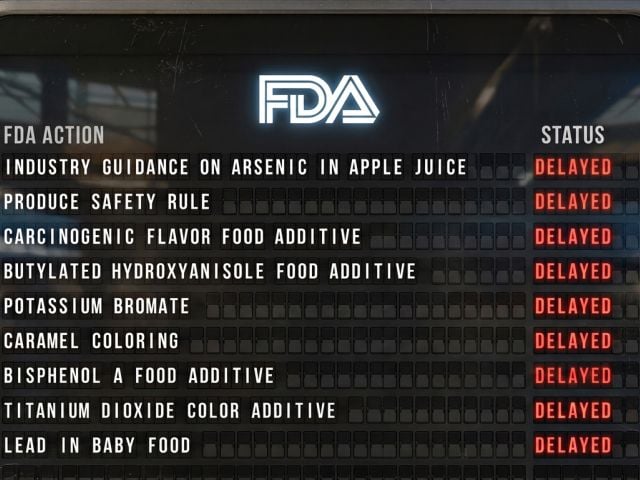
While the USDA administers our school food programs, the FDA reviews the safety of food additives and substances added to school foods on their behalf. Unfortunately, many of the food chemicals addressed by SB 745 have never been reviewed for safety by the FDA for many decades, including BHA, BHT, sodium benzoate, propyl gallate, propyl paraben, butyl paraben, acetaldehyde and diacetyl. Others have not been reviewed by the FDA for many decades. For example, potassium bromate has not been reviewed since 1973, and TBHQ has not been reviewed since 1977.
One-third of these chemicals cannot be used in foods offered in other nations, and many are prohibited from the store brands or natural channel brands of major retailers.
Unlike other nations, the FDA does not have a comprehensive food safety system. In fact, 99% of new food chemicals are reviewed by the food chemical companies that manufacture them, not by the FDA. The vast majority of food chemicals that have been reviewed by the FDA have not been evaluated for many decades.
In combination, FDA’s failure to carefully screen new food chemicals and to periodically re-evaluate the safety of the food chemicals we’re already eating is the reason we are eating thousands of food chemicals that are not permitted in foods in other nations.
The FDA has no plan to reconsider the safety of most of the chemicals addressed by SB 745 any time soon and is not required to do so.
Only six of the chemicals addressed by SB 745 are on a list of chemicals the FDA intends to review some day, and only one action has been taken to conduct any of these reviews.
Just this week, the FDA asked the public for information about BHA, a chemical that was the subject of a formal FDA petition, filed more than 30 years ago. And that was only after the National Toxicology Program in 1991 found it was “reasonably anticipated" to cause cancer.
Fortunately, banning the ingredients covered by SB 475 from school foods will have no impact on our school food professionals. Ten of these ingredients are not currently found in school foods at all. Most are found in fewer than 100 foods – out of 10,000 school foods. For example, titanium dioxide is found in only 60 school foods.
While we are hopeful that change is coming. But the FDA does not yet have a comprehensive food chemical safety system.
State legislators should not wait for the FDA to protect our children from harmful chemicals in school foods.
Thank you for the opportunity to testify.