WASHINGTON – Yesterday Sen. Roger Marshall (R-Kan.) introduced a bill that would, if enacted, fall short of what is needed to close the regulatory gap that allows food ingredients onto the market that have not been sufficiently reviewed.
The “generally recognized as safe,” or GRAS, exemption allows food and chemical companies, rather than the Food and Drug Administration, to decide whether a food chemical is safe.
Congress created the GRAS exemption to apply to common food ingredients with widespread recognition of safety, such as vinegar, flour, and spices. But today companies exploit the loophole to bring all kinds of new food ingredients to market.
Since 2000, almost all new chemicals – 99% – have come onto the market through the GRAS loophole, an Environmental Working Group analysis found.
Marshall’s Better Food Disclosure Act, or Better FDA bill, would require the agency to maintain a list of GRAS substances. It would also require companies to notify the FDA that an ingredient is safe, before those companies make any GRAS determination.
But the bill fails to limit the kinds of ingredients – including carcinogens and reproductive toxicants – that can qualify as GRAS.
It also fails to set standards for the quality and quantity of safety information that can be included as part of the GRAS notification.
Nor does it disqualify GRAS decisions made by experts whose safety determinations might be biased because of conflicts of interest.
The bill does not require the FDA to agree with a company that its chemicals are safe in all cases. In the event of delay – if the FDA fails to review a notice and respond within 180 days – a substance could be automatically added to its list of confirmed GRAS substances.
The bill comes just months after major staff cuts at the FDA. The layoffs reduced the agency’s workforce by about 19%. The Better FDA Act does not include a funding mechanism to ensure the agency has the capacity to review and respond to notices.
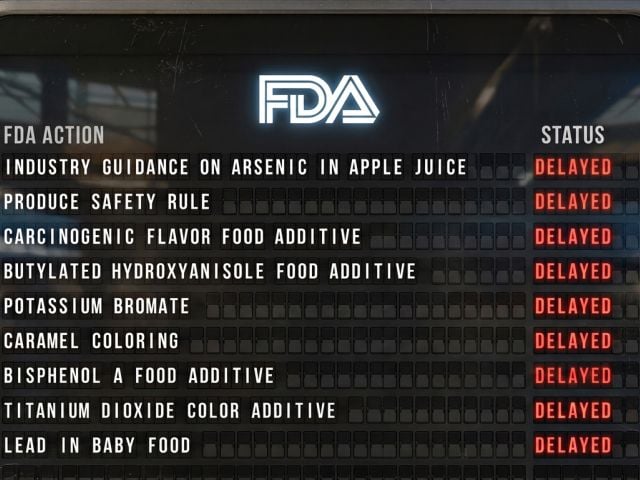
The FDA has also long failed to ensure that the chemicals already used in food are safe. While many chemicals were approved decades ago, the agency does not regularly revisit the safety of ingredients, even when new science identifies a potential for harm. Instead of requiring the FDA to regularly reassess chemicals for safety, the Better FDA Act merely restates the agency’s existing authority.
The following is a statement from EWG Senior Vice President for Government Affairs Scott Faber:
No issue is less partisan than the food we put on our tables. We all want safe food.
We share Sen. Marshall’s diagnosis of the problem – that the FDA has failed for decades to protect us from dangerous food chemicals like potassium bromate, titanium dioxide, PFAS, BPA and other harmful toxins.
We respectfully disagree with his prescription.
Consumers, and the FDA, need more than a list of substances that food and chemical companies have deemed safe. Consumers deserve a food chemical safety system with teeth that prevents harmful substances like carcinogens and reproductive toxicants from being added to food. Consumers deserve a safety system with rigorous data requirements so we can be confident about the food we eat and feed our families every day. Consumers expect the FDA to be in the driver’s seat when it comes to safety decisions, not authorization by default. And, consumers expect regular reassessment of chemicals of concern and the resources to ensure the FDA can get the job done. Mandatory notice to the FDA is a step in the right direction, but it’s not enough to fix our broken food system.
###
The Environmental Working Group (EWG) is a nonprofit, non-partisan organization that empowers people to live healthier lives in a healthier environment. Through research, advocacy and unique education tools, EWG drives consumer choice and civic action.