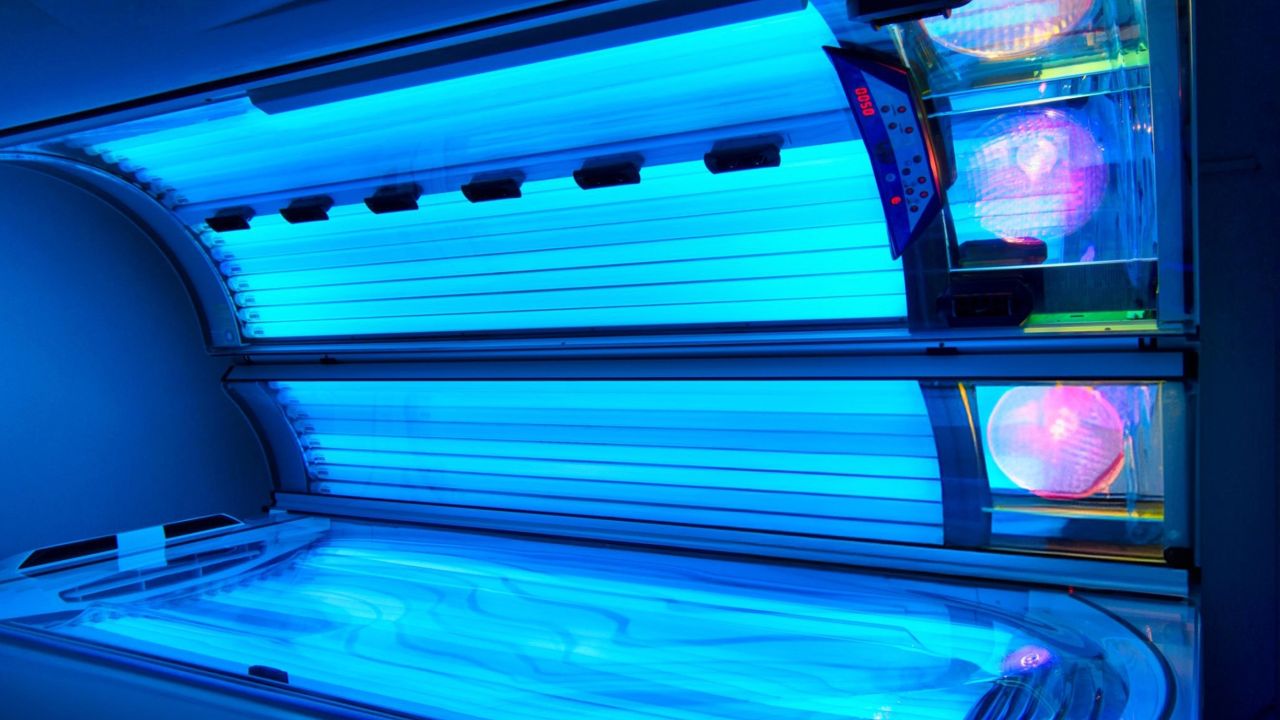
Tanning beds can increase the risk of skin cancer, and the Food and Drug Administration has long warned that children and teens should never use them. Yet the agency has quietly killed a rule that would have banned anyone under 18 from using these devices.
The FDA first proposed the rule over a decade ago, along with other restrictions on the use of tanning beds and requiring that they carry warning labels. If finalized, the rule would have brought the federal government in line with dozens of states that have already restricted teens’ access to the beds.
Instead, Health and Human Services Secretary Robert F. Kennedy Jr.’s FDA recently issued a notice scrapping the proposal. The agency justified the move by claiming industry groups and others raised “scientific and technical concerns” about the plan. It also asserted that withdrawing the proposal doesn’t prevent it from crafting new tanning bed rules in the future.
That leaves minors without any federal protection from an industry that has long targeted teenage girls. It’s hardly going to “Make America Healthy Again.”
At least 23 states, along with most of Canada, the European Union and Australia have already banned minors from tanning beds due to their serious health risks. The FDA’s decision is a clear case of burying its head in the sand while leaving teens in harm’s way.
What the science says
The science on tanning bed risks isn’t emerging or uncertain.
A large scientific body of evidence links tanning bed use to serious health harms, with cancer often occurring decades after first exposure. The FDA’s withdrawn rule was based on these findings, proposing a plan to protect minors across the country from these harms.
In 1999, the National Toxicology Program classified tanning beds as known carcinogens. It cited the link between the ultraviolet, or UV, radiation the beds produce and the risk of developing both melanoma and non-melanoma skin cancers.
Nearly a decade later, the World Health Organization’s International Agency for Research on Cancer, or IARC, placed tanning beds in its highest risk category: a known human carcinogen. This classification is the same given to tobacco and asbestos, based on a 75% increased risk of melanoma for women who start using tanning beds before the age of 30.
A large body of epidemiological evidence also links use of sunbeds to higher melanoma risk, especially when first use occurs before age 30.
The IARC review also found that tanning bed usage increased the risk for other skin cancers including, squamous cell carcinoma, as well as caused serious, lasting eye damage.
Agency avoids action
Despite the evidence, the FDA spent decades avoiding any real action.
When initially faced with evidence showing rising melanoma rates in young women, the agency proposed in 2013 a warning label. That label advised that tanning beds should not be used by people under the age of 18. But there was no way to enforce it to guarantee the labels were used, and no restriction on minors using the beds.
It was a gesture, not a safeguard.
The ultraviolet A, or UVA, radiation inside a tanning bed is very different from the natural sunlight your body encounters outdoors.
Tanning beds are deliberately engineered to maximize UVA radiation, the wavelength responsible for tanning the skin, while minimizing ultraviolet B, or UVB, rays responsible for sunburn. It’s a design choice to keep customers coming back by removing the most immediate, visible consequences of overexposure.
But suppressing the burn doesn’t suppress the damage. UVA radiation penetrates deeper into the skin than UVB and is linked to skin aging, skin immune harm and plays an important role in the development of skin cancer.
Some proponents of tanning beds point to modest, short-lived increases in the body’s vitamin D levels as a justification for use. But researchers are clear. No brief vitamin D boost is worth the added cancer risk, especially when there are safer alternatives, such as dietary changes.
Ineffective sunscreen carries its own risks
The tanning bed problem doesn’t stop at the salon door.
Consumers might think wearing sunscreen while sunbathing protects them from harmful UVA exposure. But many sunscreens primarily block the rays that cause sunburn, UVB, while providing far weaker protection against UVA. The result is UV exposure that closely resembles a tanning bed.
Researchers calculated that a two-week vacation spent using a sunscreen with poor UVA protection, even with frequent reapplication and no visible sunburn, delivers the same solar exposure as 10 trips to a tanning salon.
That’s why EWG’s Guide to Sunscreens® places heavy weight on strong UVA protection in the product rankings. And it’s why we’ve worked for decades to urge the FDA to require stronger UVA standards and set a limit on sun protection factor, or SPF, values for U.S. sunscreen.
The gap between what sunscreens promise with their often high SPF labels and what they actually deliver on UVA is well documented.
When EWG tested sunscreens in 2021, we found that, on average, UVA protection was just one-quarter of the SPF level advertised on the label.
FDA researchers reached the same conclusion in their own sunscreen testing, finding that many U.S. sunscreens lack adequate UVA protection. The agency flagged a particular concern that high SPF numbers often mask weak UVA coverage.
EWG Verified® sunscreens go one step further. These products must undergo additional testing to confirm that their UVA protection exceeds the requirements in both the U.S. and in Europe – not just meet them. They’re also free from EWG’s chemicals of concern, so you know you’re buying a safer and more effective sunscreen for you and your family.
The sun is both a major cause of skin cancer and the body’s primary source of vitamin D, an essential nutrient that forms when skin is exposed to intense sunlight.
But generating vitamin D needs only a few minutes of sun exposure per week during summer for people with less melanated skin. Major medical associations advise against deliberate, prolonged sun exposure as a strategy for boosting vitamin D levels. The health risks outweigh the returns.
What you can do
The science on tanning beds, sunscreens and UV risks is clear, even if federal policy is not.
EWG provides actionable consumer advice to minimize the potential for long-term harm:
- Avoid tanning beds entirely. There is no safe level of use, especially for minors. The risk increases the younger that someone starts using them.
- Use sunscreen. High SPF numbers don’t always guarantee UVA protection. It’s important to find a sunscreen that works for you.
- Check out EWG’s tools. Search EWG’s Guide to Sunscreens™ and EWG's Healthy Living App to find top-rated products that provide balanced UVA/UVB protection without ingredients of concern.
- Cover up. Wear protective clothing, hats and UV-blocking sunglasses.
- Seek shade. Find or create your shade with an umbrella or canopy.
- Time your outdoor activities. UV radiation is strongest between 10 a.m. and 4 p.m. Plan your outdoor time around the sun's peak hours when you can.
Go outside. Have fun. Don’t get burned. A tanning bed isn’t worth the risk.