For decades, elite skiers and snowboarders chased medals with the help of high-performance wax made with the toxic “forever chemicals” known as PFAS.
Winter sports enthusiasts usually slicked fluorinated, or “fluoro,” wax on the bottom of their equipment. The wax gave athletes a powerful advantage, especially in wet snow, and delivered what some described as “ridiculous” speed, not to mention potential harm to people and the environment.
Fluorine indicates the likely presence of PFAS.
But that era is over.
For the first time in Olympic history, the games will be completely free of toxic, fluorinated ski waxes. The shift follows a total ban by the International Ski and Snowboard Federation, which took effect during the 2023-2024 season.
The 2026 Milan Cortina Winter Games will serve as the ban’s highest-profile test yet.
These Olympics mark a turning point for athlete safety, environmental protection and the global effort to phase out toxic forever chemicals.
How the ban works
In 2019, the federation announced plans to ban fluorinated waxes. But enforcement required reliable ways to detect fluorine on race skis, a process that took several seasons to perfect.
In 2023, the International Biathlon Union also banned ski preparation products containing fluoro chemicals. Top-tier events, including the World Cup and World Championships, began to conduct mandatory PFAS tests. Random tests were also introduced at lower-level competitions to ensure the rule applied across the sport, not just on its biggest stages.
Officials are enforcing the rule at these Olympics, ensuring they take place on a level, fluorine-free playing field. Every pair of skis competing at the Olympics will be tested for the presence of fluorine. Athletes can be disqualified if random checks for fluorinated compounds detect them.
In fact, two Olympic skiers, Han Dasom and Lee Eui-jin of South Korea, were banned from these games after tests found PFAS on their skis.
Why were PFAS used in ski wax?
At the highest levels of competition, even just a few fractions of a second can mean the difference between earning the gold and going home empty-handed. That’s why, since the 1980s, elite skiers and snowboarders have turned to these types of waxes.
PFAS repel water and reduce friction, allowing skis and snowboards to glide more quickly, particularly in wet snow and slush. In events where glide can determine who reaches the podium, that water-shedding power translated into a measurable competitive advantage.
Over time, manufacturers developed more concentrated forms of PFAS to boost the speed advantage. But the performance jump came at a steep cost.
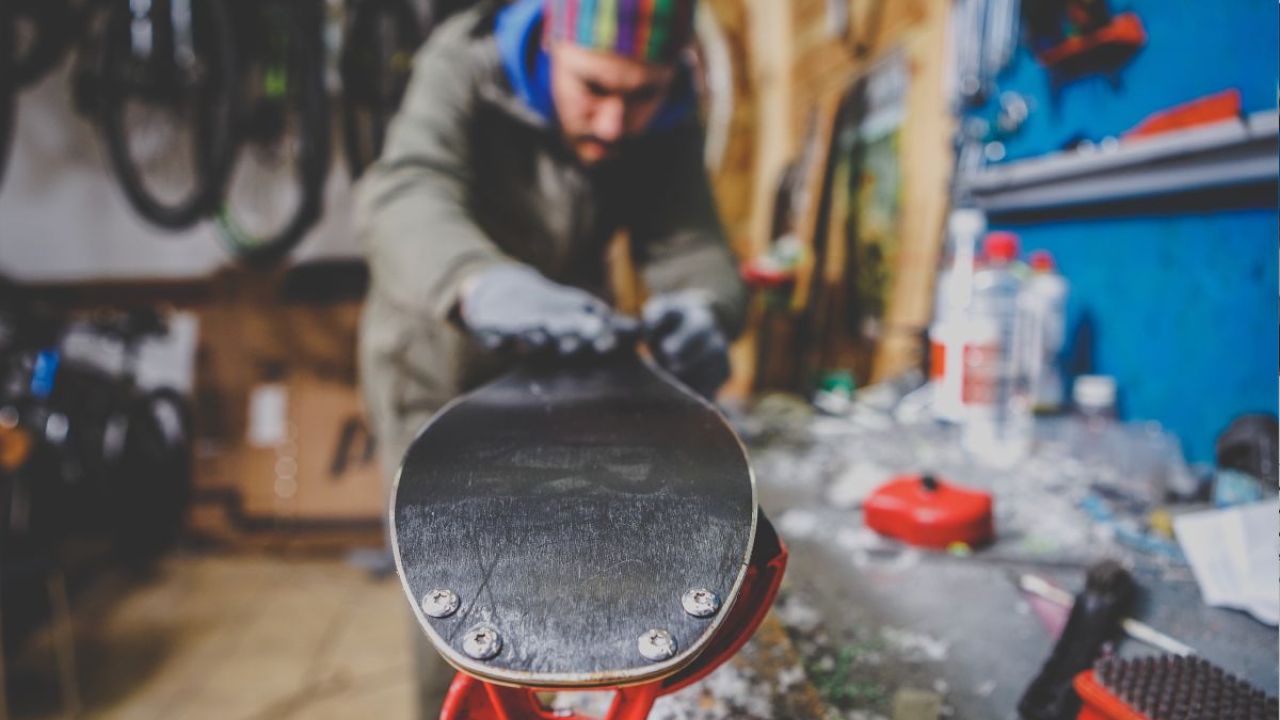
Application of fluoro wax requires heat, and technicians often worked in dedicated enclosed cabins where fumes could build up.
Those technicians, many of whom worked daily with the products, faced some of the highest exposures, inhaling vaporized PFAS season after season of working with the contaminated wax. As evidence mounted about the chemicals’ health and environmental harms, the competitive edge they provided became harder to justify. These concerns paved the way for the ban.
Environmental contamination from ski wax
The environmental impact is also significant. With use, wax continuously wears off equipment, shedding tiny particles into the snow. Studies measuring PFAS in melted snow, nearby soil and aquifers and surface water after ski competitions have found strikingly high concentrations of these toxic “forever chemicals.”
PFAS are known as “forever chemicals” because they don’t break down in the environment or in our bodies. But contamination doesn’t stay on the mountain. PFAS from decades of fluorinated wax use can persist in alpine ecosystems, leaching into waterways and moving through food chains, affecting wildlife and downstream communities for decades.
The health risks of PFAS exposure
As the science became clearer, so did the stakes. Was a marginal gain in speed worth exposing elite athletes, technicians and communities to chemicals that can cause long-term health issues?
The Centers for Disease Control and Prevention has detected PFAS in the blood of 99% of Americans, including newborn babies.
Very low doses of PFAS have been linked to suppression of the immune system. Studies show exposure to PFAS can also increase the risk of cancer, harm fetal development and reduce vaccine effectiveness, among other serious health concerns.
What this means for consumers
Consumers shouldn’t have to bear the burden of protecting themselves from toxic chemicals. That is the responsibility of federal regulators. But until laws catch up with the science, informed choices protect both your personal health and the winter environment you love.
Ski wax is just one item on a long list of products historically treated with these chemicals. Many states, like Maine and Minnesota, are banning PFAS in consumer products, but the chemicals can still be found in certain foods and in soil, as well as some sources of drinking water, nonstick cookware, firefighting foam, personal care products, textiles and many others.
In April 2024, EWG President Ken Cook spoke with Peter Arlein, a former ski-shop wax technician who decided to take matters into his own hands. He founded the Colorado-based company mountainFLOW, which produces ski wax and bicycle lubricants without PFAS. You can listen to that episode here.
If you ski or snowboard recreationally, you can enjoy the snow without the toxic footprint. PFAS-free wax is now widely available and highly effective.
- Ask before you wax. If you get your equipment professionally serviced, ask your local shop what type of wax they use. Many shops have already pivoted to PFAS-free alternatives, and some manufacturers have stopped producing fluorinated wax entirely.
- Check the label. If you apply wax yourself, look for products labeled PFAS-free or fluoro-free. Companies like Colorado-based mountainFLOW have pioneered high-performance wax made without toxic chemicals.
- Safety first. When applying any wax at home, work in a well-ventilated area. Even with safer PFAS-free alternatives, it is a good practice to wear a mask during the heating and scraping process to avoid inhaling fine particles.