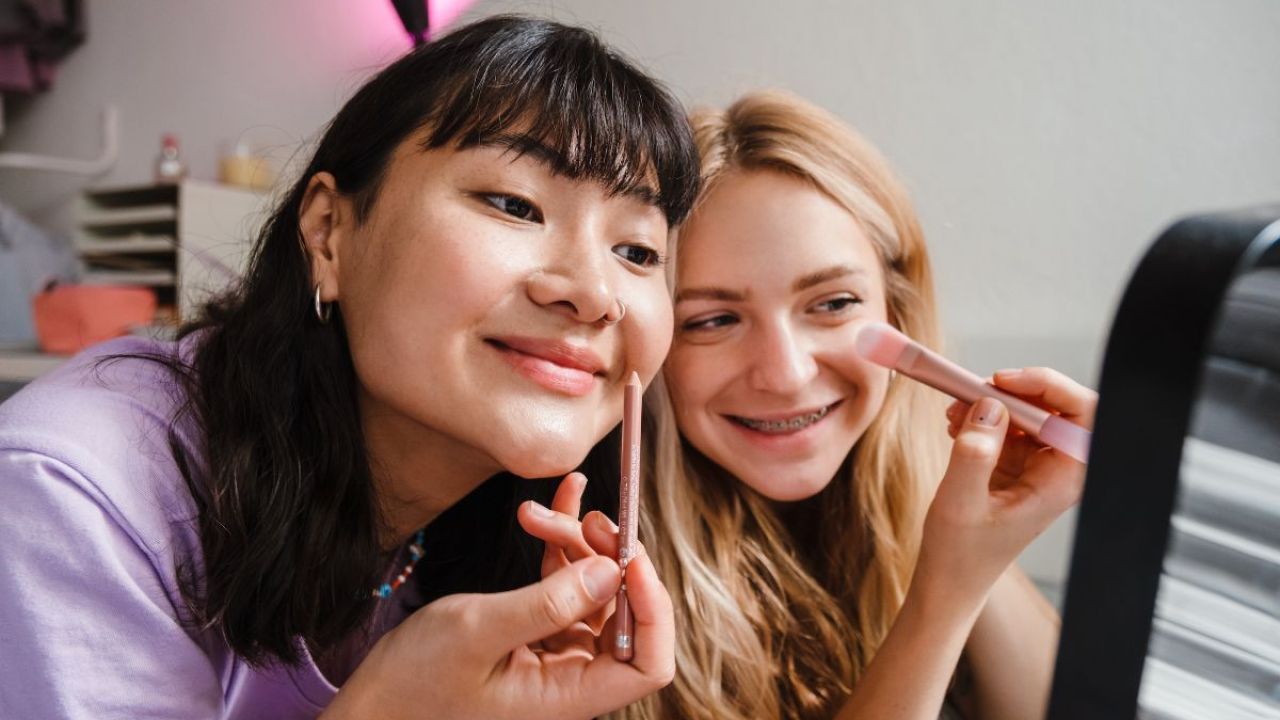
TikTok is full of influencers’ “get ready with me” videos showcasing glossy creams and trendy serums. Kids and teens watch these and then start their own complex skincare routines, sometimes filming them for their own TikToks.
But some of the products featured in these videos could expose children and teens to ingredients that damage delicate, developing skin, according to a new study.
Researchers at Northwestern University reported many of the skincare products young TikTok users see in videos posted by other kids and teens contain irritants and allergens.
Algorithms drive this kind of content to young users. When a child or teen interacts with one skincare video, more show up in their personalized feeds. Seeing so many multistep skincare routines can make kids see them as normal and popular.
The lengthy routines shown in the study’s videos are not uncommon. According to a 2023 EWG-commissioned study, 38% of Gen Z use skincare products daily, and another 23% do so weekly. Per the same study, Gen Zers are more likely to get product safety information from social media than from the product labels themselves.
Higher risks for children
The conversational style of these videos can instill trust and a sense of connection in many young viewers about the various products being used. But that faith is without good reason, since product safety is rarely part of the conversation.
Kids and teens are particularly susceptible to the health harms some skincare products can cause.
Children’s skin is thinner, more permeable and more vulnerable to damage than adult skin. Products that can bring anti-aging or skin brightening benefits to older users – like retinol, vitamin C and exfoliating acids – can break down younger users’ skin barrier and possibly redden, irritate or dry it out. The same can be true for products used by teens.
Parents may not realize the risks until a rash or reaction appears.
What the study found
For the study, published in the Pediatrics journal in June, the researchers recreated the experience of a young TikTok user to see what kind of skincare content they’re exposed to from creators around their age.
They created two TikTok profiles and reported being 13 years old to simulate a young viewer’s “For You” tab, which displays content most relevant to the user.
The team reviewed 100 videos featuring skincare routines made by users between 7 and 18.
They recorded 260 products that appeared in the videos, seeing whether any items were made using any of 38 potentially problematic ingredients for kids and teens. They found 20 such ingredients across the various products. Many of the most frequently used products contained at least one contact allergen.
The videos with the most views often portrayed skincare routines that included several potentially irritating active ingredients in multiple products. One video had products with as many as 21 such ingredients.
Ingredients of concern
Active ingredients in some over-the-counter drug products, such as acne creams, are designed to target particular skin issues and are tested for safety and efficacy. But some can be harmful when used in high concentrations or on sensitive skin. And most personal care product ingredients are not required to undergo any premarket safety review.
The most common active ingredients in products reviewed by the researchers were alpha hydroxy acids, or AHAs. Citric acid, an AHA, was found in 29% of the products featured in the TikToks. Although its hazards are minimal, citric acid can sometimes irritate more sensitive skin or worsen existing skin conditions.
Many routines combined different products with the same active ingredients – mainly AHAs – which can increase the risk of skin irritation like redness, itching or burning. Product combinations can also put teens at risk of unintentionally creating chemical mixtures that can cause greater harm than exposure to just one chemical.
The most common ingredient – found in over half of the products – was fragrance, a mix of chemicals that companies aren’t required to disclose. Often labeled simply “fragrance” or “parfum,” these mystery blends may contain any number of potentially harmful ingredients.
Several featured products also contained ingredients known to increase sun sensitivity, but only one-fourth of the videos included sunscreen, suggesting some youth may not use daily sun protection.
What you can do
EWG’s Skin Deep® database can help you find products that are safer for skin of any age.
To find healthier options, look for products with lower scores, which have fewer hazardous ingredients and restrictions on how they can be used.
To find products that meet our strictest health and safety standards, look for those that bear the EWG Verified® mark, which signals the product has been carefully reviewed by our scientists and manufacturers disclose all ingredients on the label.
For sun protection products, consult EWG’s annual Guide to Sunscreens, which rates sunscreens on their effectiveness and whether they contain harmful ingredients.
To get this info on the go, use EWG’s Healthy Living app, which puts product and ingredient ratings at your fingertips.