SACRAMENTO – Four bills sponsored by the Environmental Working Group this week cleared appropriations committees in the California Legislature, sending the legislation for full floor votes as state lawmakers enter their final voting stretch before adjournment.
The bills target some of the most pressing consumer health and affordability issues facing Californians: toxic “forever chemical” pesticides, undisclosed chemicals in baby diapers, America’s addiction to ultra-processed foods and sky-high electricity bills.
“Sacramento lawmakers have a chance this month to prove, once again, why California continues to reshape the national marketplace on health and safety,” said Bernadette Del Chiaro, EWG's senior vice president for California.
“Each of these bills reflects something simple: people deserve transparency, and they deserve affordable options that don't compromise their health,” she added.
Using solar to lower sky-high electricity bills (Senate Bill 868)
SB 868, the Plug and Play Solar Act, would cut the red tape blocking affordable balcony solar systems from being placed in apartments, condos and single-family homes, while ensuring the systems meet strict safety standards. The bill sustained some extensive amendments in the Assembly Appropriations Committee that have yet to be reviewed and analyzed.
The bill is authored by Sen. Scott Wiener (D-San Francisco) and sponsored by EWG and the Abundance Network, and now heads for an Assembly floor vote.
“Balcony solar lets California residents place a small solar panel on a sunny patio or balcony, plug it into a regular wall outlet and start saving on their electricity bill right away,” said Del Chiaro. “Installing balcony solar is as simple as plugging an appliance like a toaster into a standard wall outlet. At a time when many struggle to pay their energy bills, balcony solar is a powerful cost-cutting tool.
“We have yet to see the amendments to the bill and can’t yet comment on their significance,” she added.
California electricity rates have nearly doubled over the past decade, leaving the state with the nation's second-highest energy prices. A single 400-watt balcony solar system can cover roughly 14% of the average apartment's electricity usage, providing savings of about $250 per year. While the cost of balcony solar starts around $500 today, EWG expects SB 868 would enable broader adoption of the systems, making them more accessible to low-income households.
Balcony solar already thrives in Europe, with more than 4 million systems installed in Germany alone, and efforts to expand deployment continue to gather steam in other countries.
In the U.S., regulatory barriers have kept the technology out of reach for many – barriers SB 868 would remove while setting statewide safety standards.
Other states are moving in the same direction, including New York, where a balcony solar bill now awaits Gov. Kathy Hochul's signature.
Widespread use of PFAS pesticides (Assembly Bill 1603)
AB 1603, by Assemblymember Nick Schultz (D-Burbank), would address the use of toxic "forever chemicals" pesticides allowed for use in California. It now heads to the Senate floor.
More than 2.5 million pounds of PFAS pesticides are applied to California crops each year, contaminating produce, soil and water. EWG research found PFAS pesticides on nine in 10 California-grown samples of peaches, nectarines and plums tested by the state.
As introduced, AB 1603 would have banned the use, sale and manufacture of PFAS pesticides statewide by 2035, paused new state approvals immediately, phased out by 2030 the PFAS pesticides not permitted in Europe, and required public disclosure of PFAS pesticide use.
Under pressure from the pesticide industry and agricultural interests, the bill's author agreed to remove the ban provisions and other restrictions, in order to keep the legislation moving.
Even in its amended form, AB 1603 is an important step forward as it represents growing legislative concern about regulating PFAS as a class of chemicals, and it marks the first time California has required the state to systematically track and disclose PFAS pesticide use, information state agencies didn't have before EWG's research brought it to light.
“We need to stop spraying our strawberries and peaches with toxic forever chemicals,” said Susan Little, EWG's California legislative director. “We are contaminating our food and water supplies and it needs to stop.”
“With this bill, we are calling a spade a spade so that farmers and the public alike can be aware of the extent of this problem and we can continue to address it,” she added.
Of the thousands of PFAS used in commerce, very few have comprehensive toxicity data, but what we do know is alarming: the health harms linked to the most well-studied PFAS, including cancer, immune suppression, and reproductive and developmental harm, show up at doses far lower than regulators once considered safe.
Baby diapers made of mystery chemicals (Assembly Bill 1901)
AB 1901, by Assemblymember Marc Berman (D-Menlo Park), would require manufacturers of children's diapers sold, distributed or manufactured in California to fully disclose all intentionally added ingredients, both on product packaging and online.
EWG is co-sponsoring the bill alongside Consumer Reports, the Center for Environmental Health and Children Now. AB 1901 now heads to a full Senate floor vote.
Babies spend much of their first two to three years of life in diapers. Yet disposable diapers are exempt by the federal government from carrying ingredient labels of any kind, and manufacturers are not required to inform regulators about the chemicals used to make them.
Today, manufacturers can hide dozens of chemicals behind umbrella terms like “fragrance” or “colors,” potentially toxic mystery cocktails that leave parents with no way of knowing what chemicals sit against their baby's skin day after day.
“A newborn can't choose what touches their skin, and right now, neither can their parents because manufacturers have made sure of it,” said EWG’s Little.
“Every hour of every day, an infant's skin is absorbing whatever industry decided not to tell us about. Parents can read a nutrition label or a shampoo label but not this. AB 1901 isn't asking for anything radical. It's asking for diapers to contain ingredient labels that are similar to labels required of other baby products,” she added.
Recent tests have found diapers may contain volatile organic compounds; phthalates, linked to hormone disruption and reproductive and developmental harm; quaternary ammonium compounds, or quats, used in wetness indicators and linked to reproductive effects, skin irritation and asthma; and dyes and bleaching agents that can cause allergic reactions or skin and respiratory irritation. Because babies' skin is thinner, more permeable and still developing, they are especially vulnerable to these exposures.
EWG has created a Guide to Safer Diapers to help parents navigate the market in the meantime, and diapers earning the EWG Verified® mark meet our strict standards for ingredient transparency and health.
What is and isn't ultra-processed food (Assembly Bill 2244)
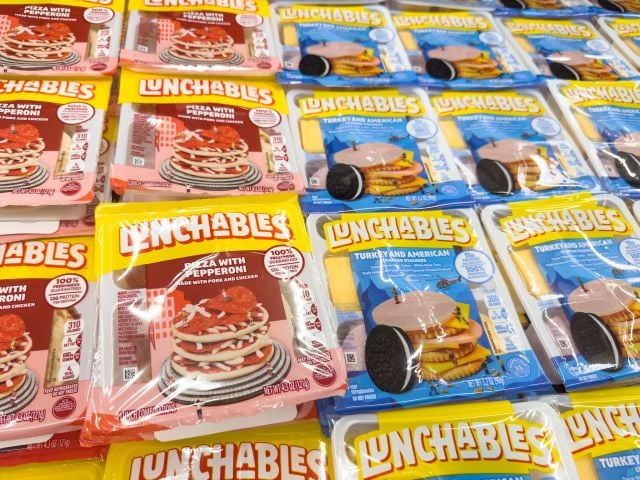
AB 2244, by Assemblymember Jesse Gabriel (D-Encino), would create a first-of-its-kind state certification program allowing shoppers to easily identify foods that are not ultra-processed, or UPF. These foods make up more than two-thirds of children's diets and more than half of the typical adult diet in the U.S., and have been linked to serious health harms including cancer, heart disease, Type 2 diabetes, metabolic disorders and mental health issues.
If enacted, the bill would establish a standardized “Non-Ultraprocessed Certified” label. Products could carry the new label if they are classified as “not UPF” under state law. The legislation will next get a full Senate floor vote.
The California Department of Public Health would oversee accreditation of independent certification agents, with products subject to recertification at least every three years. Certification agents would be required to register with the state, disclose all certified products, and submit to state audits at any time, with a public online list of certified products and enforcement against misuse of the label.
“Parents shouldn't need a Ph.D. in chemistry to understand what they're feeding their kids,” said Del Chiaro. “AB 2244 will empower consumers with clear, trustworthy information and make it easier for them to locate healthier foods that are free from harmful additives like flavors. This new seal doesn't limit consumer choice, it just makes informed choice possible.”
“Consumers deserve labels they can trust. And families deserve a simple way to tell which foods are closer to what comes from a kitchen rather than a factory,” she added.
The bill would also require large food retailers, those selling more than 25 individual non-UPF-certified product types and generating more than $10 million in annual sales, to display certified products in a way that's easy for shoppers to identify, such as through special signage or physical separation in stores.
What's next
If lawmakers pass the bills, they would head to Gov. Gavin Newsom's desk for his signature.
“California has an opportunity, once again, to show the rest of the country what real consumer protection looks like,” Del Chiaro said. “We're urging lawmakers to finish the job on all four of these bills.”
###
The Environmental Working Group (EWG) is a nonprofit, non-partisan organization that empowers people to live healthier lives in a healthier environment. Through research, advocacy and unique education tools, EWG drives consumer choice and civic action.