WASHINGTON – In an unprecedented move that may violate federal law, the Environmental Protection Agency is proposing to roll back four final enforceable limits on the toxic “forever chemicals” known as PFAS in tap water. Water systems can apply to delay compliance for PFOA and PFOS until 2031.
The Trump administration’s move will dismantle the most significant public health advance in drinking water regulation in a generation.
Instead of “Making America Healthy Again,” the EPA is handing industries a massive win and letting them keep the tap running on PFAS pollution, prolonging Americans’ exposure to chemicals linked to cancer, immune suppression and other harms.
“The EPA was created to protect Americans from exactly this kind of chemical contamination,” said Ken Cook, president and co-founder of the Environmental Working Group. “You cannot make America healthy again while allowing toxic PFAS to flow freely from our taps.
“The Trump EPA is caving to chemical industry lobbyists and water utility pressure – and in doing so it is condemning millions of Americans to drink contaminated water for years to come.
“The price of this decision will be paid by ordinary people, in the form of more PFAS-related diseases,” he added.
The agency also proposes to eliminate the “hazard index,” a tool designed to protect people from compounds of chemicals in drinking water.
The Biden administration finalized the six long-sought PFAS tap water protections in a 2024 rule. The landmark move came after decades of industry deception, regulatory failure and mounting evidence that PFAS are contaminating drinking water from coast to coast.
Legally dubious action
The EPA’s plan to reverse the four science-based standards almost certainly runs afoul of the anti-backsliding provision of the Safe Drinking Water Act, which explicitly requires that any revision to a drinking water standard “maintain, or provide for greater, protection of the health of persons.”
“The administration is abandoning science-based protections at the exact moment its own tests prove we need them most,” said Melanie Benesh, vice president of government affairs at EWG.
“This is a deliberate decision to expose American families to chemicals linked to cancer and other serious health harms. Rolling back limits on four PFAS and then allowing water systems to push compliance deadlines to 2031, when contamination is ongoing, is unconscionable.
“The communities least able to protect themselves will pay the highest price. That is not regulatory reform. It is an environmental injustice,” she added.
The current EPA’s priorities could not be clearer: protect polluters, abandon public health.
Actor and activist Mark Ruffalo called the rollback "a bitter reminder that President Donald Trump and his team have been putting the polluters first when it comes to our air, water and food." Read his full statement.
What the EPA is doing
The 2024 rule targets six PFAS compounds: PFOA, PFOS, PFNA, PFHxS, GenX and PFBS.
It set enforceable maximum contaminant levels, or MCLs, at 4 parts per trillion, or ppt, for PFOA and PFOS and 10 parts per trillion for GenX, PFNA and PFHxS.
The EPA also set the hazard index for for GenX, PFBS, PFNA and PFHxS. Mixtures are more harmful than single compounds.
The Trump EPA is leaving the PFOA and PFOS standards in place. It will also allow utilities to apply to extend the compliance deadline from 2029 to 2031, delaying vital health protections for millions of Americans.
The agency is withdrawing regulations for PFNA, PFHxS, GenX and PFBS, claiming it wants to re-review the science on these chemicals. But the EPA is already familiar with the science: Its own toxicity assessments found that exposure to even extremely small doses of PFNA, GenX and PFHxS could pose serious health risks comparable to those of the chemicals they replaced.
“The EPA’s own data proves that the known extent of PFAS contamination is getting worse, not better,” said David Andrews, Ph.D., chief science officer at EWG.
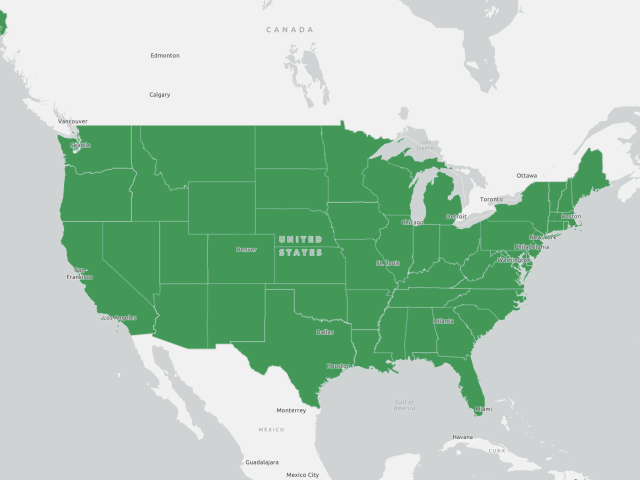
“We now know that 176 million Americans drink tap water from systems contaminated with PFAS.
“In 2020, EWG estimated PFAS contaminates the water of 200 million Americans. The EPA’s own test data confirms we were right. Yet the Trump administration’s response to escalating contamination is to weaken the only enforceable limits we have ever had.
“Delaying, weakening or abandoning PFAS limits is a public health betrayal,” he added.
Wiping out protection
Scrapping enforceable limits on four toxic chemicals and allowing utilities to extend compliance deadlines by two years for PFOA and PFOS does not maintain protection. It systematically reduces it.
The extension is a two-year gift to the water utilities and industrial polluters that have spent years lobbying against these limits.
“By weakening PFAS limits and pushing back compliance deadlines, the Trump administration is ensuring the communities harmed by PFAS contamination will be left waiting for relief,” said Andrews.
Neighborhoods across the country have already waited decades for protection from PFAS contamination. Many have been drinking contaminated water since the 1950s and 1960s, when companies like 3M and DuPont began releasing PFAS into the environment, even as they hid the evidence of harm from regulators, workers and the public.
“For years, chemical companies concealed what they knew about the dangers of these chemicals,” said Cook. “Communities paid for that deception with their health.”
Widespread PFAS pollution
About 176 million Americans drink tap water contaminated with PFAS, according to the EPA’s latest tests of the nation’s drinking water supply conducted as part of the Fifth Unregulated Contaminant Monitoring Rule, or UCMR 5, which requires U.S. water utilities to test drinking water for 29 individual PFAS compounds.
But the true scale of contamination could be much greater. EWG estimates nearly 30,000 industrial polluters could be releasing PFAS into the environment, including into sources of drinking water, affecting more than 200 million Americans.
In 2025, EWG scientists published a peer-reviewed study that found advanced PFAS water treatment systems deliver far greater public health benefits than previously recognized. These systems reduce not only PFAS but also cancer-causing disinfection byproducts, agricultural nitrates and heavy metals simultaneously.
In the 19 water systems EWG studied, PFAS treatment technologies led to an average 42% reduction in trihalomethane levels and a 50% drop in haloacetic acid levels. They are both known carcinogens produced during water disinfection.
Despite these demonstrated benefits, only 8% of U.S. water systems use advanced water filtration. Small and rural systems, which serve the populations most vulnerable to contamination and least able to afford treatment, are the least likely to have those technologies. Just 7% of very small water systems use advanced filtration, compared to 28% of the largest utilities.
“Advanced PFAS treatment is not just about forever chemicals. It reduces multiple toxic contaminants at once. The public health opportunity is enormous,” said Andrews.
Health risks of PFAS exposure
PFAS are toxic at extremely low levels. They are known as forever chemicals because once released into the environment, they do not break down, and they can build up in the body. The Centers for Disease Control and Prevention has detected PFAS in the blood of 99% of Americans, including newborn babies.
Very low doses of PFAS have been linked to suppression of the immune system. Studies show exposure to PFAS can also increase the risk of cancer, harm fetal development and reduce vaccine effectiveness.
PFAS have been linked to cancer, reproductive harm, immune system damage and other serious health problems, even at low levels.
For over 30 years, EWG has been dedicated to safeguarding families from harmful environmental exposures, holding polluters accountable and advocating for clean, safe water.
What you can do
While EWG fights to restore and strengthen these protections, Americans can take steps now to reduce their PFAS exposure:
- Filter your tap water. Reverse osmosis and activated carbon filtration systems are the most effective methods for removing PFAS from drinking water. EWG has tested 10 popular home water filters and published the results at ewg.org.
- Check EWG’s Tap Water Database. Use your Zip code to learn what contaminants have been detected in your local water supply.
- Contact your elected representatives. Demand that Congress investigate the legality of the EPA’s rollback and act to restore enforceable PFAS limits in federal law.
###
The Environmental Working Group is a nonprofit, non-partisan organization that empowers people to live healthier lives in a healthier environment. Through research, advocacy and unique education tools, EWG drives consumer choice and civic action.