SACRAMENTO – Stronger safeguards for families and the environment are moving forward after four bills sponsored by the Environmental Working Group cleared California Legislature spending committees. The bills address consumer protection, food safety and clean energy.
“Today is a great day for California families,” said Bernadette Del Chiaro, EWG’s senior vice president for California. “Four bills that would make a real and lasting difference in people's lives just cleared a major hurdle.”
Three of the bills are pending in the Assembly and must now pass a floor vote by May 29 to proceed to further debate and approval before getting sent to the governor.
One bill is pending in the Senate and faces the same deadline for a floor vote ahead of further action.
The bills address some of the most urgent and unresolved threats to California consumers:
- The toxic “forever chemicals” known as PFAS used on produce as pesticides
- Mystery ingredients in baby diapers
- No clear way for consumers to identify harmful ultra-processed food, or UPF
- Electricity bills that are straining California ratepayers’ pocketbooks
“Californians are being exposed to toxic chemicals in their food, their baby products, and their water. And their electricity bills are bleeding them dry,” said Del Chiaro.
“The legislature has a historic opportunity to act on all of these urgent issues this year. We are calling on every legislator to vote yes on each of these four bills,” she said.
“The clock is ticking,” said Susan Little, EWG director of California legislative affairs. “These bills now go to the full Assembly and full Senate for votes that will determine whether California continues to lead the nation on consumer protection or lets the moment slip away.
“EWG will be fighting for every vote between now and May 29,” she added.
Potential for groundbreaking change for consumers
Assembly Bill 1603: Banning PFAS pesticides
California, which grows half the nation’s produce, applies more than 2.5 million pounds of PFAS pesticides to crops every year, contaminating fruit and vegetables, soil and water. State test results have already found PFAS pesticide contamination on nine out of 10 samples of non-organic peaches, nectarines and plums grown in California.
AB 1603 would ban the use, sale and manufacture of PFAS pesticides used on crops statewide by 2035. The bill, authored by Assemblymember Nick Schultz (D-Burbank), would immediately pause new state approvals of these pesticides, set a 2030 deadline for phasing out use in the state of PFAS pesticides not allowed in Europe and require public disclosure of all PFAS pesticide applications.
“Consumers have no idea that PFAS pesticides are being deliberately sprayed on California crops, contaminating produce soil and water,” said Del Chiaro.
“California grows food for the entire country. When forever chemicals are so pervasive on produce, that is not a California problem. That is a national food safety problem.”
Assembly Bill 1901: Baby diaper ingredient disclosure
Parents and caregivers have a right to know what chemicals sit against their baby’s skin 24 hours a day, seven days a week, for the first years of life.
Authored by Assemblymember Mark Berman (D-Menlo Park), AB 1901 would set a first-in-the-nation requirement for manufacturers of children’s diapers sold, distributed or manufactured in California to fully disclose all ingredients on the product packaging and online.
Recent tests found diapers can contain potentially harmful ingredients like phthalates, which are linked to hormone disruption, and bleaching agents linked to skin and respiratory irritation.
Infants and toddlers are especially vulnerable, because their bodies are still developing and their skin absorbs chemicals more quickly.
“A baby wears a diaper every minute of every day for years, yet parents are forced to make purchasing decisions with zero information about what’s in them,” said Little.
“AB 1901 is the most straightforward consumer protection bill you can imagine. It just requires manufacturers to tell parents what is in their product,” she added. “There is no good reason to vote against it.”
California already proved with baby food that this approach works. When the state required disclosure of heavy metal test results, manufacturers lowered levels in the food.
Assembly Bill 2244: Ultra-processed food certification seal
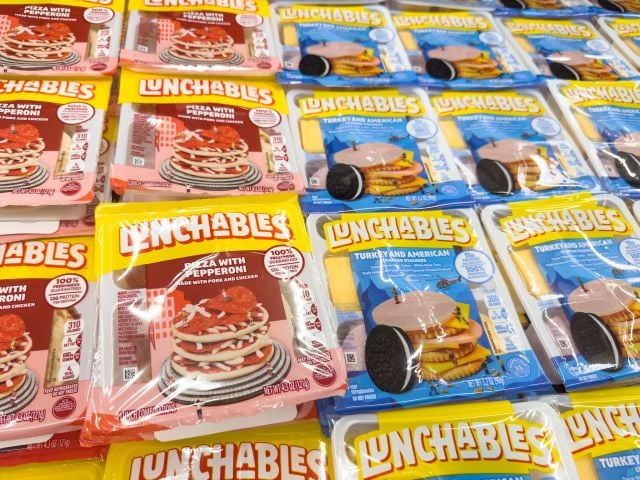
Ultra-processed food makes up more than two-thirds of children’s diets and more than half of the typical adult diet in the U.S. Research consistently links high UPF consumption to obesity, metabolic disease and other serious health harms.
But it’s hard for consumers to know what is and isn’t UPF at a grocery store or supermarket.
AB 2244, authored by Assemblymember Jesse Gabriel (D-Encino), would establish a California certification system for foods free from the additives, emulsifiers, artificial dyes and flavors that characterize UPF.
This system would be based on the state’s trailblazing UPF definition enacted last year. Products meeting the standard could carry a certification seal, a clear, at-a-glance tool to help consumers make healthier choices.
“Parents are trying to feed their kids better, but the food industry has made it nearly impossible to know what you are actually buying,” said Del Chiaro.
“AB 2244 gives consumers a simple, trusted signal at the point of purchase – no chemistry degree required.”
“California already defined ultra-processed food. Now it is time to bring that definition to the grocery aisle. This bill could change how millions of American families shop for food, starting in California,” she added
Senate Bill 868: Balcony solar
California ratepayers face some of the highest electricity bills in the country, as well as some of the worst air pollution. Solar energy can help solve both problems.
Small, portable balcony solar panels offer a practical, affordable alternative that is especially suitable for renters because they’re not permanently fixed to a home. But complex rules make the systems largely unavailable in the U.S., even as balcony solar markets thrive in Europe.
Authored by Sen. Scott Wiener (D-San Francisco), SB 868 would streamline and accelerate access to balcony solar by removing unnecessary regulatory barriers while establishing consumer safety standards.
Setup is simple – comparable to plugging a small appliance into a wall outlet – and affordable enough that most consumers could recoup their investment within a few years.
“Electricity bills are crushing California families’ finances, and the solution could be sitting not just on rooftops but also on balconies and patios across the state,” said Del Chiaro.
“Balcony solar puts clean, affordable energy within reach of millions of California consumers. SB 868 removes the red tape standing between California families and lower electricity bills. There is every reason to make clean energy easier to access for everyone,” she added.
Protein bill fails to advance
Another EWG-backed bill, to require manufacturers to disclose levels of heavy metals in their protein supplement products, failed to advance after the Senate Appropriations Committee held it in suspense.
Millions of Californians consume protein shakes, powders and bars every day but don’t know whether the products contain dangerous levels of lead, cadmium, mercury or arsenic.
SB 1033, authored by Sen. Steve Padilla (D-San Diego), would have followed similar ingredient transparency state laws for baby food and prenatal vitamins.
A recent study found about half of protein supplement products tested exceeded at least one state or federal safety limit for heavy metals. These substances are potent toxins, and even at low levels, repeated exposure can cause lasting and irreversible harm, particularly to pregnant people and the developing fetus.
Next steps for remaining bills
The four remaining EWG-backed bills must pass their respective chambers – the three Assembly bills in a full Assembly floor vote and the Senate bill in a full Senate floor vote – by May 29.
Following floor passage, the bills would be sent to their respective other chambers for committee hearings and votes before heading to Newsom’s desk for signature in September.
EWG is urging all California Assembly and Senate members to vote yes on all four bills.
Californians can contact their state legislators directly at legislature.ca.gov to urge a yes vote on the bills: AB 1901, AB 1603, AB 2244 and SB 868.
###
The Environmental Working Group is a nonprofit, non-partisan organization that empowers people to live healthier lives in a healthier environment. Through research, advocacy and unique education tools, EWG drives consumer choice and civic action.