Overview
- Over 421 million chickens and turkeys were housed in North Carolina in 2024
- An eye-popping 3.6 million tons of poultry manure the birds generate is applied to nearby farm fields, polluting water and harming human health
- Almost 5 million birds were raised in a factory farm located in the 100-year flood plain, which drastically increases the risk of water contamination
North Carolina’s poultry industry – and the pollution and health problems tied to it – reached a staggering scale in 2024: almost 422 million chicken and turkeys, equivalent to more than 37 birds for every person living in the state, a new Environmental Working Group analysis finds.
Many of these birds are housed in large factory farms, and the industry overall produced roughly 3.6 millions tons of manure in the same year. This waste is often applied as manure on farm fields, where it can cause bacteria to end up on produce or get into groundwater and drinking water, in turn potentially exposing people to cancer-causing nitrate as well as creating toxic algae blooms.
The jump in poultry production is a 3% increase compared to 2022. EWG has been analyzing the number of factory farms in North Carolina since 2016, releasing updates around every two years.
North Carolina is the largest broiler chicken producing state by weight in the U.S., producing over 13% of U.S. chicken meat. If you’ve lived on the East Coast and eaten chicken, you’ve likely eaten chicken from the state.
Nearly all chickens raised in the U.S. are produced by farmers under contract with large meat companies. These contracts require growers to operate within a relatively short distance of company-owned feed mills. For example, farmers raising chickens for Tyson typically must be located within 30 to 50 miles of one of the company's feed mills.
The high demand and sheer scale of chicken and turkey production results in the huge amount of manure the animals generate. Mega meat corporations are one of the driving forces behind the overapplication of manure on farm fields.
Poultry production is heavily concentrated in a handful of areas. This concentration produces far more manure than nearby farmland can safely absorb, leading to the repeated overapplication on crop fields, leading to the risk of it ending up in water supplies and on produce.
North Carolina’s policymakers need to implement strong regulations on poultry factory farms, especially those in flood plains, to improve water quality and public health.
Factory farming of North Carolina birds
Factory farms are the concentrated facilities and feedlots that produce livestock for meat, eggs and dairy products.
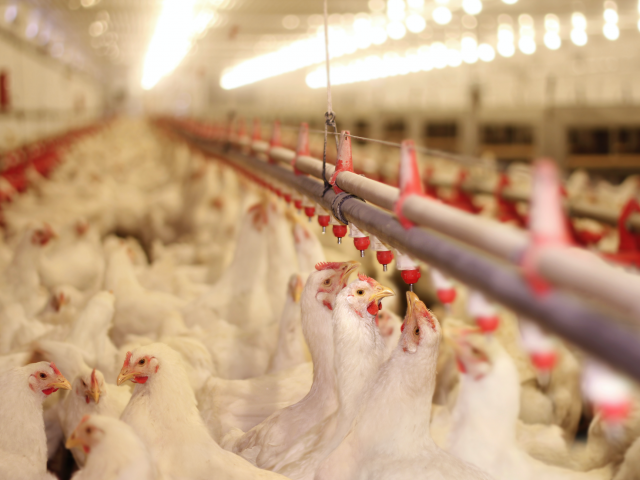
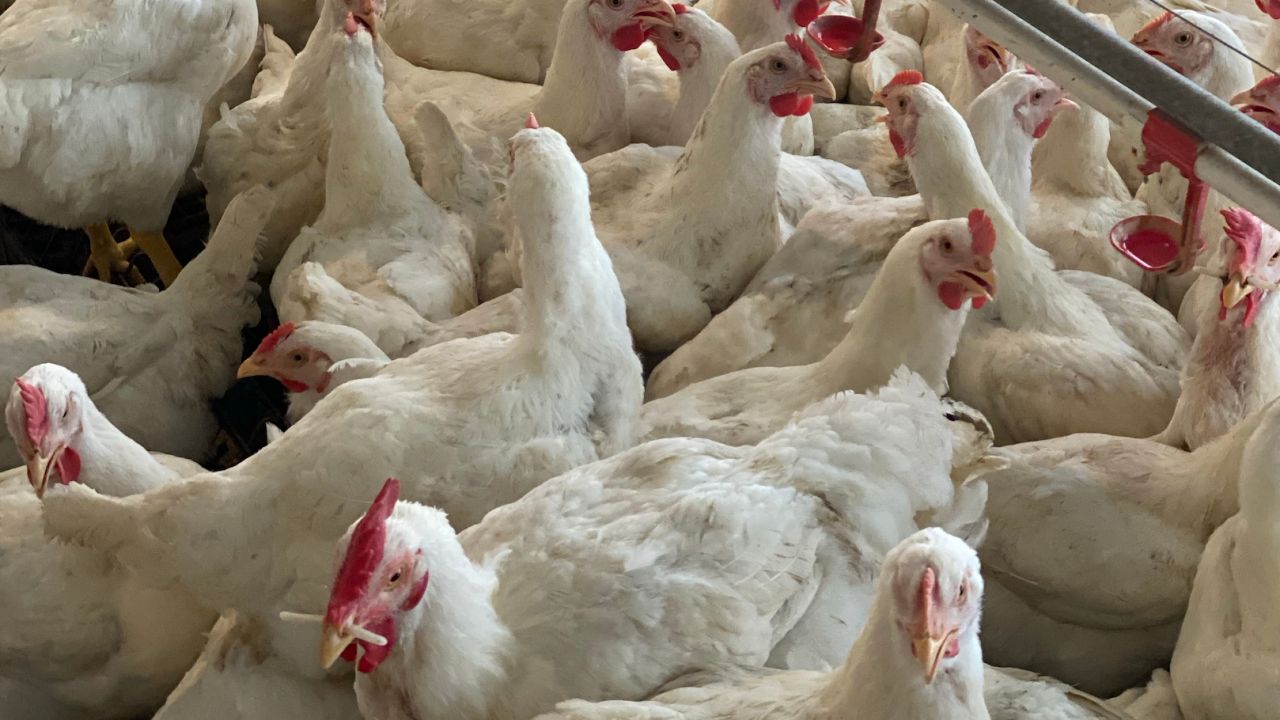
In North Carolina’s poultry facilities, thousands of chickens and turkeys are raised in large buildings called barns. In 2024, the state had 16,678 poultry barns that housed 421.8 million birds. This was a 3% increase in the number of birds since 2022, the last time EWG studied the state.
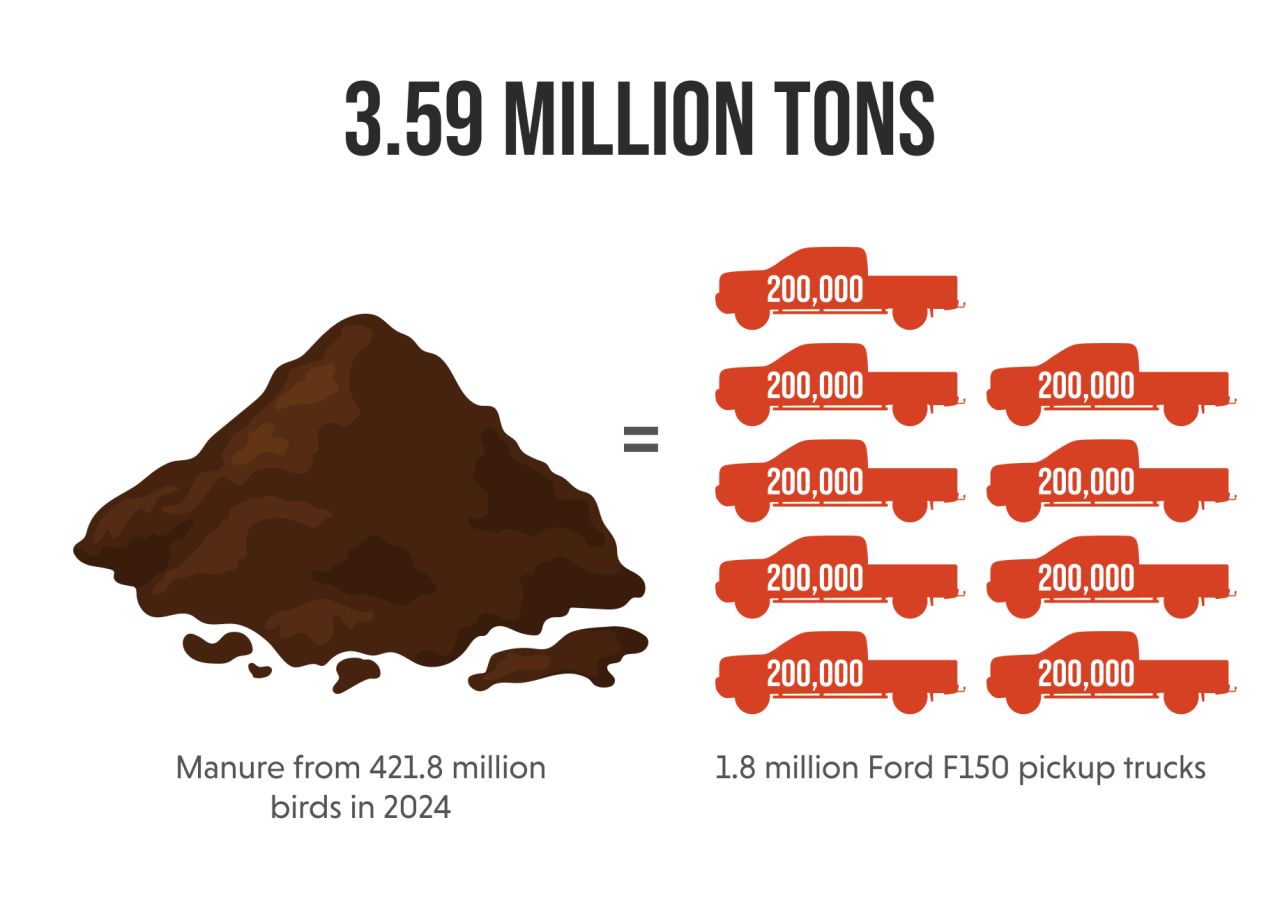
These birds produced 3.59 million tons of manure in 2024. That’s close to the same weight as 1.8 million Ford F150 pickup trucks. This huge amount of waste is applied to farm fields as the main method of disposal, and helps fertilize soil.
Image 1. North Carolina CAFO poultry waste equivalent to Ford F150 pickup trucks
Poultry are highly concentrated in North Carolina. Just five counties accounted for over 35% of all birds in the state. In descending order of the total number of birds and manure, they are Duplin, Sampson, Robeson, Anson and Randolph. The top two counties, Duplin and Sampson, made up 18% of all poultry. (See Figure 1.)
Figure 1. Top 5 counties with the most poultry in North Carolina
| County | Total poultry barns | Total poultry birds | Percent of total poultry | Amount of manure generated per year (in tons) |
|---|---|---|---|---|
| Duplin | 1,582 | 42,821,537 | 10% | 360,603 |
| Sampson | 1,509 | 35,138,065 | 8% | 306,231 |
| Robeson | 856 | 30,358,877 | 7% | 221,142 |
| Anson | 891 | 22,988,286 | 5% | 189,917 |
| Randolph | 713 | 18,825,087 | 4% | 154,949 |
Source: EWG, Department of Agriculture 2022 Census of Agriculture
Two of these counties saw increases from 2022 to 2024 in the number of birds that was greater than the statewide hike of 3%. The number of poultry in Randolph County went up 3.4% between 2022 and 2024, while the number in Anson County spiked by 13.5%.
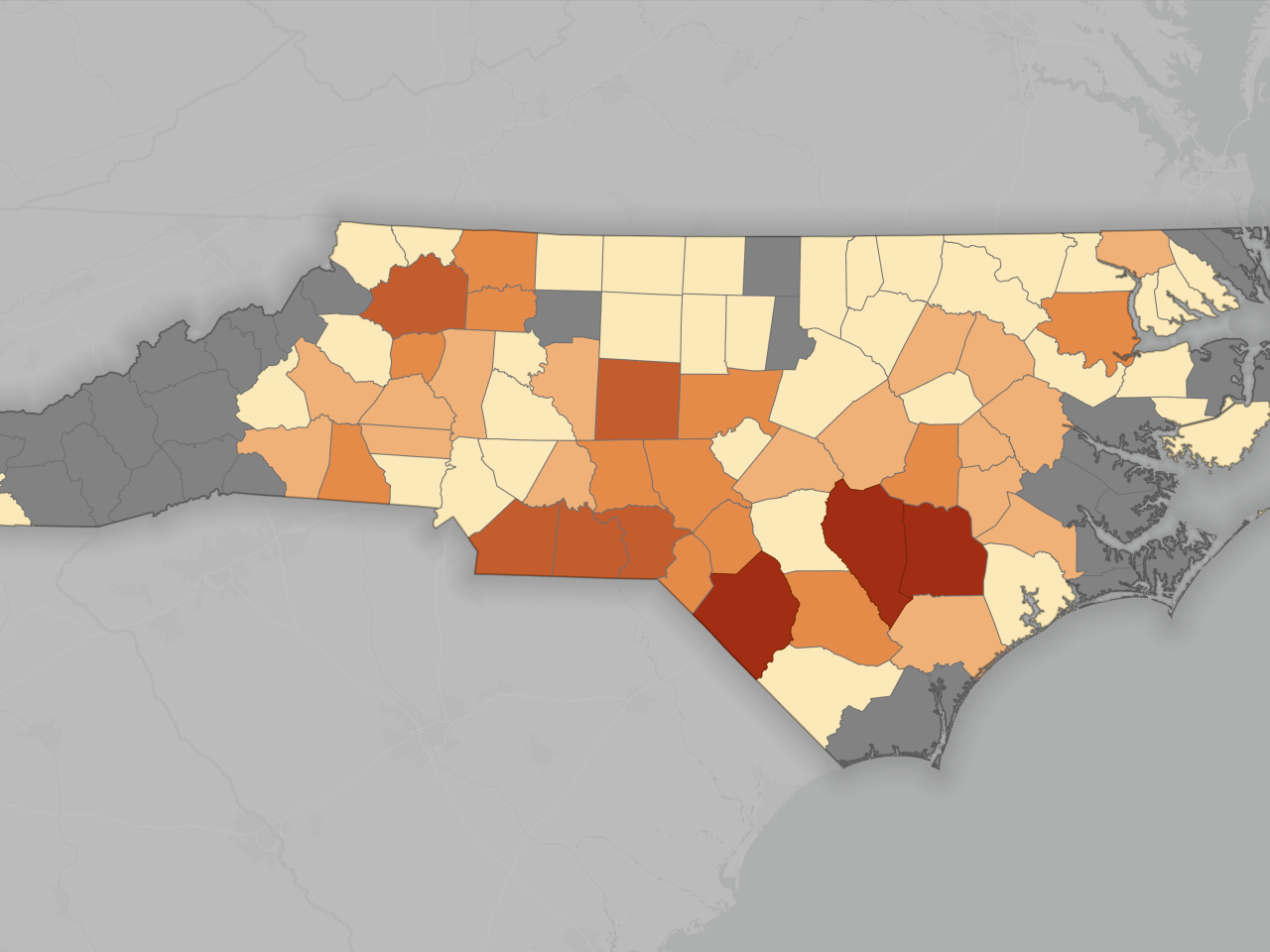
This map provides the locations of poultry (chicken and turkey) factory farm operations in North Carolina in 2024.
Damaging water and public health
There are hardly any regulations on poultry facilities in North Carolina, unlike for swine.
The state heavily regulates swine operations and their waste, requiring a permit to operate. There’s also a moratorium on construction of new operations in the state.
But there are few rules for poultry factory farms. The facilities aren’t required to get a permit to operate or to dispose of poultry litter on fields.
The state also allows poultry waste to be stored in uncovered piles for up to 15 days at a time, but state officials rarely enforce this time limit. And there’s no state oversight for where poultry litter is spread or how much is applied in any area.
This lack of regulation leads to environmental and public health problems.
When animal waste is applied to fields, contaminants like nitrate, bacteria, hormones, other pathogens and pharmaceuticals can wash off farm fields. These contaminants then leach through soil into drainage systems that empty into nearby streams, or get into groundwater, recreational and drinking water – the end result being severe health risks.
Bacteria from manure like E. coli can cause acute health problems like vomiting and diarrhea in people who consume contaminated, untreated drinking water, like in households that use private wells.
Additionally, many studies have linked consuming nitrate from manure or fertilizer in drinking water to increased risk of birth defects and colorectal and bladder cancers.
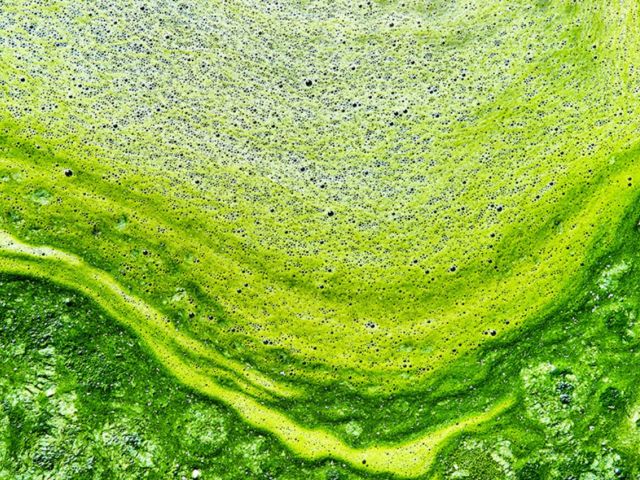
Nitrogen and phosphorus from manure runoff also feed potentially-toxic algae blooms that damage the recreational uses of water sources. If the blooms are toxic, they can sicken people recreating in or near water, or those who drink water that contain algae toxins. Exposure to algae toxins for anyone spending time in or near polluted bodies of water can cause respiratory, gastrointestinal, neurological and skin problems.
Image 2. Algae bloom
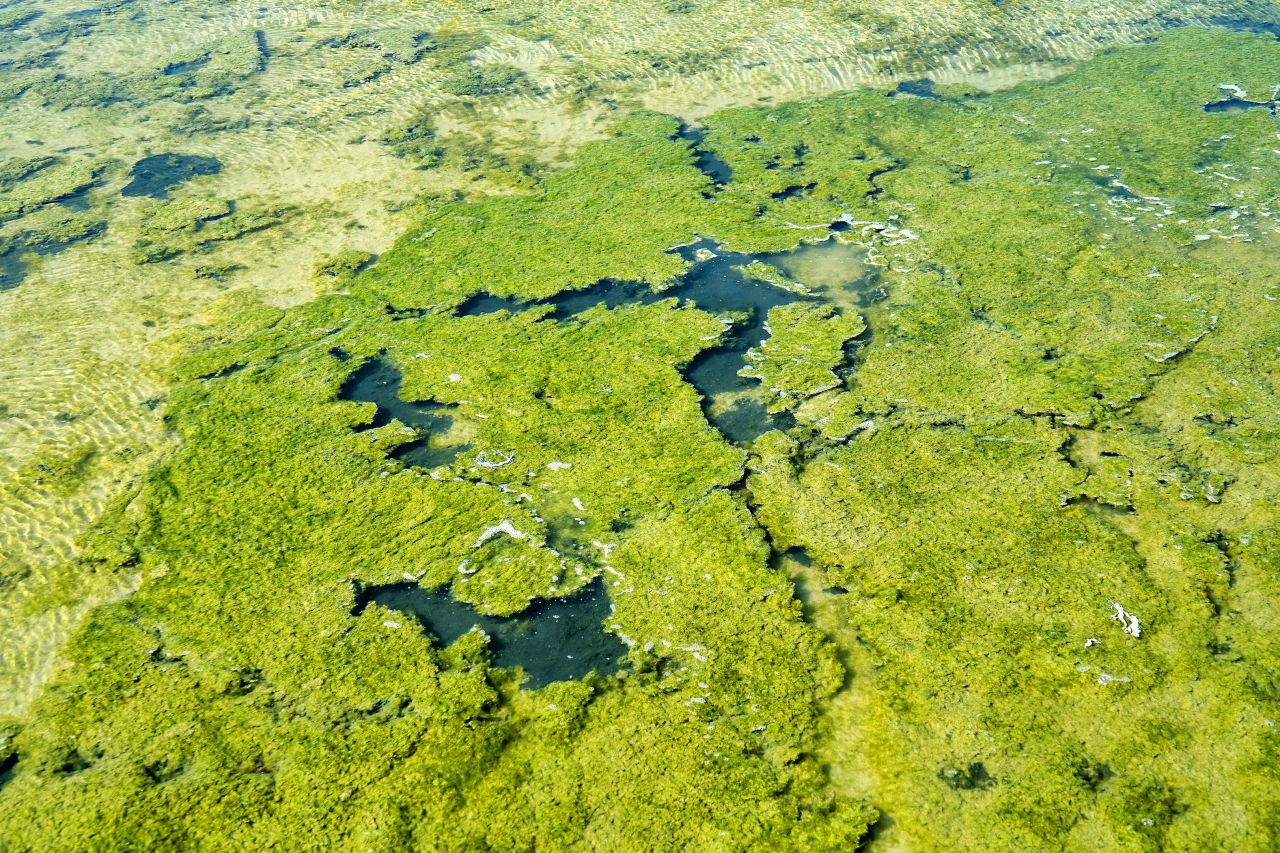
E. coli and other pathogens like Giardia from manure can also get into recreational waters. This can lead to illness as well as beach closures that reduce the amount of time people can enjoy the water. And large spills that involve waste getting dumped directly into bodies of water can result in fish kills and other ecological damage.
Factory farms can also cause significant risks to public health outside of water contamination.
Animal feeding operations emit pollutants like ammonia, hydrogen sulfide and particulate matter that cause respiratory illnesses like asthma and bronchitis in people living nearby. Studies have found that people who live within a few miles of an animal feeding operation are more likely to die from a cardiovascular problem than people living further away.
These large-scale facilities also contribute heavily to antibiotic resistance. The overuse of antibiotics in farm animals makes bacteria more resistant and antibiotics less effective, leading to almost 3 million illnesses and 35,000 deaths a year in the U.S.
Hundreds of poultry farms in the flood plain
EWG found that 4.9 million birds were housed in 182 barns located within the 100-year flood plain in the state, producing 39,048 tons of manure every year.
The Federal Emergency Management Agency defines the 100-year flood plain as containing land that has a 1% chance of flooding in a year. Of the 182 poultry barns in the 100-year flood plain, 12 were within only 500 feet of a stream and 25 were within 1,000 feet of a stream.
The birds in the flood plain were only 1% of all poultry within the state, but over half of all birds within the flood plain were in just five counties: Bertie, Bladen, Burke, Duplin and Robeson. The counties accounted for 58% of all birds in the flood plain, producing 21,902 tons of waste. These counties may have the most birds in the flood plain simply because they also are some of the counties with the highest number of animals. Robeson and Duplin Counties were in the top five counties with the most total poultry in the state.
Below is an image of poultry barns that house thousands of birds in Harnett County, and operate completely within the flood plain, with the barns highlighted in purple. The blue in the image represents the 100-year flood plain. This operation was only 400 feet from a stream, and could be easily flooded during a period of extreme rain, risking its waste ending up in the water.
Image 3. Poultry barns in Harnett County, N.C.

Source: EWG, from 2024 USDA NAIP Imagery
Poultry waste is particularly susceptible to being washed into nearby waterways during rainy weather, especially in flood-prone areas. When factory farms operate in, and apply poultry litter to, farm fields in the flood plain, the risk of waste and its components washing off fields and getting into nearby waterways is high.
During a flood, the enormous quantities of manure livestock facilities produce and store on-site can wash into nearby streams, rivers and lakes, carrying with it nutrients like nitrate, bacteria and pathogens like E. coli and salmonella. This pollutes the environment and threatens drinking water and recreational water, like the toxic algae bloom that took place in the state’s Lake Norman last summer.
Climate change is adding to the risk of manure contaminants getting into water. Research shows that total precipitation per year as well as the frequency and intensity of extreme rain is increasing in North Carolina.
Heavy rain that comes with hurricanes is also expected to increase with climate change, making animal facilities in flood plains and near the coast particularly vulnerable. North Carolina has a long history of hurricane rains flooding swine and chicken facilities, killing animals and significantly polluting water, causing public health harms.
Corporate greed worsens the problem
In the U.S., 99.5% of broiler chickens are produced by a farmer under contract with a meat company. The meat processing industry is incredibly concentrated; Just four companies – Mountaire Farm, Pilgrim’s Pride, Tyson Food and Wayne-Sanderson Farms – process 58% of all broiler chickens.
With contract poultry production, these large companies provide farmers with the chicks, feed, veterinary support, and technical guidance, while the grower provides the land, housing, labor, and utilities needed to raise the birds. The grower never owns the chickens, instead they are paid an amount of money based on how efficiently they convert feed into bird weight.
The contract model transfers much of the financial risk and costs to the growers, including the cost of building and maintaining chicken houses.
In the contract broiler industry, large meat companies often own everything that makes money while the farmers own everything that costs money. This contract model can be very bad for farmers, since they take on the vast majority of the financial risk of chicken production. They have to invest hundreds of thousands of dollars to build barns and pay for barn and technology upgrades every few years, even though they don’t own the chickens.
It is widely known that this model maximizes the amount of money that the meat corporations make, at the expense of farmers.
Farmers also shoulder the burden of disposing of the animal waste.
Because meat companies require poultry farmers to be located within a close distance of a feed mill, poultry operations are often concentrated in the same areas. Typically there are not enough farm fields to safely apply the amount of animal waste that exists in those areas, and it’s the farmer’s responsibility to dispose of the waste. This can lead to the over-application of manure on farmland, leading to the water quality and public health harms discussed in EWG’s analysis.
Policy changes are vital
EWG is calling on state and federal policymakers to overhaul regulations and oversight of poultry farms in North Carolina. The following changes could reduce the environmental and health threats from these facilities.
Better federal regulation of meat companies
The 1921 Packers and Stockyards Act regulates how meat companies interact with farmers, aiming to break up big companies’ domination of the meat packing industry. But in recent decades large companies have gained more power while livestock farmers have lost much of theirs.
In response, the Biden administration proposed the Poultry Grower Payment Systems and Capital Improvement Systems rule. The proposal would, if finalized, make poultry growing contracts more transparent for growers, prevent farmers from being required to make costly barn upgrades without disclosure, and stop the companies from decreasing farmers’ pay based on rankings with other farmers.
The proposal was slated to be finalized in July but the Trump administration has delayed final action until December 2027. This rule should not be delayed – poultry farmers need this rule to be implemented as soon as possible to provide a more fair situation between farmers and the meat corporations.
Many farm groups, from Farm Action to the Farm Bureau, that do not normally agree on much have publicly stated that the rule should already have been finalized. The administration also received almost 3,000 public comments opposing further delaying the rule.
State policy changes for manure production and management
Poultry operations in North Carolina face remarkably little regulatory oversight.
In many cases, factory farm operators need little more than a building permit to open poultry operations housing up to 50,000 chickens. And most poultry farms are largely exempt from key federal water pollution requirements that could potentially lead to stricter manure controls, including the Clean Water Act.
North Carolina should strengthen its oversight by requiring poultry operations to obtain operating permits and develop, implement and maintain comprehensive manure management plans. These changes would reduce the amount of waste that ends up in water, and thereby improve public health for residents living near factory farms.
Every year, Democratic state legislators introduce legislation in North Carolina to make these policy changes, but the bills have repeatedly stalled in the General Assembly. The latest state legislative session that started this month presents another opportunity for North Carolina to adopt these long-overdue and necessary safeguards for public health and the environment.
The state should also place restrictions on poultry operations in the 100-year flood plain. Current facilities in the flood plain should not be able to expand into more barns, and new factory farms should not be allowed to be established in the flood plain.
To protect the health of its residents – particularly those in places with the highest concentrations of factory farms – North Carolina must address the serious public health and environmental problems that poultry facilities cause.