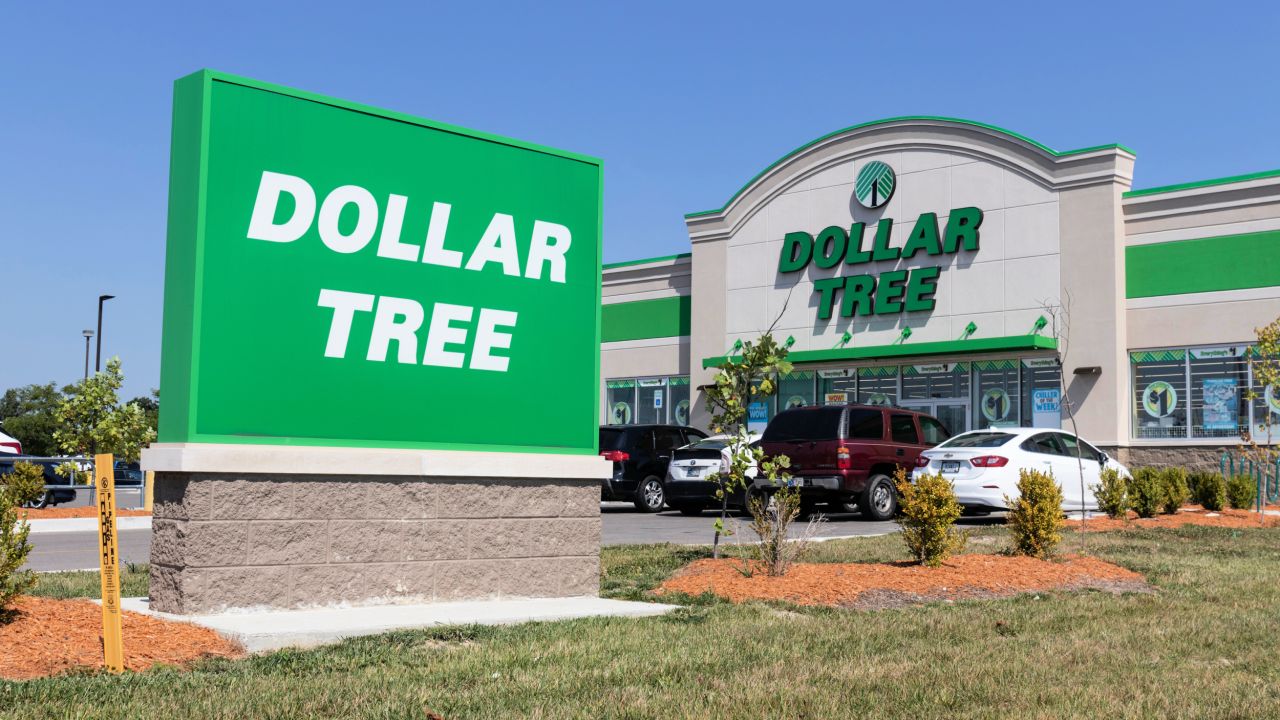
If you’ve ever wondered whether state chemical safety laws actually change what ends up on store shelves, Dollar Tree just answered: yes – and faster than consumers might think.
For years, the toxic “forever chemicals” known as PFAS have turned up in personal care products, food packaging, children’s toys and household cleaners sold at dollar stores and everywhere else. Dollar Tree, which operates more than 8,000 stores in the U.S. and Canada, has now pledged to get PFAS out of its products.
In its chemical management policy, the retailer committed to restricting forever chemicals in its private-label food packaging, children’s products and toys, and formulated products like cleaning supplies and personal care items. By the end of 2027, Dollar Tree suppliers must be able to declare in writing that PFAS haven’t been intentionally added.
Dollar Tree didn’t just decide one day on its own to get tougher on chemicals. It made the change in part because states took decisive action.
States led, retailers followed
Dollar Tree’s policy explicitly follows restrictions “already adopted in some states.” That’s not a coincidence. It’s exactly how state chemical safety laws are designed to work.
- 13 states now ban PFAS in food packaging, starting with Washington, in 2022.
- 9 states restrict PFAS in children’s products and toys, from California (since 2023) through Illinois (phasing in by 2032).
- 12 states restrict PFAS in cosmetics and personal care products
- 6 states restrict PFAS in household cleaners specifically
For more information on states’ regulation of PFAS as a class in consumer products, visit Safer States. The organization tracks the compliance year for each law, category by category.
Nearly every category in Dollar Tree’s new policy corresponds to one or more specific state laws.
One retailer’s policy has a national impact
State chemical safety laws typically exert an influence that extends beyond their own borders.
When a state bans PFAS in one product category, national retailers face a choice: Maintain two (or more) separate supply chains, one complying with a specific state’s law and one that doesn’t and is sold everywhere else, or simplify their production lines by using the safer version only.
Increasingly, companies choose to streamline. It’s cheaper to run one supply chain than two.
And once a retailer builds the infrastructure to screen out a chemical for California, Maine or Minnesota, it’s fairly straightforward, and good business, to apply that standard nationwide.
So a law enacted by one state can ultimately protect shoppers in every state, whether or not other states’ lawmakers act.
This is precisely the ripple effect EWG and our state group partners have been fighting for, bill by bill, state by state, targeting toxic chemicals, including PFAS.
Tackling additional chemicals
Other chemicals of concern, such as bisphenols, formaldehyde and parabens, are on Dollar Tree’s list to remove from its private-label products. The retailer’s updated policy lays out real deadlines, not just intentions:
- Formaldehyde-releasing chemicals will be phased out of private-brand formulated products by the end of 2028.
- Two parabens – propylparaben and butylparaben – are already restricted. Four more will be added by 2028, bringing the total to six restricted parabens, all linked to hormone disruption.
- Bisphenol A and bisphenol S, chemicals of concern in food-contact materials, will be restricted from food packaging by 2028.
Within two years, Dollar Tree will also cut in half – as measured against a 2026 baseline – the number of household cleaners and air fresheners containing restricted chemicals.
Starting in 2027, the company has committed to reporting publicly on its progress, including the share of its private-label formulated products that can be fully screened for chemicals of concern, and the share of the screened assortment that’s free of them.
PFAS exposure health risks
States are targeting PFAS in particular because they don’t break down in the environment or in the human body, so even low, repeated doses build up over time – that’s why they’re called forever chemicals.
Research links exposure to weakened vaccine response, higher risk of certain cancers, thyroid disruption and harm to the developing reproductive system.
The Centers for Disease Control and Prevention has detected PFAS in the blood of 99% of Americans, including newborn babies. The chemicals cross the placenta and have been detected in umbilical cord blood, confirming that exposure can begin before birth.
That’s the health backdrop behind the categories Dollar Tree’s policy targets first: children’s products and toys, food packaging and formulated products such as cleaning supplies and personal care items.
What this means if you shop at Dollar Tree
Dollar Tree’s intentions are clear, and states pushed the company toward them. But not every product on its shelves will be PFAS-free tomorrow. These are phased-in commitments with multi-year timelines, not an overnight transformation.
You don’t have to wait until 2027 to shop smarter. Here’s are a few things you can do now:
- Check the Healthy Living™ app before you buy. Search a cleaning or personal care product by name, or scan its barcode in the store, for its EWG rating and the science behind the score. Then compare options side by side to choose with confidence.
- Look for the EWG Verified® mark. Products carrying it already meet strict standards to avoid intentionally added PFAS and other chemicals of concern. You don’t need to wait for retailers.
- Use Food Scores for packaged food. Check ingredients, whether or not it’s an ultra-processed food and packaging concerns where available, before it goes in your cart.