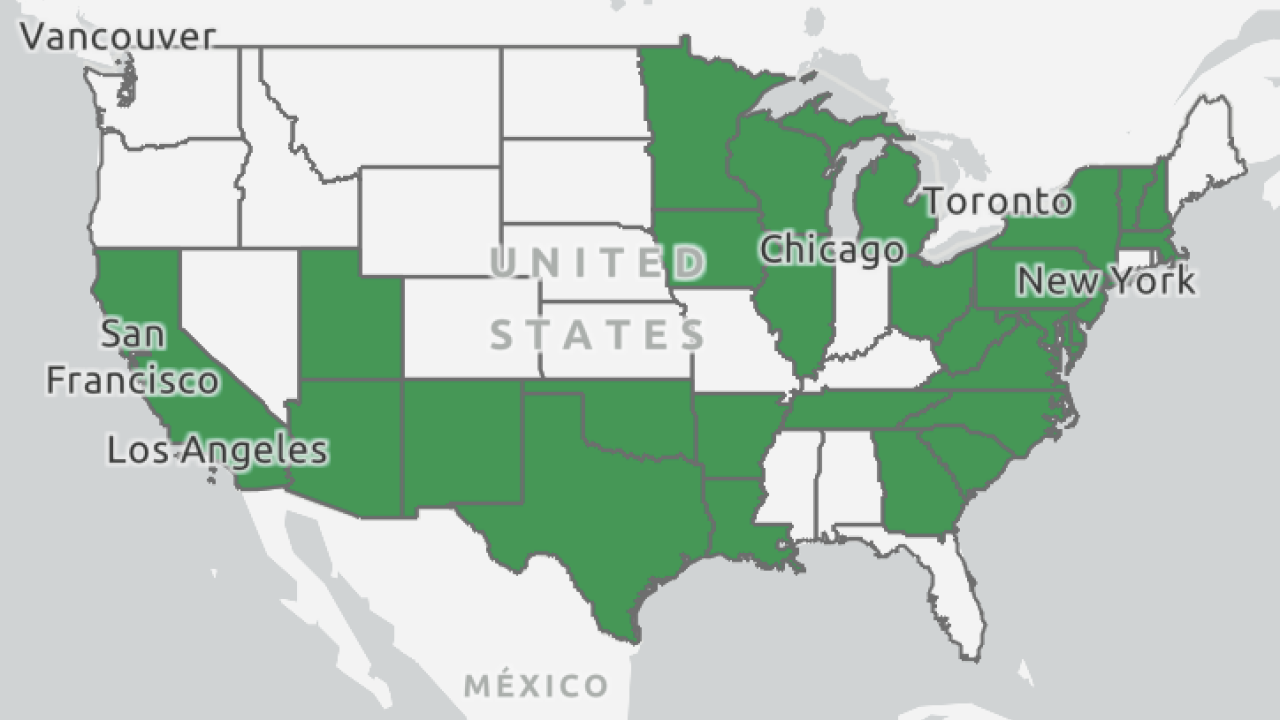
For too long, the FDA has let food chemical companies decide which food chemicals are safe to eat. So it’s good news that states are leading the way when it comes to the safety of food chemicals.
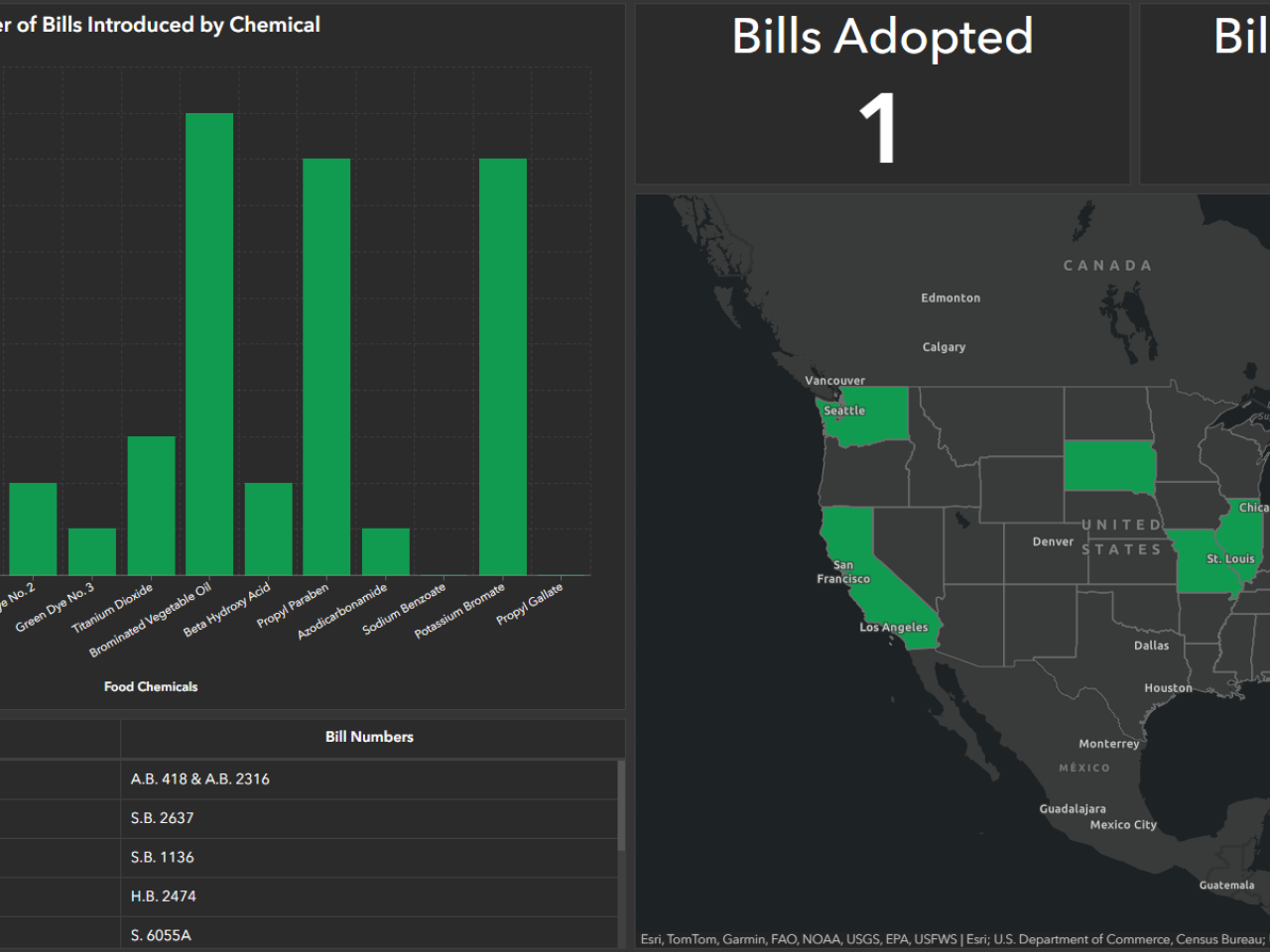
States with active legislation:
Alaska 
A.B. 1264 would define ultra-processed foods and direct state scientists to determine a subset of "particularly harmful UPFs" to be restricted in schools.
Delaware
S.B. 41 would prohibit the manufacture, sale and distribution of food containing Red Dye No. 3.
Florida
H.B. 641 would prohibit public schools from serving food containing Blue 1, Blue 2, Green 3, Red 3, Red 40, Yellow 5, Yellow 6, ADA, BHA, BHT, potassium bromate, propyl paraben or titanium dioxide and would require warning labels for a long list of additives.
S.B. 1826 would prohibit public schools from serving or selling foods containing potassium bromate, propyl paraben, titanium dioxide, BVO, Yellow 5, Yellow 6, Blue 1, Blue 2, Green 3, Red 3, and Red 40.
Georgia
H.B. 1014 would prohibit public schools from serving or selling food containing Blue 1, Blue 2, Green 3, Red 3, Red 40, Yellow 5 or Yellow 6.
H.B. 642 would prohibit public schools from serving or selling food containing Blue 1, Blue 2, Green 3, Red 3, Red 40, Yellow 5 or Yellow 6.
Hawaii
S.B. 2236 would ban the sale and distribution of baby food in the state that contains ADA, Blue 1, Blue 2, Cirtus Red 2, Green 3, Orange B, potassium bromate, Red 3, Red 30, Red 40, Yellow 5 or Yellow 6.
S.B. 644 would ban the use of single-use food packaging and serving containers that contain intentionally added “forever chemicals” known as PFAS.
S.B. 683 would further restrict PFAS use in food packaging.
S.B. 791 would prohibit public schools from serving or selling foods containing Blue 1, Blue 2, Green 3, Red 40, Yellow 5 or Yellow 6.
Illinois
H.B. 2516 would ban the use of PFAS in food packaging.
S.B. 0073 would ban the sale and distribution of baby food that contains toxic heavy metals at levels above the limits established by the FDA.
S.B. 0093 would ban the sale, distribution and production of food products containing BVO, potassium bromate, propyl paraben or Red 3.
Indiana
H.B. 1137 would prohibit public schools from selling or serving food containing potassium bromate, propylparaben, titanium dioxide, Red Dye No. 3, Red Dye No. 40, Yellow Dye No. 5, Yellow Dye No. 6, Blue Dye No. 1, Blue Dye No. 2, Green Dye No. 3, BHT, TBHQ or ADA.
H.B. 1321 would ban the sale, distribution and production of food products in the state containing potassium bromate, Blue 1, Blue 2, Green 3, Red 3, Red 40, Yellow 5 or Yellow 6.
H.B. 1364 would require packaged food intended for distribution or sale in this state to to include warning labels that disclose the use or existence of any of a long list of ingredients in the food product.
H.B. 1376 would ban the sale, distribution and production of food products in the state containing butylated hydroxyanisole, butylated hydroxytoluene, Red 40, titanium dioxide, Yellow 5 or Yellow 6.
Iowa
H.F. 212 would prohibit public schools from serving or selling foods containing margarine, BVO, potassium bromate, propyl paraben, Blue 1, Blue 2, Green 3, Red 3, Red 40, Yellow 5 or Yellow 6.
H.F. 2676 would prohibit public schools from selling or serving food containing Blue Dye No. 1, Blue 2, Green 3, Red Dye No. 40, Yellow Dye No. 5, Yellow 6, potassium bromate or propyl paraben.
S.F. 2367 would prohibit public schools from selling or serving food containing Blue Dye No. 1, Blue 2, Green 3, Red Dye No. 40, Yellow Dye No. 5, Yellow 6, potassium bromate or propyl paraben.
Kansas
H.B. 2425 would prohibit public schools from selling or serving food containing BHA, propyl paraben, Red Dye No. 3, Red Dye No. 40, Yellow Dye No. 5, Yellow Dye No. 6, Blue Dye No. 1, Blue Dye No. 2 or Green Dye No. 3.
S.B. 390 would prohibit public schools from selling or serving food containing BVO, potassium bromate, propyl paraben, ADA, BHA, titanium dioxide, Red 3, Red 40, Yellow 5, Yellow 6, Blue 1, Blue 2 or Green 3.
Kentucky
H.B. 277 would prohibit public schools from selling or serving food containing potassium bromate, propyl paraben, titanium dioxide, Red Dye No. 3, Red Dye No. 40, Yellow Dye No. 5, Yellow Dye No. 6, Blue Dye No. 1, Blue Dye No. 2, Green Dye No. 3 or brominated vegetable oil.
Maryland
H.B. 1004 would ban the sale of foods containing contains brominated vegetable oil, potassium bromate, propyl paraben or Red Dye No. 3.
Massachusetts
H. 3959 would ban the sale of foods containing potassium bromate and propyl paraben state-wide, as well as ban public schools from distributing or selling foods that contain Blue 1, Blue 2, Green 3, Red 40, Yellow 5 or Yellow 6.
H.B. 539 would require food vendors providing public school lunches ensure that at least 50% of entrees sold and served for lunch contain healthy foods. Vendors cannot sell or serve food where more than 20% of entree items qualify as ultra-processed, or have a nutritional composition including more than 30mg of cholesterol, more than 5% of the entrees total calories come from saturated fat. Finally, each food service provider selling food items shall keep itemized nutrition data that is made publicly available.
H.D. 4705 would ban the use of Blue 1, Blue 2, Green 3, Red 3, Red 40, Yellow 5 and Yellow 6.
S.B. 1531/ H. 2496 would prohibit public schools from serving or selling foods containing harmful food dyes, including Blue 1, Blue 2, Red 3, Red 40, Yellow 5, Yellow 6, and Green 3.
Michigan
H.B. 4369 would prohibit public schools from serving or selling foods containing potassium bromate, propyl paraben, BVO, titanium dioxide, Blue 1, Blue 2, Green 3, Red 40 or Yellow 6.
H.B. 4577 would prohibit public schools from serving or selling foods containing BVO, potassium bromate, propyl paraben, titanium dioxide, Blue 1, Blue 2, Green 3, Red 40 and Yellow 6.
H.B. 4865 would require the testing of baby food for heavy metals and establish limits on heavy metal content.
H.B. 5069 would prohibit the sale of food containing BVO, potassium bromate, propyl paraben, Blue 1, Blue 2, Green 3, Red 40 or Yellow 6.
S.B. 228 would prohibit public schools from serving or selling foods containing BVO, potassium bromate, propyl paraben, titanium dioxide, Blue 1, Blue 2, Green 3, Red 40 or Yellow 6.
Minnesota
H.B. 260 would require a warning on any food containing acrylamide, arsenic, bisphenol A, or BPA, cadmium, DEHP, lead, mercury, Blue 1, Red 40, Yellow 5 and Yellow 6.
H.B. 99 would ban the sale, distribution and production of food products in the state containing BVO, potassium bromate, propyl paraben or Red 3.
S.B. 802 would prohibit public schools from serving or selling foods containing potassium bromate, propyl paraben, titanium dioxide, BVO, Blue 1, Blue 2, Green 3, Red 3, Red 40, Yellow 5 or Yellow 6.
Missouri
H.B. 1958 mandates that any food product containing acrylamide, arsenic, BPA, Blue 1, cadmium, DEHP, lead, Red 40, Yellow 5, Yellow 6 or mercury must carry a warning label.
H.B. 2887 would prohibit public schools from selling or serving food containing potassium bromate, propyl paraben, brominated vegetable oil, titanium dioxide, Blue Dye No. 1, Blue 2, Green Dye No. 3, Red Dye No. 3, Red 40, Yellow Dye No. 5 or Yellow 6.
S.B. 1290 would prohibit public schools from selling or serving food containing potassium bromate, propylparaben, brominated vegetable oil, titanium dioxide, Blue Dye No. 1, Blue Dye No. 2, Green Dye No. 3, Red Dye No. 3, Red Dye No. 40, Yellow Dye No. 5 or Yellow Dye No. 6.
New Hampshire
S.B. 557 would prohibit public schools from selling or serving food containing Blue Dye No. 1, Blue Dye No. 2, Green Dye No. 3, Red Dye No. 3, Red Dye No. 40, Yellow Dye No. 5, Yellow Dye No. 6, Red Dye No. 2 or Orange Dye B.
New Jersey
A. 4132 would ban the sale, distribution and production of food products containing potassium bromate, propyl paraben, Red 3 and BVO.
A. 4367/ S.B. 3135 would restrict a number of substances from food packaging: PFAS, ortho-phthalates, bisphenols, halogenated and organophosphorus flame retardants (HFRS, OPFRS), non-detectable pigments, including carbon black, oxo-degradable additives including oxo-biodegradable additives, UV-328, 2-(2h-benzotriazol-2-yl)-4, 6-di-tert-pentylphenol, or any other ultraviolet light absorbers including benzophenone and its derivatives, short-, medium-, and long-chained chlorinated paraffins, toxic metals other than lead, cadmium, mercury, and hexavalent chromium, antimony trioxide, formaldehyde, perchlorate, toluene; or vinyl chloride, including polyvinylidene chloride.
A.B. 4641 would ban the sale of food containing ADA, BHA, BVO, potassium bromate, propyl paraben, Red 3 or titanium dioxide.
S.B. 4394 would immediately prohibit public schools from selling or serving food containing Blue 1, Blue 2, Green 3, Red 3, Red 40, Yellow 5 or Yellow 6. Within two years, it would ban the commercial manufacture, sale and distribution of these dyes, as well as propyl paraben and BHA.
S.B. 4560 would ban the sale and distribution of ultraprocessed foods in schools participating in federally funded or assisted meal programs.
S. 946 would prohibit public schools from selling food containing Red 3, Red 40, Blue 1, Blue 2, Green 3, Yellow 5, Yellow 6, brominated vegetable oil, titanium dioxide, propyl paraben or potassium bromate.
New York
A.B. 4008 would prohibit the sale of foods containing Red 3 or Red 40 in public schools.
A.B. 5558 would prohibit the manufacture, sale and distribution of food containing Red 3.
A.B. 6520 would require businesses to label certain foods and beverages containing harmful ingredients, including Red 3, titanium dioxide, BVO, potassium bromate and propyl paraben.
A.B. 8585 would ban the sale of products in the state intentionally containing PFAS.
A.B. 8707 would prohibit the sale of foods or beverages containing Blue 1, Blue 2, Green 3, Red 3, Red 40, Yellow 5 or Yellow 6 in public schools.
A.B. 9026 would require the testing of baby food for toxic heavy metals and the disclosure of such test results.
S. 1239/ A.B. 1556 would require disclosure of secret GRAS chemicals and ban the sale, distribution and production of food products containing potassium bromate, propyl paraben and Red 3.
S.B. 3214 would prohibit public schools from selling food containing Blue 1, Blue 2, Green 3, Red 3, Red 40, Yellow 5 or Yellow 6, unless such a sale happens off the school's premises or at least one half-hour after the end of the school day.
S.B. 6668 would prohibit public schools from serving or selling foods containing synthetic dyes such as Blue 1, Red 3 or Yellow 6.
S. 8701 would require the testing of baby food for toxic heavy metals and the disclosure of such test results.
North Carolina
H. 440 would prohibit the sale, distribution or manufacturing of food products that contain BVO, potassium bromate, propyl paraben, Blue 1, Blue 2, Green 3, Red 40, Yellow 5 or Yellow 6.
H. 874 would prohibit public schools from serving or selling foods that contain potassium bromate, propyl paraben, titanium dioxide, BVO, Blue 1, Blue 2, Green 3, Red 3, Red 40, Yellow 5 or Yellow 6.
Ohio
H.B. 272 would ban the sale or distribution of food products intentionally containing PFAS.
Oklahoma
S.B. 4 would ban the sale, distribution and production of food products in the state containing aspartame, ADA, BVO, BHA, BHT, potassium bromate, propyl paraben, Red 3, Red 40, Blue 1, Blue 2, Green 3, Yellow 5, Yellow 6, titanium dioxide, ethylene dichloride, methylene chloride, propyl gallate, sodium benzoate, sodium nitrate, or trichloroethylene.
Pennsylvania
H.B. 1131 would prohibit public schools from serving or selling foods containing Blue 1, Blue 2, Green 3, Red 40, Yellow 5 or Yellow 6.
H.B. 1132 would define UPF and prohibit the sale or distribution of competitive foods in public schools if they are not healthy.
H.B. 1133 would require foods containing BHA to include a label that states: “WARNING: This product contains BHA, which may cause cancer."
H.B. 1134 would require foods with Blue 1, Blue 2, Green 3, Red 40, Yellow 5 or Yellow 6 to include a label that states, “This product contains synthetic colors, which may have an adverse effect on activity and attention in children.”
H.B. 507 requires the testing of baby food for heavy metals and establishes limits on heavy metal content.
S.B. 820 would require companies to disclose their "Generally Recognized as Safe" food ingredients to the public and would ban the manufacture, sale and delivery of food that contains Red Dye No. 3, Red Dye No. 40, Yellow Dye No. 5, Yellow Dye No. 6, Blue Dye No. 1, Blue Dye No. 2, Green Dye No. 3, potassium bromate, titanium dioxide, propylparaben, brominated vegetable oil, butylated hydroxyanisole, azodicarbonamide and butylated hydroxytoluene, among other additives.
South Carolina
H. 4263 would prohibit public schools from serving or selling foods containing Blue 1, Blue 2, Green 3, Red 40, Yellow 5 or Yellow 6.
H. 4339 would prohibit public schools participating in federally funded or assisted meal programs from serving or selling foods containing potassium bromate, propyl paraben, titanium dioxide, BVO, Blue 1, Blue 2, Green 3, Red 3, Red 40, Yellow 5 or Yellow 6.
S. 589 would prohibit public schools from serving or selling foods containing potassium bromate, titanium dioxide, BVO, Blue 1, Blue 2, Green 3, Red 3, Red 40, Yellow 5 or Yellow 6. The bill would also submit a request to deny Supplemental Nutrition Assistance Program, or SNAP, coverage for candy and soda.
Tennessee
H.B. 4852 ould legally define food in the sate as adulterated if it contains BHA, propyl paraben, Blue 1, Blue 2, Green 3, Red 3, Red 40, Yellow 5 or Yellow 6.
S.B. 118 would ban the manufacturing, selling, distributing or offering for sale in this state any baby food product that contains a toxic heavy metal in an amount that exceeds the applicable limit established by the federal Food and Drug Administration.
Utah
S.B. 320 would prevent public schools from selling, donating, offering or serving on school grounds during the school day, food that contains potassium bromate, propyl paraben, Blue Dye No. 1, Blue 2, Green Dye No. 3, Red Dye No. 3, Red 40, Yellow Dye No. 5 or Yellow 6.
Vermont
H. 260 would prohibit the manufacture, sale, delivery or distribution of food containing BVO, potassium bromate, propyl paraben and Red 3.
H. 536 would prohibit the sale of baby food containing toxic heavy metals exceeding FDA limits, mandates regular testing, and requires public access to test results and QR code links for consumer information.
S. 26 would prohibit the use of Blue 1, Blue 2, Green 3, Red 40, Yellow 5 or Yellow 6 in competitive food and food and beverages served as part of a school district or an approved independent school’s food programs.
West Virginia
H.B. 4124 would require baby food manufacturers to provide information about the quantity of or percentage of different types of heavy metals in baby food.
H.B. 4852 would legally define food in the sate as adulterated if it contains BHA, propyl paraben, Blue 1, Blue 2, Green 3, Red 3, Red 40, Yellow 5 or Yellow 6.
S.B. 745 would prohibit public schools from serving food containing Blue Dye No. 1, Blue 2, Green Dye No. 3, Red Dye No. 3, Red 40, Yellow Dye No. 5, Yellow 6, titanium dioxide, BHA, BHT, TBHQ, sodium benzoate, propyl gallate, ADA, propyl paraben, potassium bromate and many more.
S.B. 764 would ban the sale, distribution and production of food products in the state containing BHA, propyl paraben, Blue Dye No. 1, Blue 2, Green Dye No. 3, Red Dye No. 3, Red 40, Yellow Dye No. 5 or Yellow 6.
Wisconsin
A.B. 1071 would require testing of baby food, including infant formula, for arsenic, cadmium, lead, or mercury, and disclosure of the results.
A.B. 550 would require packaged food intended for distribution or sale in this state to to include warning labels that disclose the use or existence of any of a long list of ingredients in the food product, including certain color additives, synthetic antioxidants, solvents, sweeteners, stabilizers, thickeners, and preservatives. The warning labels must be prominent, in high contrast to their immediate backgrounds, and in a reasonably visible location, and include the statement “WARNING: This product contains an artificial color, chemical, or food additive that is banned in Australia, Canada, the European Union, or the United Kingdom.”
S.B. 228 would prohibit school boards and independent charter schools from serving food that contains ADA, BVO, potassium bromate, propyl paraben, or Red 3, as part of free or reduced price meals under the National School Lunch Program or the federal School Breakfast Program.
Lowering your exposure to harmful food chemicals
While states take action to protect us, you can lower your intake of harmful food ingredients. You can:
- Consult EWG’s Food Scores database to find products that don’t use toxic food chemicals like the ones included in these state bills. When you’re on the go, use our Healthy Living app to find products.
- Choose packaged foods that are certified organic, whenever possible. These products must meet strong standards that protect consumers from exposure to potentially harmful additives.
- When possible and affordable, limit your intake of ultra-processed foods. Many contain concerning ingredients.
First created April 4, 2024.