Jump to:
Jump to:
EWG’s recommendation
Azodicarbonamide, also known as ADA, is an ingredient of concern. EWG suggests limiting consumption of foods containing this ingredient.
Experimental studies have demonstrated that baking bread made with ADA-treated flour results in the formation of SEM, which has been the focus of toxicological concern because laboratory and animal studies have suggested carcinogenic and genotoxic potential.
Science analysis
What is ADA and why is it added to foods?
ADA is a dough strengthener and flour bleaching agent. It is used to improve the texture of dough and brighten the appearance of flour.
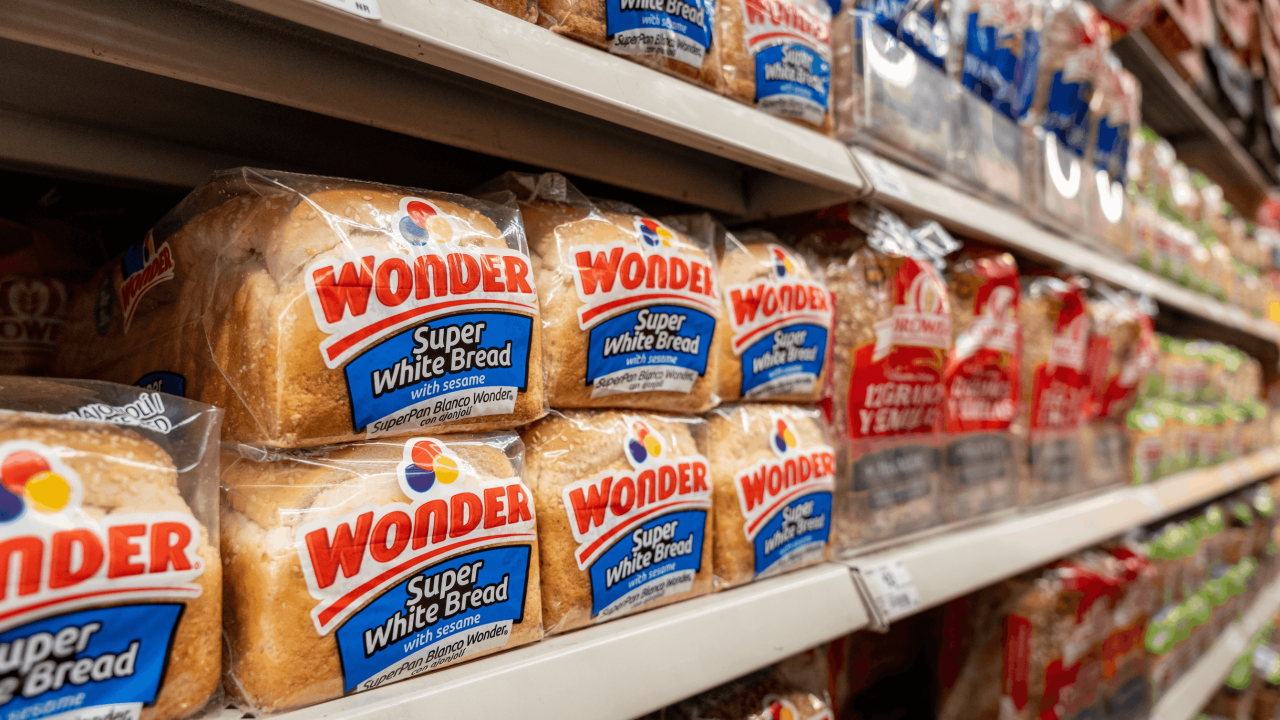
ADA is typically found in breads, deli sandwiches and frozen appetizers.
ADA is used in 60 of the 172,081 foods added to EWG’s Food Scores between 2023 and 2025, demonstrating that ADA is now used in only a small fraction of newly introduced food products.
Top 15 food and drink categories organized by supermarket shelf
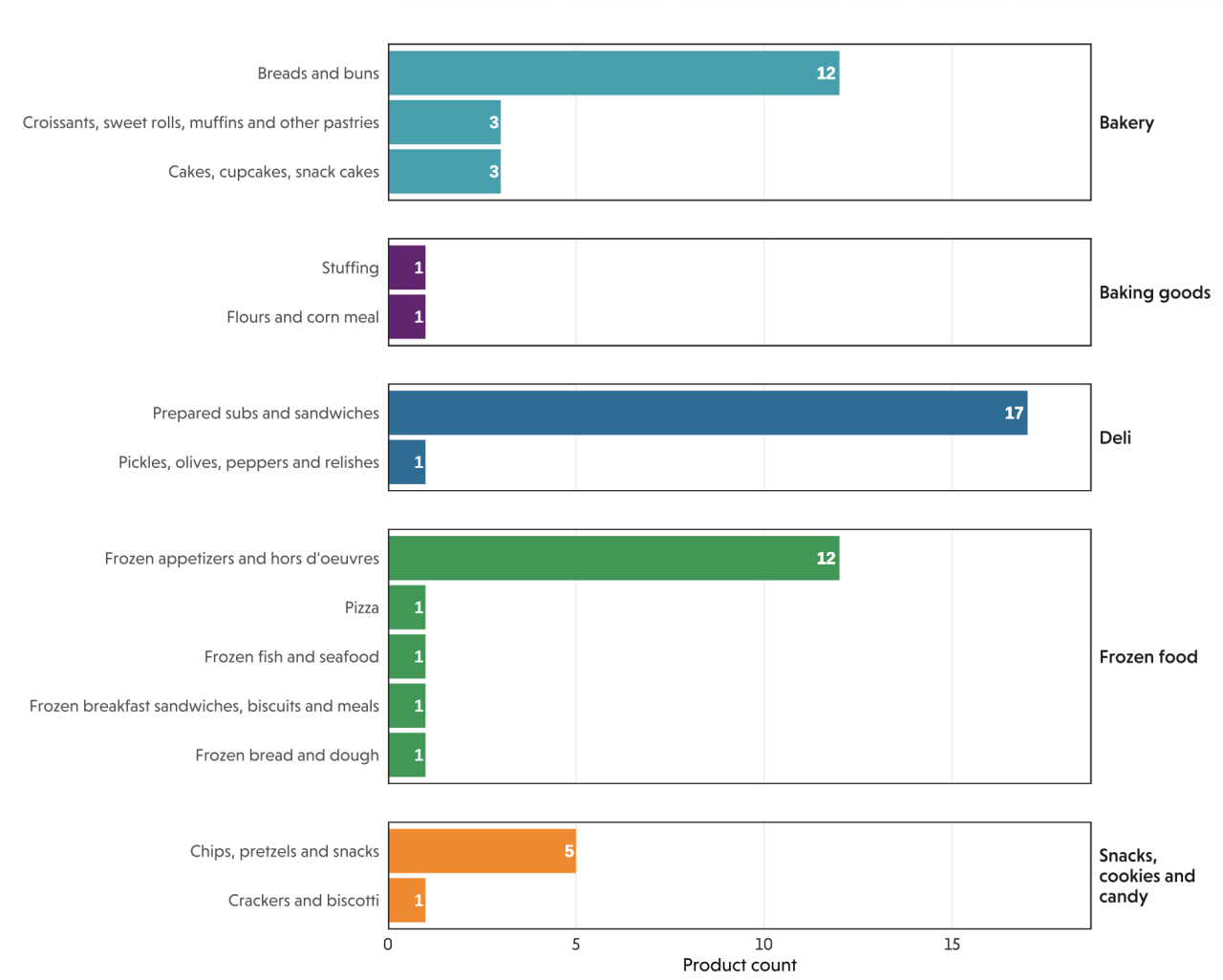
Source: EWG’s Food Scores. Product Label created between 2023-01-01 and 2025-10-22.
What is the regulatory status of ADA?
The European Union never authorized ADA as a food additive but did allow it as a blowing agent (a substance that helps create foam) in food-contact plastics. In 2004, the EU prohibited the use of ADA in jar seals and gaskets intended for food contact because of concerns about the formation of SEM during heat sterilization.
A European Food Safety Authority panel concluded after review of commissioned research that SEM shows weak carcinogenic activity in lab animals and weak genotoxicity in vitro, but newer studies showed a lack of genotoxicity. The new information reduced concerns and the panel concluded the risk to human health was low, but the ban remains.
Because of toxicity concerns, ADA is also banned as a food additive in Brazil, China, India and New Zealand.
ADA is regulated as an approved direct food additive in 1962 and permitted for use in the U.S. up to 45 parts per million in cereal flour and as dough conditioner in bread.
In 2026, the Food and Drug Administration launched a formal post-market safety assessment of ADA. The agency opened a public request for data targeting current use levels, dietary exposures and the presence of its toxic decomposition byproducts, such as semicarbazide and urethane, in the food supply.
Are foods containing ADA ultra-processed?
As an industrially synthesized ingredient, ADA is classified as an ultra-processed ingredient in the NOVA framework. (Monteiro et al., 2019).
Is ADA allowed in organic foods?
Under Department of Agriculture organic standards, synthetic substances, such as ADA, are prohibited in certified organic foods.
What are the potential health harms associated with ADA?
Health concerns about ADA arise mainly because of the byproducts that form when it breaks down, especially during heating.
During dough preparation and baking, ADA breaks down into several compounds, including biurea, semicarbazide (SEM), ammonia and isocyanates. Experimental studies have demonstrated that baking bread made with ADA-treated flour results in the formation of SEM (Noonan et al., 2008). Laboratory and animal studies have raised toxicological concerns about SEM because they suggest it has carcinogenic and genotoxic potential (Kumari et al., 2026).
The formation of SEM during baking and other high-temperature food processing was first characterized in experimental studies of ADA-treated flour and bread (Noonan et al., 2008; Becalski et al., 2004). In a 2016 survey of over 250 products, the FDA found levels of SEM can vary widely. The agency found that many products fell into a median range, between 100 and 400 parts per billion (ppb) but maximum outliers reached as high as 767 ppb for biscuits and 1,490 ppb for French and Vienna breads (FDA 2016).
SEM has produced tumors in mice and demonstrated DNA-damaging activity in mechanistic studies. Although in vivo genotoxicity findings are inconsistent, the combination of carcinogenicity and genotoxic potential raises concerns (EFSA 2005; Hirakawa 2003).
A rodent study found SEM to have hormone-disrupting properties, altering testosterone regulation in male and female rats (Maranghi et al., 2009). SEM has also shown it can harm the reproductive system, affecting sperm maturation in male mice even at low doses (Tian et al., 2014). Animal studies have shown the metabolite may also damage other organs, such as the heart, liver and kidneys (Tian et al., 2014; Olofinnade et al., 2020).
Baking foods with ADA can produce small amounts of urethane, or ethyl carbamate. This process contaminant forms when ethanol from yeast fermentation reacts with cyanate or carbamoyl-containing compounds, which can be derived from ADA's direct breakdown products like isocyanic acid. Urethane is a Group 2A probable human carcinogen (Abt et al., 2021).
Repeated exposure to ADA led to dose-dependent decreases in weight and food consumption, oxidative stress and lipid peroxidation in rats (Olafinnade et al., 2020). Oxidative stress and lipid peroxidation can cause cellular and DNA damage and are implicated in numerous diseases.
The breakdown to SEM is a concern for both foods and contact materials containing ADA, specifically in gaskets used in lids for glass baby food jars (Nepalia et al 2017).
Uncertainties/where more research is needed
Although experimental studies suggest that ADA and its breakdown products may contribute to oxidative stress, inflammation, DNA damage, reproductive toxicity, and alterations to the gut microbiome, the available evidence is derived largely from in vitro and animal studies, and important data gaps remain (Lieshchova et al., 2023). The long-term health effects of chronic dietary ADA exposure in humans also remain poorly characterized (Kumari et al., 2026).
ADA was used as a foaming agent in the production of plastic gaskets in glass jars. When its metabolite semicarbazide was found to contaminate foods in glass containers, including baby food, the EU banned its use in food contact materials. Under market pressure, brands have phased it out in global markets, although it is still technically allowed in lids in the U.S.
Whole Foods Market prohibits ADA in products sold in its stores. Aldi and Walmart have policies restricting ADA in many or all of their private-label food products. Panera and Subway removed ADA from their bread products in 2014.
ADA is also used in foamed plastics, such as those used to make yoga mats.
Cited resources
Global health and regulatory agencies
- EFSA Panel on Food Additives, Flavourings, Processing Aids and Materials in Contact with Food, 2005. Opinion of the Scientific Panel on food additives, flavourings, processing aids and materials in contact with food (AFC) related to Semicarbazide in food. EFSA Journal 2005; 3(6):219, 141 pp. doi:10.2903/j.efsa.2005.219
- International Agency for Research on Cancer. (1983). Some food additives, feed additives and naturally occurring substances. https://publications.iarc.fr/Book-And-Report-Series/Iarc-Monographs-On-The-Evaluation-Of-Carcinogenic-Risks-To-Humans/Some-Food-Additives-Feed-Additives-And-Naturally-Occurring-Substances-1983
Comprehensive reviews and frameworks
- Abt, E., Incorvati, V., Posnick Robin, L. and Redan, B.W., 2021. Occurrence of Ethyl Carbamate in Foods and Beverages: Review of the Formation Mechanisms, Advances in Analytical Methods, and Mitigation Strategies. Journal of Food Protection, 84(12), pp. 2195-2212 https://doi.org/10.4315/JFP-21-219.
- Kumari, D., Janmeda, P., & Singh, D. (2026). From food additive to health hazard? A review of azodicarbonamide, potassium bromate, and monosodium glutamate with in-silico toxicity analysis. Food Chemistry Advances, 10, 101239. https://doi.org/10.1016/j.focha.2026.101239.
- Monteiro, C.A., Cannon, G., Levy, R.B., Moubarac, J., Louzada, M.L., Rauber, F., Khandpur, N., Cediel, G., Neri, D., Martinez-Steele, E., Baraldi, L.G., & Jaime, P.C. (2019). Ultra-processed foods: what they are and how to identify them. Public Health Nutrition, 22(5), 936–941. https://doi.org/10.1017/s1368980018003762.
- Nepalia, A., Singh, A., Mathur, N., & Pareek, S. (2017). Baby foods can also have toxic side effects: A review. Asian Journal of Science and Technology, 8(3), 4386-4393.
- Tian, W., Sang, Y., & Wang, X. (2014). Semicarbazide – from state-of-the-art analytical methods and exposure to toxicity: a review. Food Additives & Contaminants Part A, 31(11), 1850–1860. https://doi.org/10.1080/19440049.2014.953012.
Legislation
- Commission Directive 2004/1/EC of 6 January 2004 amending Directive 2002/72/EC as regards the suspension of the use of azodicarbonamide as blowing agent, Official Journal of the European Union, L 7/45. https://eur-lex.europa.eu/LexUriServ/LexUriServ.do?uri=OJ:L:2004:007:0045:0046:EN:PDF.
Specific health impact studies
- Becalski A, Lau BP-Y, Lewis D, Seaman SW. (2004). Semicarbazide Formation in Azodicarbonamide-Treated Flour: A Model Study. Journal of Agricultural and Food Chemistry, 52(18), 5730–5734. doi: 10.1021/jf0495385
- Food and Drug Administration, 2016. Exposure Estimate for Semicarbazide from the Use of Azodicarbonamide in Bread for the U.S. Population. (Presented at the 251st National Meeting of the American Chemical Society, March 15, 2016). https://www.fda.gov/media/97444/download.
- Hirakawa K, Midorikawa K, Oikawa S, Kawanishi S. (2003). Carcinogenic semicarbazide induces sequence-specific DNA damage through the generation of reactive oxygen species and the derived organic radicals. Mutation Research/Fundamental and Molecular Mechanisms of Mutagenesis. 2003;536(1–2):91–101. https://doi.org/10.1016/S1383-5718(03)00030-5
- Lieshchova, M., Logvinova, V., Bilan, M., Bohomaz, A., & Brygadyrenko, V. (2023). Effect of azodicarbonamide on rats with a high-fat hypercaloric diet. Acta Fytotechnica et Zootechnica, 26(1), 15-27. https://doi.org/10.15414/afz.2023.26.01.15-27.
- Maranghi, F., Tassinari, R., Marcoccia, D., Altieri, I., Catone, T., De Angelis, G., Testai, E., Mastrangelo, S., Evandri, M. G., Bolle, P., & Lorenzetti, S. (2009). The food contaminant semicarbazide acts as an endocrine disrupter: Evidence from an integrated in vivo/in vitro approach. Chemico-Biological Interactions, 183(1), 40-48. https://doi.org/10.1016/j.cbi.2009.09.016.
- Olofinnade, A.T., Onaolapo, A.Y., Onaolapo, O.J., Olowe, O.A., & Adeyeba, O.A. (2020b). Food-added azodicarbonamide alters hematological parameters, antioxidant status and biochemical/histomorphological indices of liver and kidney injury in rats. Journal of Basic and Clinical Physiology and Pharmacology, 32(2), 39-50. https://doi.org/10.1515/jbcpp-2019-0341.