Just one year into the Trump administration, the onslaught of attacks on the environment and public health is staggering. The Environmental Protection Agency is leading the deregulatory charge with policy actions that will lead to more pollution.
To help understand the full scope of the damage, EWG co-Founder and President Ken Cook in this episode speaks to environmental law expert Joe Goffman. He served as assistant administrator for the EPA’s Office of Air and Radiation during the Biden administration. Goffman also played a key role in writing the landmark 1990 Clean Air Act amendments that strengthened U.S. air quality law.
With his work on virtually every major air quality law and rule over the past 35 years, Goffman is uniquely qualified to unravel the full extent of damage that the EPA is doing to our air, water, and health.
Disclaimer: This transcript was compiled using software and may include typographical errors.
Ken: Hi there, Ken Cook here, and I'm having another episode.
In just the past few months, we've seen the Trump administration move to repeal tailpipe emission standards for cars, extend the life of coal burning power plants that utilities wanted to shut down because they didn't make economic sense anymore. We've seen him remove the United States from all climate related policy activities at the United Nations, and we've seen Trump systematically dismantle the scientific capacity at EPA that has been essential to protecting public health and the environment for decades.
In fact, there are far too many assaults on clean energy, clean air, and climate policy to itemize at this point, not even one year into the administration, which makes today's episode especially compelling and timely because my guest today is Joe Goffman, and he has been at the absolute center of US air quality and climate policy for decades, which makes him uniquely positioned to help us understand what we're losing now, what's at stake. Joe concluded his service as assistant administrator of the EPA’s Office of Air and Radiation throughout the Biden administration. Prior to that, Joe wrote a crucial chapter of environmental law as the author of Title Four of the 1990 Clean Air Act Amendments.
That's the last time we passed a Clean Air Act, which pioneered the cap and trade approach to tackling acid rain. He's worked on virtually every major air quality rule of the past 35 years from the mercury and air toxic standards to the Clean Power Plan, helping us understand how fine particles make people sick.
Joe recently oversaw implementation of more than $10 billion in Inflation Reduction Act funding for air quality, clean energy, and climate programs. Joe served as executive director of Harvard Law School's Environmental and Energy Law Program, and he's been Chief Counsel to the Senate Environment Committee, which is, I'll tell you, a big job.
If there's anyone who understands both environmental policy and environmental protection, it's Joe Goffman, my guest today. Joe, thank you for coming on the show. I am such an admirer of yours and of all that you've done,
Joe: I wanna return the compliment because I have viewed you through the eyes of a couple of mutual friends/admirers. I'm gonna do a little bit of name checking here. I've worked closely with Michal Freedhoff.
Ken: Yes, of course.
Joe: She's an extremely exacting judge of character. She's always spoken about you in the most, I would say, respectful terms.
Ken: It's mutual.
Joe: You know, she'll invoke your name if you're — of course Ken Cook is the person doing the best work here.
So the fact that you were sort of an early adopter of the linkage between, let's just say the good faith version of Make America Healthy Again and what Zeldin is doing, and sure enough, it seems as if at least some elements of MAHA have caught on to the point where they've actually confronted — both Kennedy and Zeldin and have merited recognition.
I don't know what your original motivations are, but with quite an, as it was, an astute to pick that, you know, particular drum to start banging on.
Ken: I appreciate that. I think the cracks are beginning to appear here. I haven't missed many opportunities to remind folks that in fact, they voted for Trump, not Kennedy, and when you vote for Trump what you get is a Zeldin or someone like him who is going to come into the administration and do not what MAHA would suggest, but what fit MAGA, what fit Trump. Zeldin is not in trouble with Trump. Far, far from it. And he may overstep at some point and we had, you know, fumbles and foibles in the first Trump administration of course, clownish behavior that finally caused an EPA administrator to have to resign. But let's start off. EWG has not been at the forefront of work on the Clean Air Act and air regulations. We have stepped in a time or two, but I have to say, I have always looked at that area of law as the beacon.
When I look at pesticide law, toxics law, the Clean Water Act, the Safe Drinking Water Act, none of them work as well as I think the Clean Air Act has worked. You probably have ambitions for it to do more, and why, what's happening now is a break with a long bipartisan tradition of paying close attention to cleaning up air pollution from a variety of sources and now we're seeing rollbacks from just about every quarter of the Clean Air Act purview and law and regulation beyond just the Clean Air Act.
So Joe, the person who's in charge of your, who has your job now, the job you had in the Biden administration is a former lobbyist for all kinds of polluting industries.
If people needed to know night and day — this is night and day. Give me your sense, how are you holding up? It must be hard to watch this happening to so much that you worked on for so long and so hard in the realm of the Clean Air Act and climate and clean energy and all the rest. How are you holding up as you watch this getting so thoroughly attacked?
Joe: I guess one way I would answer your question. Sort of how you're holding up, is that I always thought about what the EPA and our office puts out, which is regulations in many cases, and in addition to all the other work. The work I focused on personally was the regulatory work, but I never thought of the code of federal regulation and the words we added to it is the end point.
That's just the gateway to action in society. So what I've been looking at over the years is, you know, what's happening in the economy? What kind of investments are private sector businesses making in terms of clean energy or clean transportation, technologies like wind and solar? Are we seeing the car companies, you know, marshaling their own or mobilizing their own resources to make cleaner cars?
I don't want to be pollyannish here. The verdict is very much mixed and those investment patterns really fluctuate significantly depending on the politics and what's going on. But you know, the trends are still strong. You know, one of the things that I worked on in the Obama administration was the Clean Power Plan.
Ken: Historic, yeah.
Joe: Yeah. But it's like the Clean Power Plan was the Jimi Hendrix and Janice Joplin of environmental policy, it died an early death and then immediately rose to legendary status. Yeah, but actually what happened was shortly after the Clean Power Plan was printed in the code of Federal Regulation and went through its unhappy litigation fate, we saw the power sector meet the reduction levels that have been contemplated.
Ken: I just have to jump in and say, I was lobbying one day on another topic with a Midwestern senator and we were talking about toxic chemicals and how industry was positioning itself, and she said it reminded her of the ferocious complaints she got about air pollution regulation and the clean power plan in the run up to it.
Only to have the same executives that affected power generation in her state come to her afterwards and say, “Hey, it makes sense. We're gonna move in the direction that the Clean Power Plan indicated anyway.” And my take on that duality that you mentioned, it's so important I think, in environmentalism today, Joe.
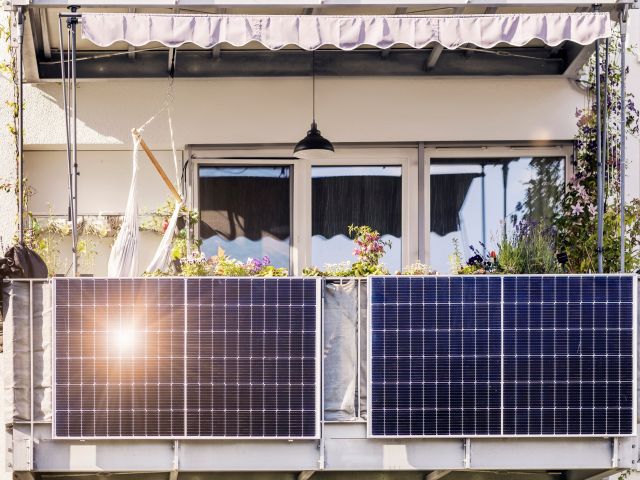
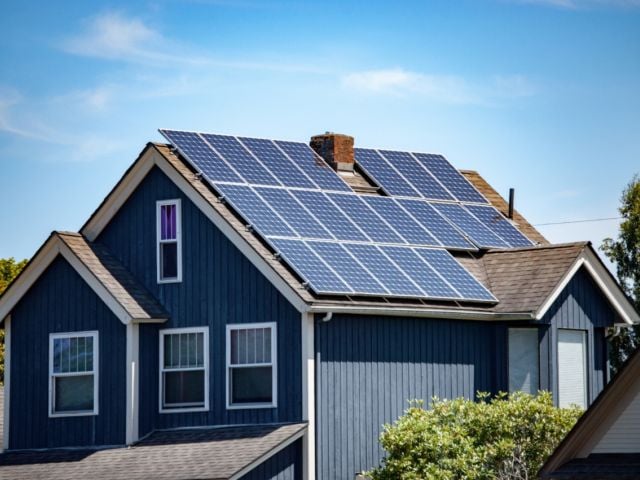
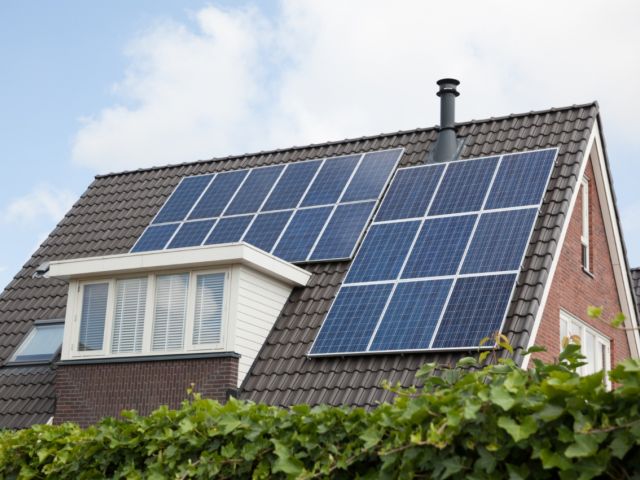
It used to be when we thought about alternative energy sources we were kind of making it up, I mean, back in the nineties and so forth, like solar's gonna come along and yeah, we got wind. You know, it was a little bit iffy, but now it's real. It's real. And it is not only technically feasible, it's in many cases, the cheapest source of power that happens to be clean. It can be distributed. I have some on my rooftop right now. So what we're fighting for now as environmentalists is as important as what we've been fighting against. We can, you know, we're not talking about unicorn stuff, we're talking about real change, and I think the dynamic of having regulation that eases that forward, urges that forward, and then recognizing that the real game is to change the marketplace and to change the economy and have it an organic kind of dynamic to it, an energy to it — pardon my pun — is key.
Joe: That's exactly right. It's not what happens when EPA is finished, its contribution. It's what happens next. We'd be kidding ourselves if we ignore the highly destructive agenda of the current administration. But we're still every bit as much in the, what happens next phase of life in terms of dealing with air pollution and climate change. And I really hope and urge, you know, advocates, state governments, businesses to continue to carry their share.
One of the reasons that the Clean Air Act worked as well as it did is that the way Congress wrote it and the way the courts interpreted it wove into EPAs obligations and authority. A really close nexus with what's going on in terms of the market and in terms of technology. So, for example, the Clean Power Plan, I'll stick with that ,really was every bit is much a mirror of what was going on in terms of real world investment in renewable energy, real world shifting from coal to natural gas, you know, the move to low and zero carbon sources of energy in the electricity sector, because Congress basically said to us ‘don't just hypothesize, don't just assume the technology will be there.’
Put your arms around what's happening in terms of technology and keep that at the center of what you do. So the act always was in this, always has been, still should be, in this ongoing, very organic dialogue between the formal obligations of EPA and what's going on in terms of real world investment, real world technological development, and to this point that's made for a really sturdy system.
Ken: Yeah. You know, the thing that bothered me so much when the court stepped in, even though the rule had been withdrawn, to move forward with the Clean Power Plan: I have always heard industry say to me in all of our interactions, you have to look at the broader economics and technology of the sector as you're thinking about trying to reduce environmental harm and in the Clean Power Plan, that's exactly what was done. And we know as we just sort of stated, utilities were actually moving forward to cleaner sources of power, but they didn't wanna be told to do it.
Ken: Why is it that when Republicans come to power now, why is the Clean Air Act such an early and prominent target?
Joe, I just look at their agenda and think, okay, where's the Clean Air Act stuff? We have energy dominance, we have all kinds of themes now that basically aim at this sector. What, what is it you think that's going on there?
Joe: A lot of questions like that have multiple answers. I'm gonna go with the high road.
The Clean Air Act is sort of like a statute that creates a revolution in every generation. In other words, the Clean Air Act and John Paul Stevens in his, his majority opinion in Massachusetts versus EPA establish that the Clean Air Act includes, gives EPA, the authority to regulate greenhouse gases.
In that majority opinion, he captured it pretty well. He basically said the Clean Air Act, it's organic and it's closely tethered to, you know, its engine is technological change and economic change. In effect, Congress said every time you get an advance in the science that helps us understand what air pollution does to make people sick, every time you get an advance in technology to either control pollution or make energy sources cleaner, EPA has an obligation to change the regulations, to change the standards, to change the rules, so that scientific progress and technological progress are now part of what has to be reflected in what government does and what business does, and that requires a lot of in kind and financial investment on the part of the private sector.
I think it's a, you know, an exceptionally enlightened approach because it basically says to Americans, you know, we're gonna make sure that your lives continue to improve. Your health continues to improve, your use of energy continues to improve because technology's improving, because science is expanding, its understanding of what's going on with your health.
Now that means that periodically business investment planning, you have programmed in that it's going to be in some way disrupted. And I think it's that disruption, it's that sort of substantial additional homework, that, you know, investors and businesses have to take on that summons, all this opposition.
Now let's get down to cases. The Clean Air Act biases the economy towards cleaner fuels, towards cleaner technologies, and against dirtier fuels and dirtier technologies. Both the glory and the tragedy of the American economy, up until this point, is how powerful the contribution that fossil fuels have made to our prosperity.
So it's a really, really difficult tension. And then of course, in this administration, it's all been reduced to this unique loyalty that this administration has, starting with the president to the oil industry. Trump in plain view in 2024, stood and stood in front of a bunch of oil executives and said, here's the briefcase: dump your dollars in it and I'll give you what you want.
Ken: Yeah. Give me a billion dollars. Yeah.
Joe: Yeah. And one of the things they want was to, you know, just shut down the evolution the auto companies have been fostering from internal combustion engines to zero minting vehicles. There's a, you know, a client relationship between that particular industry and you know what, Lee’s doing at the EPA.
Ken: Yeah. I mean it was like a gigantic RFP. Give me the ideas you want for us to roll all of this back. And I sometimes think of the Clean Air Act and our attitude towards it as something like our attitude toward infectious disease after we've applied vaccine policy. Right? You forget how bad it can be and over time so much progress has been made to make air breathable again in so many parts of the country. We have a ways to go as far as you can push it. There's still some damage that's done below that safe level.
Joe: I do want to be clear. The cost of the lines on fossil fuels — a reliance that at different times has been much to the benefit of people and much to the benefit of the economy — there's a cost to it. The Clean Air Act was built to make sure that we can manage that cost and what science seems to be telling us — and it's science — looking at the world, looking at what actual human beings are experiencing, looking at our health, looking what the environment is experiencing, you know, we've now reached a point where the costs maybe are getting to the point, probably gone past the point where they're manageable.
And we're looking at a new flank in the energy economy where there's a chance to get what we want out of the — our economy — at a much lower cost. And of course I'm talking about, you know, zero bidding and renewable energy.
Ken: No question about it. Some of the dramatic changes that have been made. Some of them, and I — this has been a theme on the podcast with some other leaders, including Bill Riley who was there when they signed the last Clean Air Act.
I've always kind of wondered if that was a turning point for what then became a very partisan divide on environmental policy that when the oil and gas industry, the Koch brothers and everyone else, when they saw a Republican president George Bush signing a Clean Air Act. It felt like, to me it's always felt like they said, not again. We're not going there again. We just can't keep moving forward with all these Clean Air Act and Clean Water Act and Superfund Laws, even though they were working and we were still growing the economy despite the regulations and the redirection of assets and industry to comply.
There has been a change and it has carried through whenever we've had Democratic administrations, unfortunately, we've seen great progress there that's undone, or attempts are made to undo it by Republican administrations, but there's never been anything like what we're seeing now, Joe. I make the distinction between deregulation, going after specific things like the endangerment funding or specific regulations might affect automobile pollution or power plants and then there's the dysregulation — the broader attempt to make it impossible for the government to do its job — funding being slashed, research being stopped, staff expertise being run out of town.
What has happened just since this administration came in? To turn back the clock. And I know they're legal challenges, so we don't know for sure it will succeed, but what are they, what have they at least tried to do that's so antithetical to the direction we were going in. When you packed your bags at EPA and left this last time, what's happened, Joe?
Joe: Well, at this point, I'm a sort of distant observer, but what I get a sense is happening, certainly what I fear is happening is something like this: the career staff at EPA, certainly those with whom I worked and because of my position, I got to spend a lot of time with a lot of different people — the finest people, our society producers. They have all the attributes: they're extremely intellectually disciplined, complete intellectual integrity.
There's an absolute devotion to making the world a better place, a real sense of mission and a complete comfort telling decision makers, telling the people who are in the kind of jobs that I was in, you know, the truth. And what I think the current project is, is to you know, get rid of as many people as possible who actually with every breath, embody that multifaceted ethic.
Ken: Yeah. Those characteristics are, they have no place in, in this EPA.
Joe: And what I really worry about is that, you know, they're taking away a sort of critical mass of leaders. And you see, I saw leadership in, within the career staff on sev, on almost every level because yeah, even younger or mid-level people reinforce that ethic, peer to peer with each other. I think they're, they're sort of taking away the top layer of protection and creating all sorts of distance centers for that peer-to-peer leadership, that peer-to-peer sustenance of the intellectual and personal integrity that were second nature to the staff.
Ken: That's exactly right. And I've gone into, you know, EPA councils before where we didn't win the argument, but I always felt like it was principled. You know, it was just a different perspective, but at least you felt like they were aiming at the same objective as you had.
One of the great accomplishments of the environmental movement is all the science that was required to be generated, all the data that was required to be generated, that told us about the world, things we didn't know before these laws came into being. And oftentimes as environmentalists, we forget that part, that accomplishment because we worry about winning the regulatory fight. And if we come up short, if the PM2.5 standards, not where we wanted it, if the atrazine rules isn't where we wanted it, it's sometimes easy to write off, oh my gosh, now we know what PM2.5 does to people. It doesn't stop with a decision by EPA.
That data is still there. That information, that scientific perspective is still there. I always think, well, what am I supposed to do with that now? And I'm not gonna quit. I'm gonna try and apply it.
Joe: Mm-hmm. I think that's right. And the Clean Air Act is a sort of an acknowledgement or a confession or a commitment to the proposition that we owe ourselves as people and as a society.
And the government owes Americans to always be looking directly at what's going on with their health and addressing the problems that we now newly understand pollution to present to people's health. During the Obama administration, the EPA established an updated standard for high particles. And you know, personally, if there's a pollutant that keeps me up at night as an environmentalist, it's PM.
Ken: We progressed. I mean, during Clinton there was a big fight over particulate matter. And, from air pollution sources, and a lot of progress was made under Browner, but even more under Obama. But it was also something that Lisa Jackson wanted to go faster. But anyway, what is this stuff?
Joe: PM is, you know, it's particle — people think of as soot. When it comes to an air pollutant that can really make you sick in a million different ways. At least plays, you know, best supporting actor in different illnesses like cardiovascular problems, neurological problems, cancer. It's a hall of fame pollutant. It carries other pollutants with it.
It's often, you know, physically of a size that can really get deeply into the lungs and into the cardiovascular system. It's really, like I said, it's a Hall of Fame pollutant.
Ken: It's in my pantheon with DDT and PFAS and —
Joe: Right. Yeah. It comes from burning coal. It comes from various industrial processes.
It comes from the tailpipes of trucks. It even comes from the tailpipe of cars. And it's a kind of glorious story because between the time the modern Clean Air Act was first enacted and 2020, it was first enacted in 1970, you know, we were approaching about a 50% reduction in overall PM and you know what that tells us is reducing it, this stuff, is doable because in the same 50 year period we did see, you know, significant economic growth.
Ken: Yeah. The economy kept growing. It wasn't the end of the world. Yeah.
Joe: Yeah. All sorts of other indicators of economic welfare were going, going up. And in the Obama administration, you know, looked at what was then, I think in 2012 or 2015, the state-of-the-art science and said, you know, there are things about this pollutant that we hadn't seen before.
And therefore, if we're gonna tell people that the standard that cities and states have to reach in order to keep the concentration of this stuff that at a so-called, you know, at a health protective level, we're gonna have to tighten that standard. Between 2012 and 2020, there was a real breakthrough that epidemiologists were able to achieve because they put into play brand new, you know, really high performing data processing tools. And they looked, I think I'm thinking one particular cluster of studies where they looked at areas that were deemed to be meeting the standard. And they compared and they looked at the populations in those areas and they looked at various indicators of health treatment.
I think they looked at either Medicare or Medicaid expenses in those areas and they noticed that people in those areas were still getting sick. You know, a lot of those expenses were still going to treating the kinds of illnesses that are directly associated with PM.
And that told EPA scientists, let's look again. Let's see if you know, we're now even smarter about what this stuff is really doing to people than we were five or 10 years ago. And oh, by the way, even if we weren't motivated by scientific curiosity, Congress mandated in the Clear Act every five years we have to keep looking. EPA, you know, incredible community of career scientists in the Office of Research and Development and in the Office of Air Radiation did what they often do. They used their very sophisticated process to wrap their arms around the scientific record, and they came to the administrator and said, look, the world's not quite as safe as we thought it was in 2012, and we have an obligation to actually make it safer.
Unfortunately, the administrator at the time, Andrew Wheeler rejected that advice. But when Michael Regan came back in and came in to succeed Wheeler, he basically said, you know, I've been following this 'cause he had been at — run the North Carolina Department of Environmental Protection. He was extremely astute about the effect of PM, the disproportionate effect of PM on communities of color and communities in poverty.
And he said, I think I know the score about what's going on with the science. I wanna look again at this. And then, you know, we concluded that, yeah, this world is not as safe when you just stick with the 2012 standard, because 10 plus years of scientific progress, it taught us that there was still significant dangers to this pollutant.
You know, that reflects the competence and the dedication of the staff. Of course the fact, the lifeblood of the Clean Air Act is scientific progress and the progress of understanding because the air quality's gotten so much better over the last several decades. I hate to play amateur sociologists, but it's as if people think the air's a lot of cleaner now than it was 50 or 60 years ago, so maybe it wasn't such a big problem.
That's, I think has protected the interests that have frankly been so successful in resisting, opposing and creating the kind of intentional dysfunction of environmental regulation right now?
Ken: Yeah, I mean, in a way, victims of our own success. May we have much more success and for everybody who works in the field.
We know that decisions get made that are sort of go-no-go decisions. This is the level you have to reach of a contaminant in drinking water. This is the level that you have to reach of the emissions from your coal-fired power plant or your tailpipe or what have you. And underneath that decision where you're drawing a line, there's, you know, there's still going to be some human harm.
It is the case that there's often sort of regulatory, scientific turbulence underneath these decisions that makes them kind of a close call. And that's the nature of the decision making when it gets up to the, you know, the Office of Management and Budget decision makers when EPA makes a decision to, to push the economy a little further.
Joe: Yeah. I think people should really understand how elaborate the accountability that EPA has to the public and to the various interests in society. Let's go back to the decision to make a more rigorous standard for PM. The administrator's decision making was not just, ‘well, this is where I wanna land.’ You know, here's the number I wanna land on. But he really examined very closely, alright, ‘what's the story we're telling the public and all the businesses and cities and states that have a stake in this?’ I wanna make sure that I've landed my final decision in the place where the record is the strongest.
And by record, he meant what the different assessments of the different components of the science are? What are we really seeing in the way the science works? What are we really seeing in terms of, if you will, central case for what we need to do to really protect people's health? And that, you know, really was, took years to put together many, many thousands of technical comments that experts from outside the government and even from within the government submitted, and then addressing all those comments, we had every expectation that the DC Circuit Court of Appeals, and maybe even the Supreme Court would review the entire decision making process.
Ken: Because people would sue.
Joe: Yeah. This is a system that's built around public accountability.
Ken: Yeah. No question about that. So. Say a little bit about what's some of the steps that are, that have been taken since January. There've been, you know, decisions to extend coal-fired power plants. There have been conciliation after conciliation offered to these polluting industries. Can you give us some that stand out in your mind as being especially noteworthy and worrisome?
Joe: You know, it's such an alarmingly large list.
Ken: I know.
Joe: I, I've been. Focused on one particular thing, and I don't know how it ranks, it's of interest because it's pending. I think people may recall that in the summer, the agency proposed to repeal the tailpipe emissions standards for greenhouse gases for cars and trucks, and the agency represented that it was just changing the standards for greenhouse gases or getting rid of those standards, but the other pollutants the agency regulates from what comes out of car and truck tail pipes, like nitrogen oxides and PM. Oh look, there's PM again. Nitrogen oxides, which contributes to ozone smog in cities, which is a precursor of fine particles or fine particles themselves. The agency said to the public, ‘don't worry, we're not changing those standards.’
It's only because the Clean Air Act really doesn't authorize us to regulate climate pollutants.
Ken: And climate pollution's a hoax in the White House.
Joe: What the agency doesn't seem to realize is that proposal and has been hidden from the public is that in fact, that action, if it's finalized, will actually weaken the standards for NOx and for PM, you know, instead of having an increment of about 74 million zero emitting. And it's not just zero greenhouse gas emitting, it's zero emitting of all pollutants. Yeah. Cars on the road, we're gonna have 74 million more polluting cars on the road. Not just climate change pollutants, but pollutants that affect people's health directly. And the agency in its proposal is blown right by that.
And it’s expected to finalize that rule and basically it's changing the standards, not just for carbon dioxide, but for PM and NOx and increasing smog and soot in American cities. The agencies ignored that completely and in doing so has actually violated an important provision, the Clean Air Act, which said if the agency ever changes a tailpipe emission standard, that change can't weaken existing standards. So even if you were among those, it would say within the Make America Healthy Again community who bought the lie that climate change is a hoax. This action is a direct attack on public health as well. Yeah. And a lot of people expect this final action to be taken sometime next month.
I think there are people who voted for this president that have fallen for the climate change as a hoax, didn't vote to have their health be placed under attack from air pollution. But that's exactly what pending action is gonna do.
Ken: And there's so many examples of that. I find, you know, people taking a single issue position on health, like I'm focused on food additives.
You know, you in real life, you would never make that assumption. You might recognize that food additives are something we ought to deal with, but there are so many other things that affect our health and what you elected when you elected Trump is a whole range of decision making and decision makers who are going to affect all of these areas of your health potentially.
I think people are confronting that in a way now that they weren't before. There a lot of enthusiasm about some of the things that Kennedy promised on the stump when he was campaigning for Trump that aren't there anymore. And Kennedy was himself in his earlier life, you know, a champion of the Clean Air Act and using it to reduce mercury emissions mostly from coal-fired power plants, but some other sources as well, that he famously realized were affecting his own health by contaminating fish that he ate, and he went from mercury and fish to mercury and vaccines.
We all know that story. But to go back to the beginning of it, how is it possible then that you can be making America healthy again if you're granting more exemptions and encouraging more coal-fired power plants to continue operating when they were ready to shut down?
Joe: Yeah, a variety of reasons, but chief among them for business and economics.
Ken: Money! They didn't make sense anymore. Right.
Joe: Well, you know, the headline justification is, is anticipation of an increase in demand for electricity. But you can't square the fact that just this past summer, the administration and the Republican majority in Congress shut off the valve for, what in many instances is the fastest way to add capacity to generate energy, which is also the cheapest way.
And that again is renewables like wind and solar. So it's awfully convenient to the interest of the coal industry to cut off what was already proving itself to be a highly reliable, low cost, quick to deploy, new source of generation, and that's, you know, wind and solar. There's a master narrative here. The thing I think you and I both care about most, which is public health. Every health scientist knows, every ecologist knows, every doctor knows that what affects people's health is the ensemble of pollutants and other stressors on people's health.
You know, the Make America Healthy Again movement seems to understand that as well. But the administration is turning it upside down by looking at that ensemble of health threats, whether it's toxics in food or air pollution or pollution in the water supply, and turning it all on its head and saying, yeah, we're creating an umbrella of health threats.
Ken: I'd encourage people to step back and, you know, understand that you know, our health really is affected by these ensemble mixture exposures, and at different times in life, at different times when you're vulnerable toward the end of life, beginning of life, those windows are different. I was surprised by the ferocity of the attack on science, both at EPA and NIH, but I know Bill Reilly struggled with this.
People in the White House kept telling him to stop picking up the rocks and looking underneath with all this science and finding problems. Well, we're basically getting rid of the people who pick up rocks and look underneath them. And what impact is that going to have long term, Joe?
Joe: Well, look, science holds you accountable. Whether you pick up the rock or not. What's under, it's still under it. In the case of air pollution, what's under that rock is what makes people sick. Even if the rock isn't picked up, even if we don't quite understand all that's making people sicker than they should be. But if you preserve the ability to do science, then it's a near certainty that by 2030 you're gonna have found out more about why people are getting as sick as they are. And once you see that, it can't be unseen. And you do have laws like the Clean Air Act that says by the way, EPA, once you see it, whoever the president is at that time, you have to do something about it. Once you see it, CEO of a coal company or CEO of an oil and gas company, you have to do something about it.
It's that accountability and that, it's the imperative to action that science creates, that this administration is hostile to. The consequences are, as a society, we're going to continue to be in the dark in many cases about what's happening to us. There's a really nasty little habit that I see RFK Jr. in particular perpetuating, which is to try to divide people.
Oh, it's only sick people that get measles. Oh, it's only old people that get cardiovascular COVID. Kids that get asthma. I'm sorry. We were all once kids and you know, we're all working hard to get old.
And, once you sort of set up a system that keeps people in the dark, it takes away our power as Americans to hold our government accountable. To see what's going on and to obey the imperative that seeing that creates the imperative for action. It's being deliberately and at this point, relentlessly taken away from us.
Ken: Yeah. We're in a real fight here to preserve this science and the rule of law and in an administration that seems to recognize that those things are in its way or takes that attitude. What do you tell people about how to understand what's happening now? How do you encourage people to keep up the fight or to look for bright spots or exercise their ability to, you know, speak out?
Joe: Well, I'll give you sort of a 2025 answer, which might not have been the same 10 or 15 years ago.
Let's look at what parts of our society that are still gonna be the most responsive. In some cases it's the private sector. It's customers whose consumers have a lot of power there. Also look at the fact the air we breathe is every bit as much, if not more affected by what local county boards.
Yeah. City councils, county commissioners, and mayors decide those forms of government are more accessible and more responsive. I don't think we're getting a lot of traction out of the federal government right now, but let's outflank, let's surround the federal government with some really good policies and good constituency building efforts at the local and state level.
Don't forget to call your congressman, but maybe that's the fourth call you make. Maybe the first call to your city council or to your commissioner, because that's where a heck of a lot of decisions that affect our welfare really get made in the longer run. And it may not be that long run, you know, that the federal government will have to respond too.
Ken: You know, I happen to agree that we are spending more and more time at EWG on some of these state level issues. We have a very active program. For example, here in my now home state of California, it really does make a difference that you can't make in other ways to have, state agencies continue to do their science, continue to build policy around that.
We've seen it most recently. We've done a lot of work on food additives and lo and behold, in California, we have the first definition of ultra processed food in law. And there's an initiative underway to begin over time, taking it out of public schools, the biggest restaurant in California.
And actors in the private sector! I have really been encouraged through some of our work in food and agriculture and personal care products and the consumer facing world. Well, how many companies want to do the right thing and do it to standards that we would never, ever dream of putting in place under regulation? Far exceeding from the standpoint of health and material use and toxicity and so forth, just go way beyond what government would ever do.
Joe: I think that's the fruit of, in many companies, in many industries, a workforce. That's a constituency for, you know, sustainable action, sustainability and a consumer base. And again, that's another source of two other sources of power, just to sort of keep the faith, you know, if this is what you believe.
Yes, you have every justification, every reason to continue to believe in it. And since most people play multiple roles as workers and consumers. Reflect that faith and your, your values and your convictions in those roles as well.
Ken: I completely agree. Well, Joe Goffman, thank you so much, not just for being on the podcast, but for your incredible service.
So much of what you've accomplished, tens of millions of people have benefited from it. I know you'll be, your instinct will be to make clear was always a team effort, and of course it was, but your leadership stands out, Joe and I'm just thrilled to have had a chance to chew the fat a little bit with you today.
Joe: Well, thank you for that. But it's just a statement of fact that I'm merely standing for the amazing federal workforce that I was lucky enough at various times in my life to be part of. I’m just the front man.
Ken: I hear you. Well, they did well by putting you — by having you be in the front.
Joe: You know, I have a face and voice made for voicemail, so I'm not sure they made a particularly good selection there. But anyway, thank you Ken.
Ken: Big thanks to Joe Goffman for joining me today, and thank you out there for listening. If you'd like to learn more, be sure to check out our show notes for additional links to take a deeper dive into today's discussion.
Make sure to follow our show on Instagram at Ken Cooks podcast. And if you're interested in learning more about EWG, I hope you are head on over to ewg.org or check out the EWG Instagram account @EnvironmentalWorkingGroup. If this episode resonated with you or you think someone you know would benefit from it, send it along.
The best way to make positive change is to start as a community. With your community. Today's episode was produced by Beth Rowe and Mary Kelly, the amazing Beth Rowe and Mary Kelly. Our show's theme music is by Moby. Thank you, Moby. And thanks again to all of you for listening.