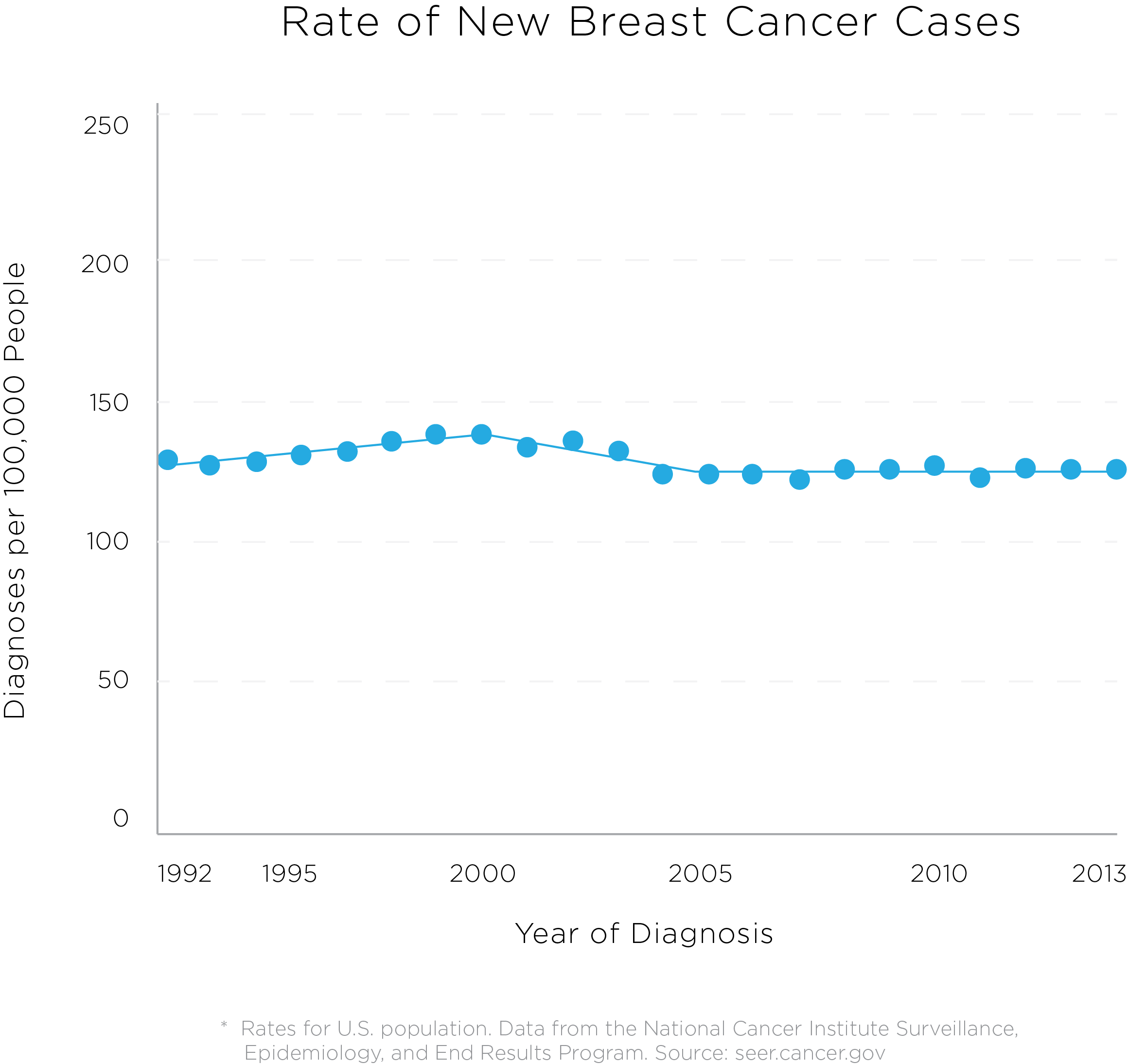
- There are more than 3 million women living with breast cancer in the U.S. and it is estimated that almost 250,000 women and 2,600 men will be diagnosed this year.
- About 1 in 8 women will be diagnosed with breast cancer in her lifetime.
- 83 percent of breast cancer patients survive for at least 10 years, but it still causes more than 40,000 deaths per year.
- Breast cancer is most commonly diagnosed after age 40, but risk begins to increase around age 30.
- Rates are highest among African-American and white women.
- Risk factors:
- Family history and genetics
- Women with inherited changes to the BRCA1 and BRCA2 genes are around five times more likely to develop breast cancer than the general population.
- Prolonged exposure to estrogen: early menstruation, late menopause, postmenopausal hormone treatment
- Obesity and lack of physical activity, especially in postmenopausal women
- Radiation
- Alcohol
- Exposure to polychlorinated biphenyls (PCBs) and ethylene oxide are suspected risks.
- Family history and genetics
Prevention tips
- Early detection can be lifesaving - breast exams, mammograms and other screening tests are valuable tools that should be discussed with your physician.
- Women considering hormone treatments for symptoms of menopause or for oral contraception methods should carefully consider the risks and benefits with their doctors.
- Limit alcohol intake.
- Maintain a healthy weight with a nutritious diet and regular physical activity, especially after menopause.
- Bisphenol A found in plastics and can linings can leach into food. Heating, acidic foods and drinks, and wear and tear to containers can increase the leaching of BPA.
- Certain drugs (tamoxifen, raloxifene and aromatase inhibitors/inactivators) can reduce breast cancer risk, however, these medications can result in other serious health risks, including other cancers. Talk to your doctor about the risks and benefits of these treatments.