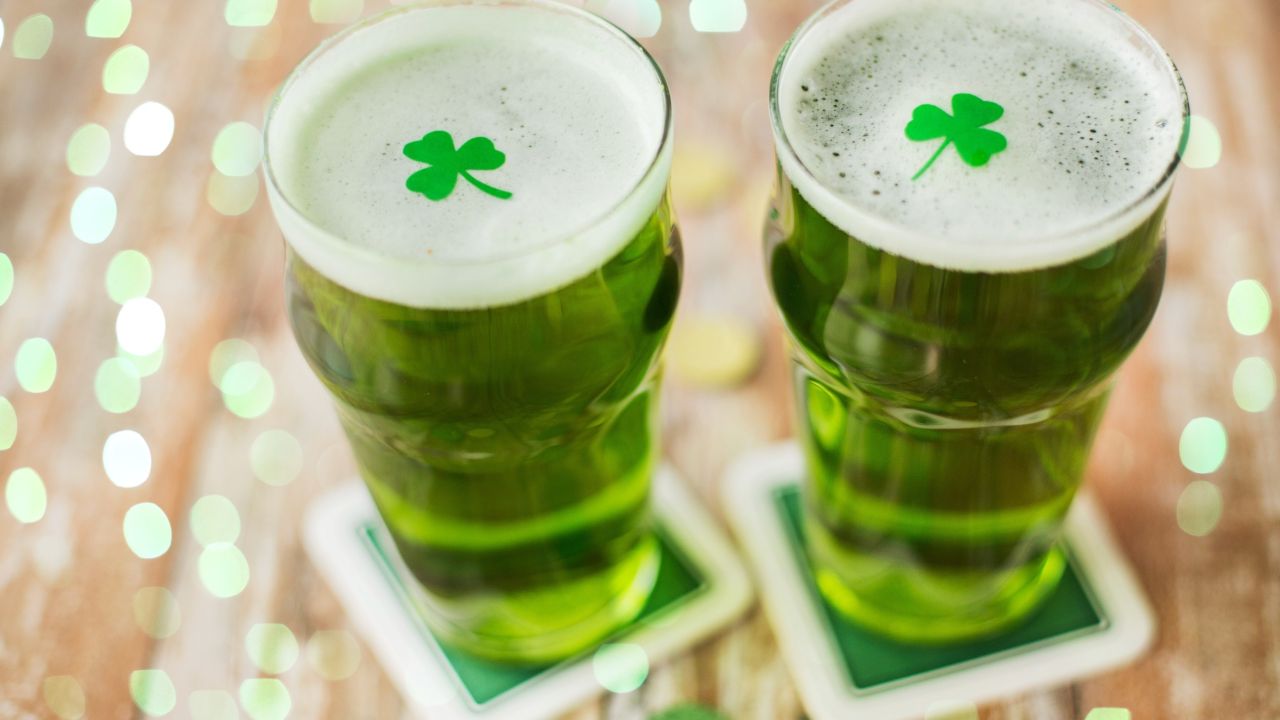
This weekend, bars across the country will serve their booze with a festive twist: beer dyed green in honor of St. Patrick’s Day.
If you choose to drink alcohol, you may already be comfortable with a certain level of risk. Alcohol use increases the risk of several types of cancer and other chronic diseases, and experts agree that drinking less is almost always better for your health.
Then there’s the matter of dyeing beer green. It carries its own health risks, which may be of lesser concern than alcohol consumption.
It’s also worth taking a closer look at popular St. Patrick’s Day dyed treats like green-frosted cupcakes or shamrock cookies. Kids typically consume more artificial dye in their daily lives than adults do, and they’re more vulnerable to potential health effects.
What’s in green food coloring
Green beer and other St. Patrick’s Day treats, like green Jell-O, cookies and icing, usually get their color through a mix of blue and yellow dyes, especially Blue Dye No.1 and Yellow Dye No. 5.
In a two-year study that reviewed extensive research on food dyes, the California Office of Environmental Health Hazard Assessment, or OEHHA, found that dyes such as Yellow 5 pose significant risks to children when their brains are in a critical stage of development.
A 1994 study published in Australia and reviewed in the OEHHA report showed that exposure to just one milligram of Yellow 5 can cause irritability, restlessness and disturbed sleep for children.
EWG’s Food Scores, which lists nutrition, ingredient and processing concerns for more than 150,000 food and drink products, lists the level of concern for Yellow 5 in food as moderate.
Possible concerns for Blue 1 include neurobehavioral effects observed in an animal study published in 2012. According to an analysis published by Center for Science in the Public Interest, Blue 1 is also linked to skin irritation.
EWG included both Blue 1 and Yellow 5 in our list of the top 12 food chemicals to avoid, citing the effects they can have on development and their link to behavioral difficulties in children.
Regulatory state of play
These synthetic dyes are approved by the Food and Drug Administration, under the Food Drug and Cosmetics Act, and are two of the seven colors they currently authorize.
The FDA has announced its intent to begin “voluntarily” phasing out petroleum-based artificial food dyes like Blue 1 and Yellow 5 as early as 2026, though it has yet to take any regulatory action toward this goal.
West Virginia enacted a state-wide ban on these colors last year. Some food companies have begun making plans to remove synthetic food dyes from their products in response to these state-wide bans of food colors.
Other states are considering statewide bans on the distribution and sale of artificial colors including Yellow 5 and Blue 1.
Arizona, California, Utah, and Virginia have banned artificial dyes in food served in their schools because of the health risks they pose to children.
Safer alternatives
If you’re looking to ditch the dyes but still want to celebrate St. Patrick’s Day in style, pistachio, matcha and mint are healthier alternatives – they’ll give your creations a green color with added flavor.
Instead of green beer, mix up this frozen mint lemonade to keep the holiday spirit alive, while avoiding toxic dyes and chemicals. Or consider food that is naturally green, like this green goddess salad.
Check EWG’s Food Scores to see what’s in the food you’re purchasing, including any food dyes, as well as how healthy the product is for you or your children.
As always, making informed decisions is about weighing risks. One green treat – whether a pint for the adults or cookies for kids – is unlikely to have a lasting impact on your health.
Nonetheless, with green dye in treats for all ages, St. Patrick’s Day is a sober reminder to check ingredients in products you don’t want to make a habit of eating or feeding your children.