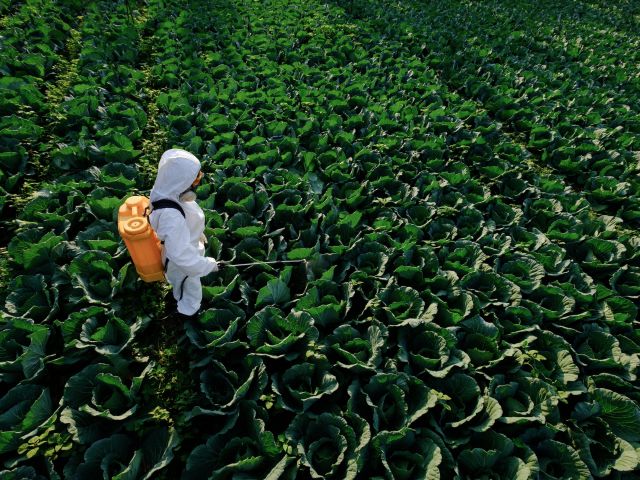
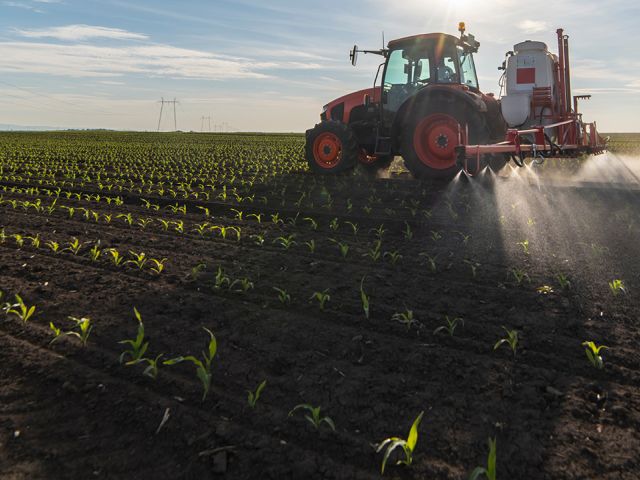
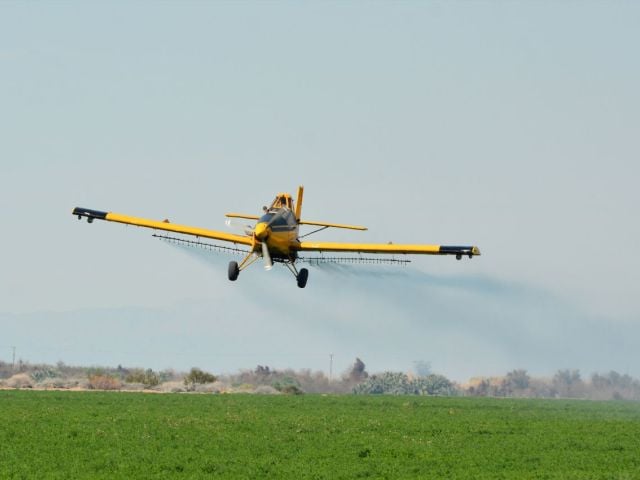
ALBANY, N.Y. – Ahead of New York’s legislative session ending June 4, environmentalists and other advocates are urging state lawmakers to pass a bill banning paraquat, a widely used herbicide with links to Parkinson’s disease, childhood leukemia and other serious health harms.
At a virtual briefing Tuesday, representatives from the Parkinson’s Foundation, American Parkinson Disease Association, Environmental Working Group and allied advocates called for lawmakers to back the legislation, A.10074A/S.9094A. A medical expert and a person living with Parkinson’s disease also talked about the urgent need to pass the bill.
If enacted, it would make New York the second state to prohibit the toxic weedkiller, after Vermont last month enacted its landmark ban on the use of paraquat.
The bill, led by Assemblymember Linda Rosenthal (D,WF-Assembly District 67) and Sen. Pete Harckham (D,WF-40th Senate District), would deliver critical protections for farmworkers and rural communities who face the greatest exposure risk from paraquat. It would represent a significant step in shielding future generations from the crop chemical.
‘Very challenging disease’
More than 70 countries – including China, where most paraquat is produced – have already banned paraquat, yet it remains legal and widely used in the U.S. New Jersey and Pennsylvania are among other states now weighing similar restrictions.
During the virtual briefing, Rebecca Gilbert, M.D., Ph.D., chief mission officer of the American Parkinson Disease Association, described the full burden of the disease and the urgency of acting on preventable risk factors, like exposure to paraquat used on U.S. farm fields. She said:
As a doctor, I see people with Parkinson’s, and I can tell you that it is a very challenging disease to live with. . . . And the disease may be famous for causing tremor, which can be very challenging, but there’s much more than that.
“There’s stiffness, slowness, falls and then a lot of symptoms that are not related to movement at all, like depression or anxiety, sleep, problems, hallucinations, problems with cognition.
In laboratory studies, paraquat can very clearly damage the very brain cells that die in Parkinson’s disease. . . . And so putting paraquat onto cells in a laboratory can basically recreate the disease.
Forever changing lives
Gilbert continued:
It’s a disease that steals independence and it slowly steals it in a way where the person with the disease feels that they can’t control what it’s stealing from them and that is a situation that’s very difficult to be in. And it affects not just the person diagnosed but the entire family with the care partner responsibilities, financial stress and social isolation.
. . . I want to highlight that Parkinson’s is not just a disease of the elderly, as it is often thought of, because there is such a thing as young onset Parkinson’s that can be diagnosed in those under the age of 50, people in their 30s and 40s, sometimes even in their 20s.
And these individuals are given this news when they’re raising their children, building their careers, and the diagnosis then forever changes the trajectory of their lives.
So, when evidence mounts that there’s a known and preventable environmental exposure that contributes to the risk of Parkinson’s, we all have a responsibility to act, because we can do better.
Banning paraquat is something that we can do as a community to protect ourselves. So this is not about politics. This is about public health.
Protecting public health
At the press event, Mike Mooney, a former landscaper and resident of Pittsford, N.Y., who is living with Parkinson’s disease, spoke about his diagnosis. He explained why he believes a ban is a straightforward public health decision:
[A]fter diagnosis . . . one of the first things I did was get the genetic testing that’s available to see if you have any known genetic links to Parkinson’s. And for me, it’s not really a unique story from that standpoint because only 12.5 percent or so of people with Parkinson’s have any genetic link . . . so 80-plus percent, or more . . . have no known genetic link. . . . It’s crazy.
So when I see countries like China producing this [paraquat], but they banned it for their people . . . I just ask the question, what are we doing? It makes no sense.
My view, the number one role of the government should be to the people. And there’s no public trust right now. Nobody knows what is going on with these chemicals. They don’t know. . . .
It’s like Russian roulette . . . but we know that one sip of paraquat will kill you. And it just seems like a no-brainer for us to ban this chemical.
New York can be a leader
Jessica Hernandez, legislative director at EWG, warned that inaction this session would leave New Yorkers exposed for years to come.
“New York has an opportunity to lead on this issue and help prevent future cases of Parkinson’s disease,” she said. “We hope New York will be the second state in the nation to ban paraquat and urge the legislature to pass the Rosenthal-Harckham bill this session.”
###
The Environmental Working Group is a nonprofit, non-partisan organization that empowers people to live healthier lives in a healthier environment. Through research, advocacy and unique education tools, EWG drives consumer choice and civic action.