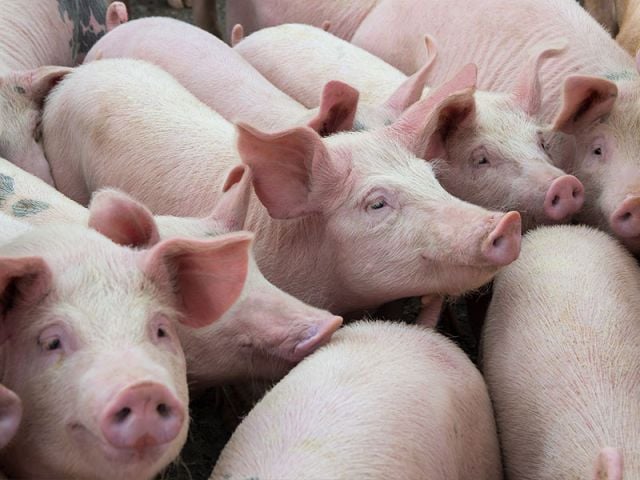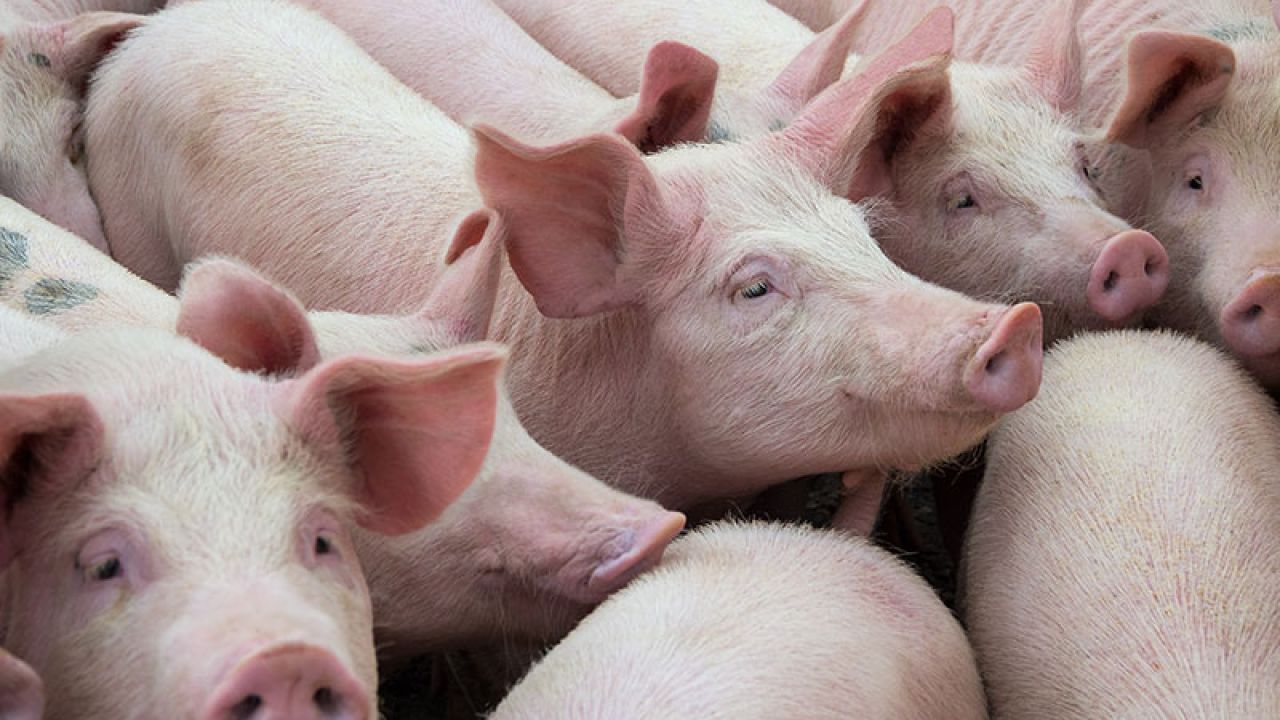
If you’ve eaten sausage or ham – or any kind of pork product – there’s a good chance it came from Iowa.
The Hawkeye State raises about a third of all hogs in the U.S. – more by a wide margin than any other state, along with some poultry and beef.
Iowa also has a high – and rising – rate of cancer. It’s one of only three states where cancer is rising. Those two things may be related.
Manure from all that livestock may well be partly responsible, because it can end up in drinking water, exposing people to a greater risk of cancer.
A new EWG analysis finds Iowa has over 15,000 factory farms – thousands more than state data shows. These animals produce a staggering amount of manure: 107 million tons a year.
The average human produces about 12 tons of solid waste over the course of an entire lifetime. Iowa’s factory farms annually generate more waste than the entire population of New York City, enough to fill more than 38,000 Olympic-size swimming pools.
How factory farms pollute water
To be disposed of, the manure is spread – untreated – on nearby farm fields, fulfilling two purposes – disposal and, because of the nutrients nitrogen and phosphorus, fertilizer for neighboring cropland.
But those fields can’t always absorb all the nutrients – if the ground is frozen, for instance, or if the growing crops already have enough nitrogen or phosphorus. The excess manure or nutrients may run off fields or get into tile drains below fields, flowing into water, or leach through soil into groundwater, contaminating the drinking water supply.
Once nitrogen enters the water, it can become nitrate, which is harmful at different levels in drinking water.
Research links nitrate – found in manure and commercial nitrogen fertilizer – in drinking water to an increased risk of colorectal, bladder, kidney, ovarian and thyroid cancers. It’s also linked to adverse birth outcomes, including preterm birth, low birth weight and spina bifida.
Many Iowans are affected by exposure to nitrate. Results of tests for nitrate showed that 146 Iowa community water systems – serving 1.2 million people – between 2021 and 2023 had elevated levels of the contaminant, EWG found.
Outdated nitrate limit
That means 1.2 million Iowans are being served water with elevated levels of nitrate and being exposed as a result to elevated risks of cancer and birth defects.
Eighty-one water systems, serving almost 800,000 people, served water that tested even higher. Eight systems, serving 56,000 people, exceeded the federal nitrate legal limit.
The Environmental Protection Agency’s limit on nitrate in drinking water, set in 1962, aimed to prevent a potentially fatal condition in infants sometimes called “blue baby syndrome.”
Recent research links nitrate exposure at levels well below the legal limit to a higher risk of colorectal and other cancers, thyroid disease and birth defects.
Iowa already has the second-highest rate of new cancer cases in the country, a trend researchers have connected to a number of environmental factors, like water contamination, although other factors are also at play.
It’s not just Iowans who are affected. Nitrate contamination travels through surface water and groundwater aquifers, and the food raised on treated land moves through the food supply.
So anyone who eats or drinks items connected to industrial agriculture has a stake in how well this waste is managed.
Threat to the environment
Manure contamination of water also contributes to other problems affecting public health and the environment. Phosphorus and nitrate in excess can affect aquatic ecosystems and contribute to algae blooms.
Industrial-scale meat production also contributes to climate change. Excess nitrogen can break down into nitrous oxide, a potent greenhouse gas, trapping heat in the atmosphere. Extreme weather events, such as drought followed by heavy rain, can lead to higher nitrous oxide emissions from farming.
The problem keeps getting worse
The number of the largest animal facilities in Iowa grew nearly 13% between 2019 and 2025, climbing to 4,444 operations, the new EWG analysis found.
But it’s not just sheer growth in the number of these operations that causes an issue. It’s also the consequences of growth.
Large operations make up less than a third of all farms in the state, which are mostly smaller and mid-size operations. But because of the sheer quantity of animals they house, they produce 60% of the manure.
As livestock production consolidates into bigger, more concentrated operations, the waste problem intensifies along with it, becoming more difficult to manage, whether to spread as fertilizer without triggering runoff or to transport it longer distances.
Policy failures
Federal policy failures that could control and manage industrial farms’ growth are at least partly to blame.
For purposes of federal oversight, factory farms are defined by their size. An operation may be too small to qualify as a large farm subject to stricter permitting and planning rules, even if they produce virtually the same amount of manure. That’s the case with over 3,200 Iowa operations, which fall under the large threshold by at most 50 animals.
Federal funding paid through farmer subsidies effectively promotes factory farm expansion rather than programs intended to promote a safer, more climate-resilient farming system. Instead of protecting water quality or the climate, taxpayers’ money supports the expansion of factory farming.
What you can do
You can’t personally fix a state’s water quality, but everyday choices add up and send a signal to the market.
Eating less meat, or choosing meat that wasn’t raised on a factory farm, reduces demand for the kind of large-scale, concentrated production driving this problem. Consult our meat and dairy label decoder for guidance.
In the grocery store, look for labels on meat and poultry like Animal Welfare Approved, Certified Humane (paired with “grass-fed” or “pasture-raised”), or Global Animal Partnership’s more stringent standards. These labels indicate the animals were raised in better conditions, with more space and less concentration of waste than is typical of a factory farm.
Beyond the grocery store, consumer advocacy is also critical. Encourage local, state and federal officials to strengthen oversight of manure application and push for change in the priorities of federal expenditures.